
High demand
Ticket Glacier 3000 Les Diableretes from Col du Pillon
4.6(94)
fromCHF 89

5 Activities
Filter
Why book with Swiss Activities?
Why book with Swiss Activities?
Glacier 3000 is a vast area for snow fun and winter activities — almost all year round.
The Tsanfleuron Glacier is the starting point for a ski paradise with 28 km of pistes stretching down to 1,350 m above sea level. The Peak Walk by Tissot is almost flat. From there, you can see, besides the Jungfrau massif, the Matterhorn too. The view even extends as far as Mont Blanc.
The glacier offers good snow conditions throughout the year. That’s why many winter activities can also be enjoyed during the summer.
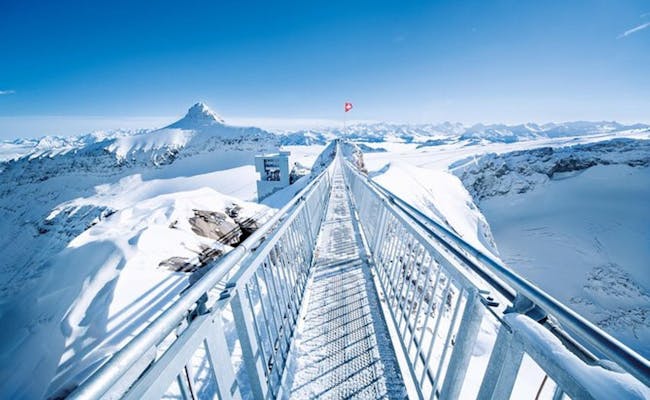 Walk by Tissot (Photo: Gstaad 3000)
 Walk by Tissot (Photo: Gstaad 3000)
The biggest attraction is the glacier itself and the Peak Walk, which connects two mountain peaks and leads over the glacier. At Glacier 3000, you can basically explore the glacier from below as well.
The attractions at Glacier 3000 include:
The Dôme Hike reaches the highest point of Glacier 3000 at 3016 m above sea level. A wide and comfortable path leads upward for a pleasant walk.
The hike starts at Scex Rouge at 2940 m above sea level and follows a marked trail down to Col de Prapio. From there, two gentle ascents head southwest up to Le Dôme. The Dôme is also called Steinmannli because of the stone cairns. A large stone cairn marks the summit of the Dôme.
The pleasantly wide path is surrounded by rock formations and can be walked at a relaxed pace. The fresh mountain air and breathtaking views create a memorable experience. The view of the glacier, the striking Diablerets summit, and the valleys far below combine to make a stunning panorama.
The approximately 1.5 km trail takes about an hour to complete. From the Dôme, a secured path leads down to the Diableret glacier. If you return to the mountain station via this route, a short detour at Col de Prapio to the Rifugio Espace by the Quille du Diable is worthwhile. The glacier trail is marked with poles, and the return route from there to Scex Rouge station is also marked, so both paths are easy to follow even in poor visibility.
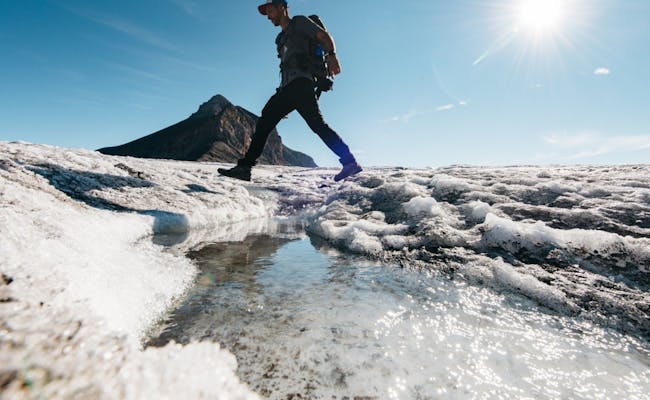 Glacier Walk (Photo: Gstaad 3000)
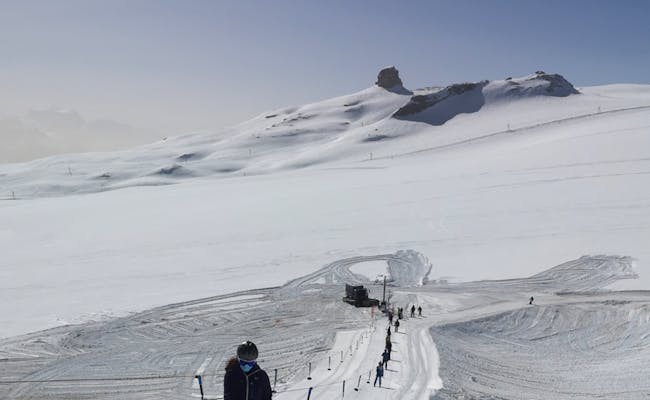 Glacier Walk (Photo: Gstaad 3000)
The Peak Walk is the path across a suspension bridge on Glacier 3000. This is the only suspension bridge in the world that connects two mountain peaks, at an altitude of more than 3000 meters. Depending on the weather, the bridge is accessible all year round.
The suspension bridge connects the pre-summit (View Point) with the main summit (Scex Rouge). The main summit is about 5 meters higher. The breathtaking view of the high mountains can be enjoyed both in summer and winter. The path is 107 meters long and eight meters wide. Because of the small difference in altitude, the bridge is almost flat. Among other things, the Matterhorn, Mont Blanc and the triumvirate of the Jungfrau massif can be seen from here. Entering the suspension bridge is free of charge.
There are nine lift systems:
Glacier 3000 has been developed since the 1960s. The idea to connect Col du Pillon with the Tsanfleuron Glacier dates back to 1959. From Col du Pillon, an aerial cableway with cabins holding up to 125 people runs in two sections up to the Scex Rouge mountain station, overcoming around 1,400 meters in elevation. The entire journey takes about 15 minutes; the cableway travels at 10 m/s during the first section and 9 m/s on the second.
The first section is 1,960 meters long and climbs 979 meters, the second section is 1,661 meters long and climbs 417 meters.
The lifts operate not only in winter but also during summer. At the start of the season, service may initially be limited to weekends; you can find the current timetables on Glacier 3000's website.
Swiss Activities Offer:
The Ice Express chairlift takes you directly from the Scex Rouge mountain station down to the glacier, where the Glacier Walk starts.
There are three chairlifts operating in the Glacier 3000 area:
Glacier Chairlift (2,800) – Scex Rouge (2,910m)
This 4-seater chairlift with fixed grip runs both in summer and winter, transporting you from the Scex Rouge mountain station down to the glacier. It covers a distance of 373 m, ascending 110 vertical metres. Travelling at 2 m/s, the ride takes about 3.5 minutes with a capacity of up to 1,200 people per hour.
Oldenegg Chairlift (1,924m) – Cabane (2,528m)
This detachable 4-seater high-speed chairlift with weather protection bubbles connects the Oldenegg area with the Cabane mid-station. It covers a distance of 2,327 m in about 8.5 minutes at a speed of 5 m/s.
Oldenalp Chairlift (1,844m) – Oldenegg (1,927m)
This detachable 4-seater high-speed chairlift with weather protection bubbles connects the Oldenalp area with Oldenegg. At 5 m/s, it covers the 2,327 m route in around 8.5 minutes.
"In winter, skiers also use the Ice Express to get back to the cable car from the slopes and then take the gondola down to Col du Pillon."
Lift operating hours vary between summer and winter.
During summer, all lifts run continuously; a maintenance break takes place in May.
The cable cars Col du Pillon – Cabane – Scex Rouge and the Ice Express chairlift usually operate daily from about 08:30 to 16:50, with departures roughly every 20 minutes. The last descent from Scex Rouge departs around 16:50. Check the current schedules on the Glacier 3000 website before your visit.
The winter season runs from early November to late April without planned maintenance breaks.
The cable cars Col du Pillon – Cabane – Scex Rouge usually operate daily between about 08:30 and 16:30, departing approximately every 20 minutes. The last descent from Scex Rouge leaves at around 16:30. The entire route between Col du Pillon and Scex Rouge takes about 15 minutes.
The chairlifts and glacier lifts generally operate daily from roughly 08:45 to 16:00. Please check the current operating hours on the Glacier 3000 website before your visit, as they may vary depending on weather and seasonal conditions.
 Cable car (Photo: Gstaad 3000)
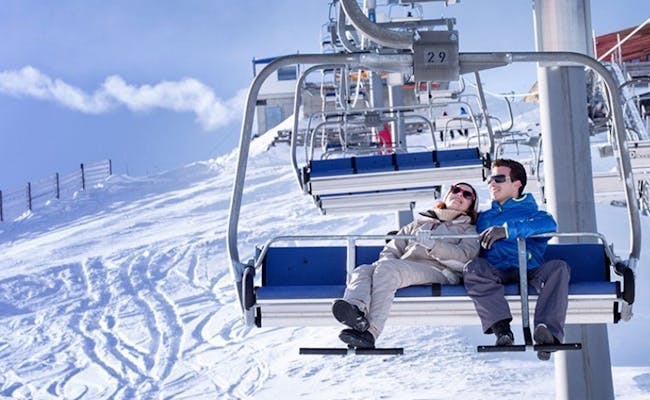 Ice Express Summer (Photo: Gstaad 3000)
At Glacier 3000, winter activities like skiing and snowboarding are usually available from early November until the end of April; the season is neither brought forward nor extended beyond late April.
You can also enjoy many activities during the summer. However, openings and conditions depend heavily on the weather, wind, and snow cover – individual facilities or areas may be temporarily closed for safety reasons.
Winter activities at Glacier 3000:
Summer activities at Glacier 3000:
To ski and snowboard at Glacier 3000, take the cable car in two stages from Col du Pillon to the mountain station Scex Rouge. The pass road to Col du Pillon is usually open all year round.
The high alpine ski area between around 3,000 and 1,300 m above sea level is considered snow-sure from early November to late April and offers a wide range of slopes for various skill levels. Off the marked runs, freeriding is possible, but only for very experienced snow sports enthusiasts with the appropriate equipment and knowledge of the risks.
Glacier 3000 offers challenging terrain for freeride fans, where you can cover many vertical meters in a short time. However, freeriding takes place outside the marked and secured slopes and is at your own risk.
Freeriding at Glacier 3000 is strongly discouraged without precise local knowledge. For all freeride tours, you should join a local mountain guide or a professional ski school and have complete safety equipment (avalanche transceiver, probe, shovel, avalanche backpack).
On the glacier, several surface lifts are available, including:
Once a year, Glacier 3000 hosts the "freeridedays.ch" — usually over a weekend at the end of March. During these two days, as a freerider, you have the chance to explore the Glacier 3000 terrain safely with professional guides and local mountain leaders, whether you're a beginner or more advanced.
The high alpine terrain allows you to cover a lot of vertical metres in a short time while freeriding. Steep slopes, technical sections, and areas with untouched powder make Glacier 3000 a particularly attractive spot for experienced freeriders. Participation in the Freeride Days requires payment and prior registration.
At the Avalanche Training Center, interested people can train for free on how to behave safely in the backcountry and what to do in case of an avalanche emergency. Under realistic conditions, you learn how to efficiently organise and conduct a search for a buried person.
The avalanche training area is located on a roughly 100 × 100 metre moderately steep slope in the lower part of the Ice Express chairlift. The beacon training field features five permanently installed transmitters, which are activated by a central control and remain buried throughout the winter. You need to bring your own shovel and probe.
For guided freeride experiences in the region, you can contact local mountain guide offices and alpine centres in Gstaad and Les Diablerets.
 Ski Freeride (Photo: Gstaad 3000)
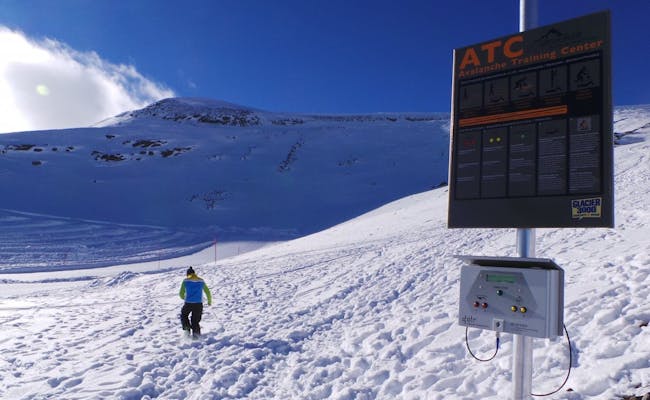 Ski Avalanche Training Center (Photo: Gstaad 3000)
A new descent over 8,000 meters is the Red Run Slope, which descends from 3,000 vertical meters to 1,300 vertical meters. It starts at the Scex Rouge mountain station. From here it passes under the Oldenhorn, continues below the Cabane middle station and connects with the already existing red Martisberg run.
The Olden Slope descends from Oldenhorn to Olpenalp and another piste leads from Oldenegg in wide sweeps down to Reusch. Both are black slopes.
These 6 blue slopes are in the upper range:
The three runs Transfleuron, Dôme and Retour Scex Rouge have boxes, rails and tables. The giant jump Big Mama is suitable for snowboarders and skiers.
Thanks to Glacier 3000's elevation, you can still go sledding or cross-country skiing late in the season depending on snow conditions. However, the operating hours of the facilities and offerings always depend on the current weather and snow situation.
For those not skiing, the fun park on the glacier offers ideal conditions for your first sliding experiences on snow. The fun park is located in the lower area of the Ice Express chairlift and operates as long as conditions allow.
Especially for kids, the short runs on simple snow sleds are great fun. The fun park is right on the glacier and usually offers very good snow conditions. Using the fun park is free of charge.
 Sledding (Photo: Gstaad 3000)
 Cross-country skiing (Photo: Gstaad 3000)
At Glacier 3000, you can enjoy cross-country skiing and skating even during transitional seasons, depending on snow conditions. Around seven kilometres of trails are groomed on the Tsanfleuron Glacier, covering almost the entire glacier surface.
The trails are usually prepared from April through autumn, as long as conditions allow. Many athletes from cross-country skiing and biathlon also take advantage of the altitude and spectacular views for their training. The trail network sits at about 2,800 to 2,840 metres above sea level and can, in good snow conditions, remain open well into early winter.
The glacier area of Glacier 3000 stretches about three kilometres long and one and a half kilometres wide, descending eastward to around 2,500 meters above sea level. One of the most impressive ways to explore this landscape is through guided dog sled rides on the glacier.
The dog sleds are pulled by Huskies, who are at home in the snow. During the ride, you glide over the glacier in the sled, experiencing the high alpine surroundings in a uniquely intense yet relaxed way—a memorable adventure.
The tours run during the winter season and heavily depend on weather and snow conditions. Typically, dog sleds operate on the glacier from November to March when conditions are suitable. Available dates and times can be checked online daily.
Reservations are mandatory and can only be made online via Glacier 3000’s booking platform. Spontaneous bookings on site aren't possible. Depending on the offer, multiple people can share a sled; the exact group size and duration will be specified during booking.
The Snowbus of Glacier 3000 offers space for up to 20 people and drives like a snowcat over the crunching snow. With it you can explore the glacier area without having to move yourself.
 Dog sledding (Photo: Raphael Dupertuis Gstaad 3000)
 Snow Bus (Photo: Gstaad 3000)
Glacier 3000 is a popular hiking area. As soon as you step out of the cable car, you're greeted by an impressive panorama that stretches to the Jura on clear days. The surrounding region offers many marked mountain trails—from easy walks to challenging alpine tours.
The Glacier Walk is an easy, secured glacier hiking trail on Glacier 3000. It leads from the Scex Rouge mountain station across the glacier to the striking rock formation Quille du Diable and the Refuge de l’Espace restaurant.
From Col du Pillon, you can comfortably reach the Scex Rouge mountain station at about 3,000 m above sea level by cable car. From there, take the Ice Express chairlift down onto the glacier to start your hike in the snow. The path is groomed and marked, taking roughly an hour one way depending on your pace (about 3 km).
The Refuge de l’Espace sits at the glacier's edge right next to the Quille du Diable, featuring a large terrace with views over Valais and the Derborence area. The Glacier Walk route is accessible year-round when conditions allow; nevertheless, wearing sturdy shoes and weather-appropriate clothing is essential.
The cosy mountain hike (T2) is marked as the Glacier Walk starting from the glacier station of the chairlift. Most of the route runs along a groomed trail. Passing the Oldenhorn, the path leads over the Glacier de Tsanfleuron up to the cantonal border with Valais. During the hike, you enjoy stunning views of the Bernese and Valais Alps.
The trail ends at the distinctive rock formation Tour St‑Martin, better known as Quille du Diable. Right next to it is the Refuge de l’Espace, located at around 2,600 m above sea level, featuring a large viewing terrace. With some luck, you might spot bearded vultures breeding and circling below the terrace in the Derborence valley.
No special alpine equipment is needed for the Glacier Walk; however, sturdy ankle-high boots and weather-appropriate clothing are highly recommended. The return journey follows the same route.
 Hike (Photo: Gstaad 3000)
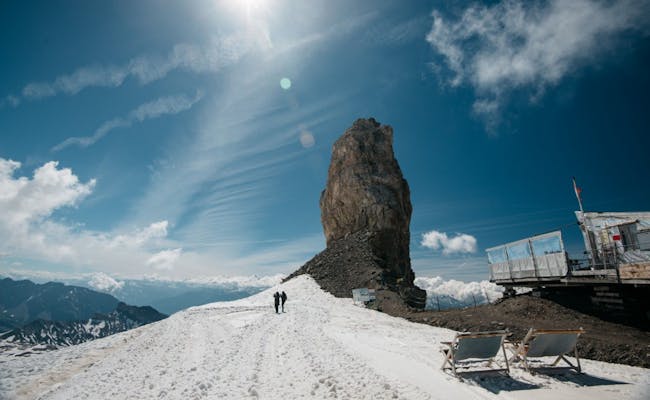 Glacier Walk (Photo: Raphael Dupertuis Gstaad 3000 )
Around Glacier 3000, there are several challenging via ferratas generally accessible from June to September/October. All routes traverse high alpine terrain around the distinctive cliffs near Les Diablerets; you can get detailed information and current conditions from the tourism office in Les Diablerets or the Swiss Alpine Club (SAC).
The following via ferratas are particularly well known:
Via Ferrata des Dames Anglaises (Difficulty approx. K2–K3)
An alpine, rocky route offering impressive views of the Glacier de Prapio. Surefootedness and a head for heights are necessary for the approach and return. Depending on conditions, an ice axe and crampons might also be needed.
Via Ferrata Cascade du Dar (Difficulty K4)
A very demanding via ferrata on a northwest-facing rock wall with waterfalls and lush greenery. You can reach the start from Col du Pillon within about 10 to 15 minutes on foot. Steep, sometimes slippery sections require excellent surefootedness and arm strength; this route is especially challenging for shorter climbers.
Via Ferrata Tête au Chamois / Rocher Jaune (Difficulty K4)
An extremely exposed sport climbing via ferrata on a yellow rock face up to 300 m high. The route is very airy with many traverses and partly overhanging ladders. It is suitable only for experienced and absolutely vertigo-free climbers equipped with full gear.
For all via ferratas at Glacier 3000, a complete via ferrata set (climbing harness, via ferrata lanyard, helmet, gloves), excellent surefootedness, and a head for heights are mandatory. Beginners are advised to book a guide or join a guided tour.
The Via Ferrata des Dames Anglaises is rocky and alpine. For the via ferrata, absolute surefootedness and a head for heights are indispensable. There are also challenging passages on the way to and from the via ferrata. You need a complete via ferrata equipment as well as helmet and via ferrata gloves. In addition, an ice axe and crampons are needed for the traverse. The former via ferrata had to be relocated due to the recession of the glacier.
The edge crevasse under the Col de Prapio had become a danger. The way back is either in reverse back to the Refuge de Pierredar or by cable car Glacier3000 to the Col du Pillon. The three rocks got their name because their shape reminds of women with long dresses. A stop is recommended at the Refuge de Pierredar. From here you have a beautiful view of the glacier Glacier de Prapio.
This via ferrata Cascade du D'ar faces northwest and scores with the greenery and waters of the Diablerets massif. From the Col du Pillon, the via is reached in about ten to fifteen minutes. This via ferrata is classified as extremely difficult and requires extreme surefootedness. Some places can be extremely slippery and for people of smaller stature, the via ferrata is particularly difficult to master. However, the most difficult part can be bypassed to the left at the beginning.
This fixed rope route goes over a large and beautiful 300 meter high yellow rock face. The via ferrata is therefore also known as the Yellow Rocher. It faces north and offers views from the Alps to over the blue lakes. This via ferrata contains many extremely difficult passages
From Col du Pillon, the via can be reached on foot, but it is easier to take the cable car to Glacier 3000 to the middle station. From here it is another ten minutes on foot. This route contains particularly exposed sections and overhanging ladders. The site around the Cabane additionally offers several climbing routes, ranging from 5 to 250 meters in length. All of them are located near the Cabane des Diablerets.
 Climbing route Via Cascade (Photo: Gstaad 3000)
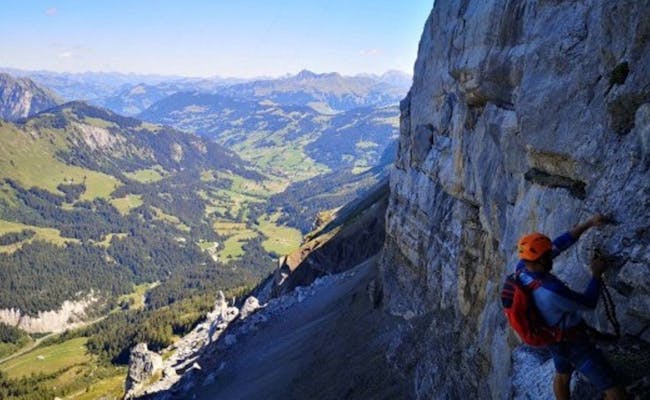 Climbing (Photo: Gstaad 3000)
The Alpine Coaster on Glacier 3000 typically operates from May to September. Its operating hours follow the timetable of the Col du Pillon – Scex Rouge aerial cable cars and depend on weather and snow conditions.
This summer toboggan run is among the highest in the world and starts near the Scex Rouge mountain station. Along approximately 1,000 metres, you'll experience an exhilarating ride over the glacier featuring a 520° loop, six waves, three jumps, and ten tight turns.
You can reach speeds of up to 40 km/h. Since the track is elevated up to six metres above the ground in places, you'll almost feel weightless while enjoying the fresh mountain air and stunning panorama. You can control your speed anytime using a brake lever.
For safety reasons, the Alpine Coaster closes during bad weather conditions like strong winds, ice, or snowfall.
 Alpine Coaster (Photo: Gstaad 3000)
 Alpine Coaster (Photo: Gstaad 3000)
Around Glacier 3000, specialised flight schools and helicopter companies offer alpine flying experiences. These include tandem paragliding flights from the mountain station as well as helicopter tours with views of the glacier landscape and the surrounding 4,000-metre peaks.
Tandem paragliding flights take off near the mountain station and carry you in the air over the glacier area and nearby summits. The complete paragliding equipment is provided by the operator; you only need weather-appropriate clothing and sturdy shoes.
Depending on the weather, the actual flight usually lasts between 30 and 45 minutes. Including preparation, instruction, the flight itself, and the return, you should allow about two hours in total.
Around Glacier 3000, several helicopter companies in the Saanenland offer alpine sightseeing flights, sometimes including a stopover in the Diablerets area. Most flights depart from the base in Gstaad-Saanenland; the exact routes and options depend on the provider.
Typical routes lead from Lake Arnensee towards Glacier 3000, the highest ski area in Saanenland. Above the Diablerets Glacier, you can enjoy stunning views of the four-thousand-metre peaks of the Valais Alps. Often, the return flight passes over the Sanetsch Pass, Wildhorn, and the Lauenen region before heading back to Saanen.
These helicopter tours are not operated directly by Glacier 3000. Booking, routes, and availability are exclusively determined by the individual flight companies.
 Glacier flight (Photo: Gstaad 3000)
 Dorf Diablerets (Photo: Gstaad 3000)
You can find current events and special offers directly on the Glacier 3000 website.
A highlight is the Glacier 3000 Run in August: This mountain run covers around 26 kilometres with approximately 1,900 metres of elevation gain, starting from the promenade in Gstaad at 1,050 m above sea level and climbing up to Glacier 3000 just below 3,000 m above sea level. Participation requires a fee and early registration is recommended.
Another popular offering is the Peak Brunch at the mountain restaurant Le 3 near the Scex Rouge mountain station. This hearty brunch with panoramic views of the surrounding peaks takes place every morning and is only available by reservation.
At Glacier 3000, you have various dining options available all year round – from a cozy mountain hut to a modern panoramic restaurant.
Refuge de l’Espace is located at about 2,600 m above sea level on the edge of the glacier near the Quille du Diable. You can reach it on foot in around 45 minutes from the glacier station of the Ice Express chairlift, following the Glacier Walk signs towards the Quille du Diable, both summer and winter.
The hut offers a large sun terrace with spectacular views over the Valais region and the Derborence valley, along with a regional, hearty menu featuring warm and cold dishes and drinks.
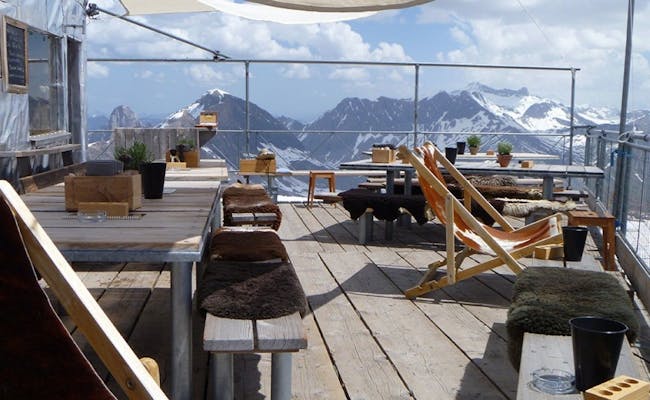 Refuge l’Espace (Foto: Gstaad 3000)
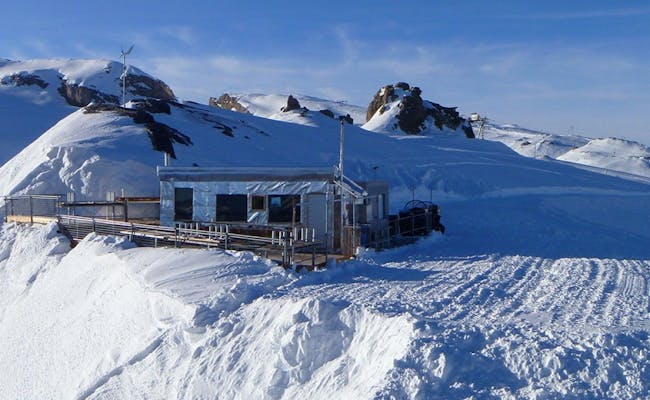 Refuge l’Espace (Foto: Gstaad 3000)
The distinctive building at the Scex Rouge mountain station was designed by star architect Mario Botta and offers top-level dining across several floors—always with panoramic views of the surrounding mountains.
The Peak Brunch is served daily in the morning at Restaurant Le 3, usually between 9:15 AM and 10:45 AM. Reservations are mandatory as seating is limited.
The brunch served at the table includes, among other things:
During the day, Restaurant Botta serves classic mountain dishes, light snacks, and specialties from the cantons of Bern, Vaud, and Valais. The panoramic restaurant has about 140 indoor seats on several levels, plus additional seating on sunny terraces.
The building is located on the edge of the Diablerets Glacier, the highest spot in the canton of Vaud, and is open during operating hours—usually from around 9:15 AM to 4:30 PM.
There are 160 seats in the self-service restaurant on the 3rd floor. In addition, there are 70 seats on a sunny terrace on the 2nd floor.
The restaurant is located on the pass road Pillon 251 next to the valley station of the gondola lift. Due to its ideal location, it offers typical Swiss cuisine to skiers, excursionists, but also motorized guests. The Diablerets massif is easily visible from here. Open daily between 8:30 am and 6 pm. In November could be closed for seasonal reasons.
After the long and challenging descent down the Olden piste, you reach the ski bar in Gsteig.
The hut, located at 2,485 meters above sea level, can be reached on foot in 5 minutes from the Cabane middle station. It is located on the Reusch - Scex Rouge hiking route and offers a view of the Vaud and Bernese Alps. For overnight stays, prior reservation is required. There are 32 berths. 2'582'819.5 / 1'131'974.5
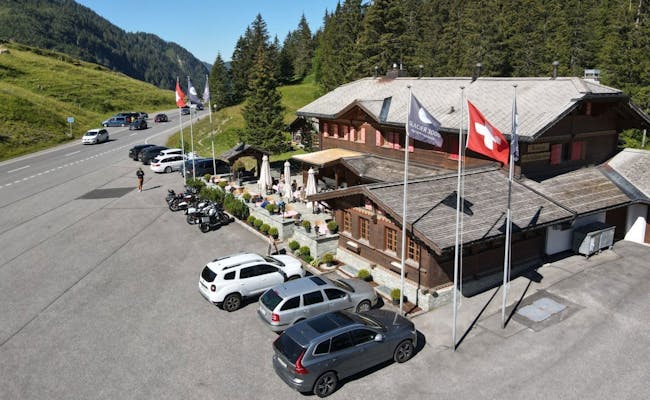 Restaurant Pillon (Photo: Gstaad 3000)
 SAC Hut Cabane des Diablerets (Photo: Gstaad 3000)
Snow often remains on Glacier 3000 even in summer, and the weather can change very quickly, even on sunny days. Before you visit, always check the current weather conditions and the operational status of the facilities. Warm, windproof clothing, a hat, and good sun protection (sunglasses, sunscreen) are important even in summer.
The altitude of about 3,000 meters above sea level is physically challenging for inexperienced high-altitude hikers. People with pre-existing conditions should consult their doctor before undertaking longer mountain or climbing tours. Early signs of altitude sickness can appear from around 1,900 meters above sea level—typically headaches, fatigue, or general discomfort. If sleep disturbances or loss of appetite occur, you should gradually move to lower altitudes and seek medical help if symptoms persist.
The easiest way to reach Glacier 3000 is via the Col du Pillon pass. There are paved parking spaces directly at the valley station; a flat fee of CHF 5.– per day applies.
The nearest airports are Bern, Sion, and Geneva. Small aircraft can also land and take off at Saanen airfield.
From Saanen, you can drive via Gstaad and Gsteig on the Pillon road to the valley station of the cable car in about 30 minutes. The roughly 33 km pass road connects Saanen in the canton of Bern with Le Sépey / Aigle in the canton of Vaud.
From Bern, take the A12 motorway and then main roads to Col du Pillon in about 1 hour 15 minutes (approx. 130 km). From Sion, Glacier 3000 is reached in just over an hour via the A9 motorway and mountain roads.
Glacier 3000 is also easily accessible by car from other regions:


