
Courbet, Monet, Renoir... Focus on Provenance
À propos de ce lieu
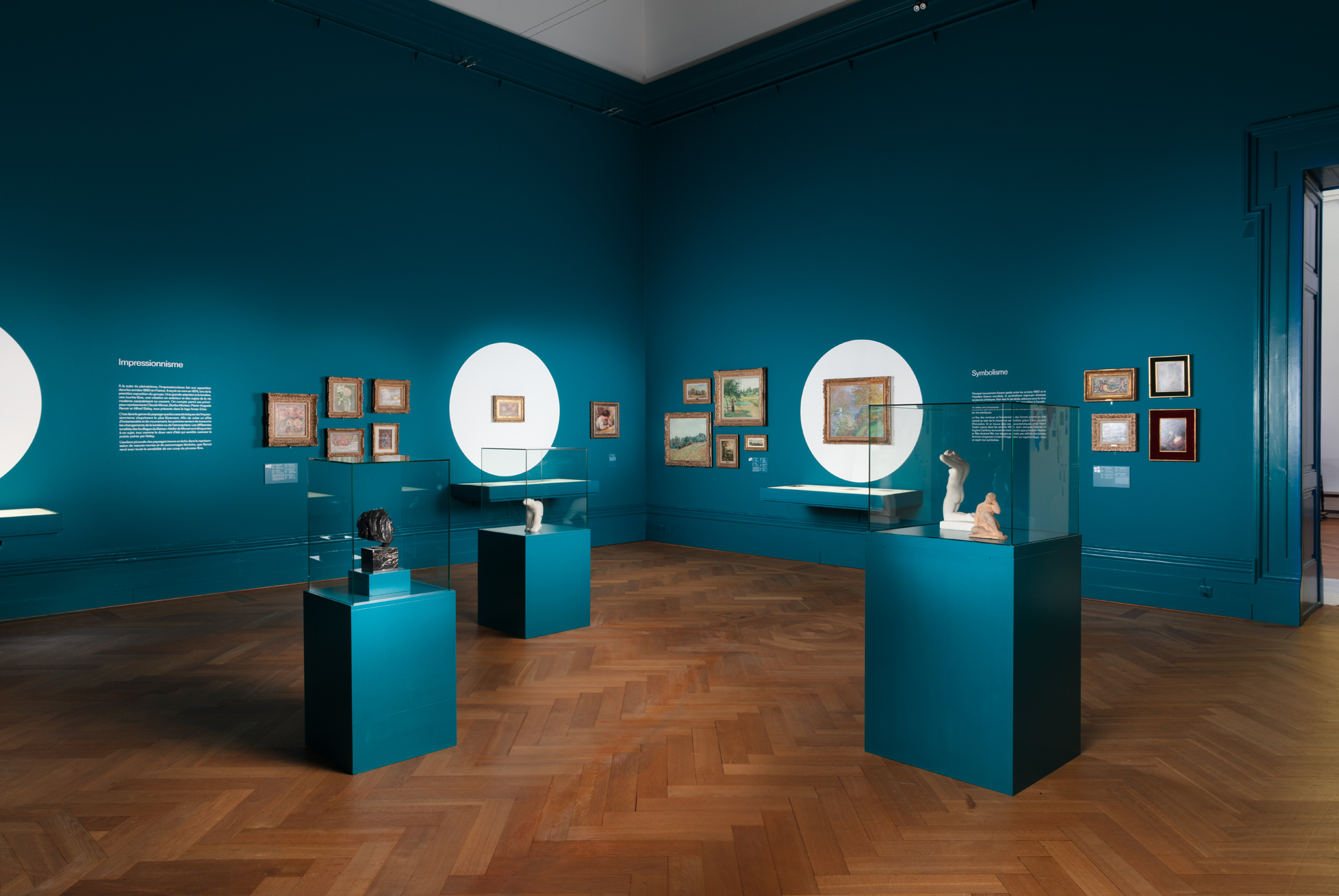
In 1979, the Neuchâtel Museum of Art and History received a significant donation from James Adolphe Yvan Amez-Droz (1888–1976). A wealthy owner of a perfume and cosmetics company, Yvan Amez-Droz assembled a collection of paintings, drawings, prints, books, and objets d’art in Paris, where he was based. Through the donation of the modern portion of this collection, the collector wished to express his affection for Neuchâtel, the birthplace of his family. Named the “Yvan and Hélène Amez-Droz Bequest” in accordance with the donor’s wish to associate his sister’s name with his own, the collection comprises 69 works: 45 paintings, 18 drawings, 2 monotypes, and 4 sculptures. It brings together various 19th- and 20th-century French artists, ranging from the plein air movement to the early École de Paris. At the heart of the collection are the famous Impressionist artists Edgar Degas, Claude Monet, Berthe Morisot, and Auguste Renoir. Some works, such as Monet’s *Bateau-Atelier*, are now among the institution’s masterpieces. When the collection was acquired by the museum, the focus was on the authenticity of the pieces, and the question of their provenance was not addressed. With the resurgence of debates on art looted between 1933 and 1945 in academic, museum, and public spheres, provenance research has become a priority in Switzerland in the 21st century. With support from the Federal Office of Culture, the Museum of Art and History conducted a study between 2019 and 2021 dedicated to the history of the works in the Yvan and Hélène Amez-Droz bequest. This exhibition presents the results of the investigation and fulfills the duty of care that museums owe regarding the Nazi era. At the same time, it highlights the artistically fertile period that preceded the avant-garde movements. Note: This text was translated by machine translation software and not by a human translator. It may contain translation errors.