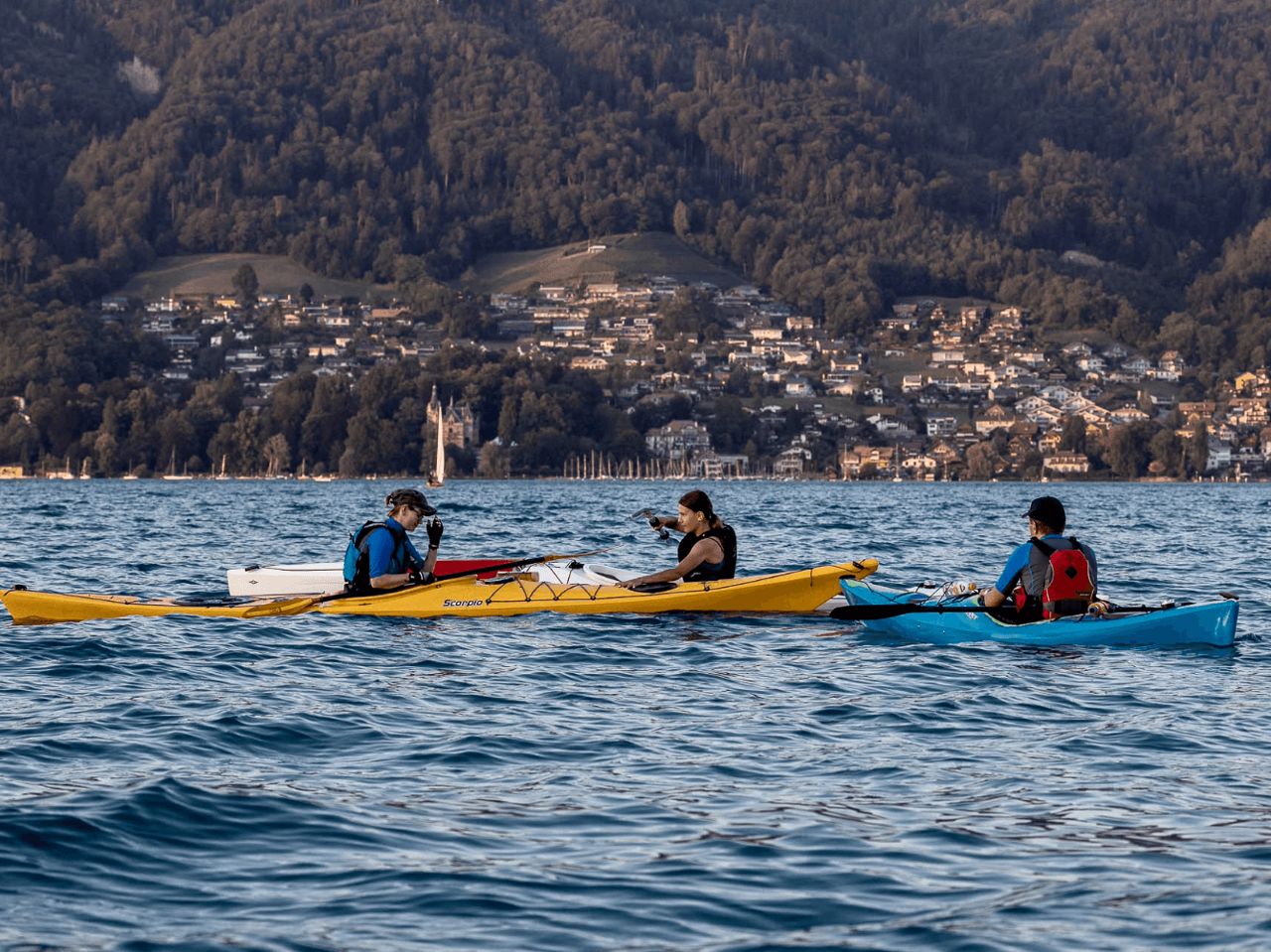
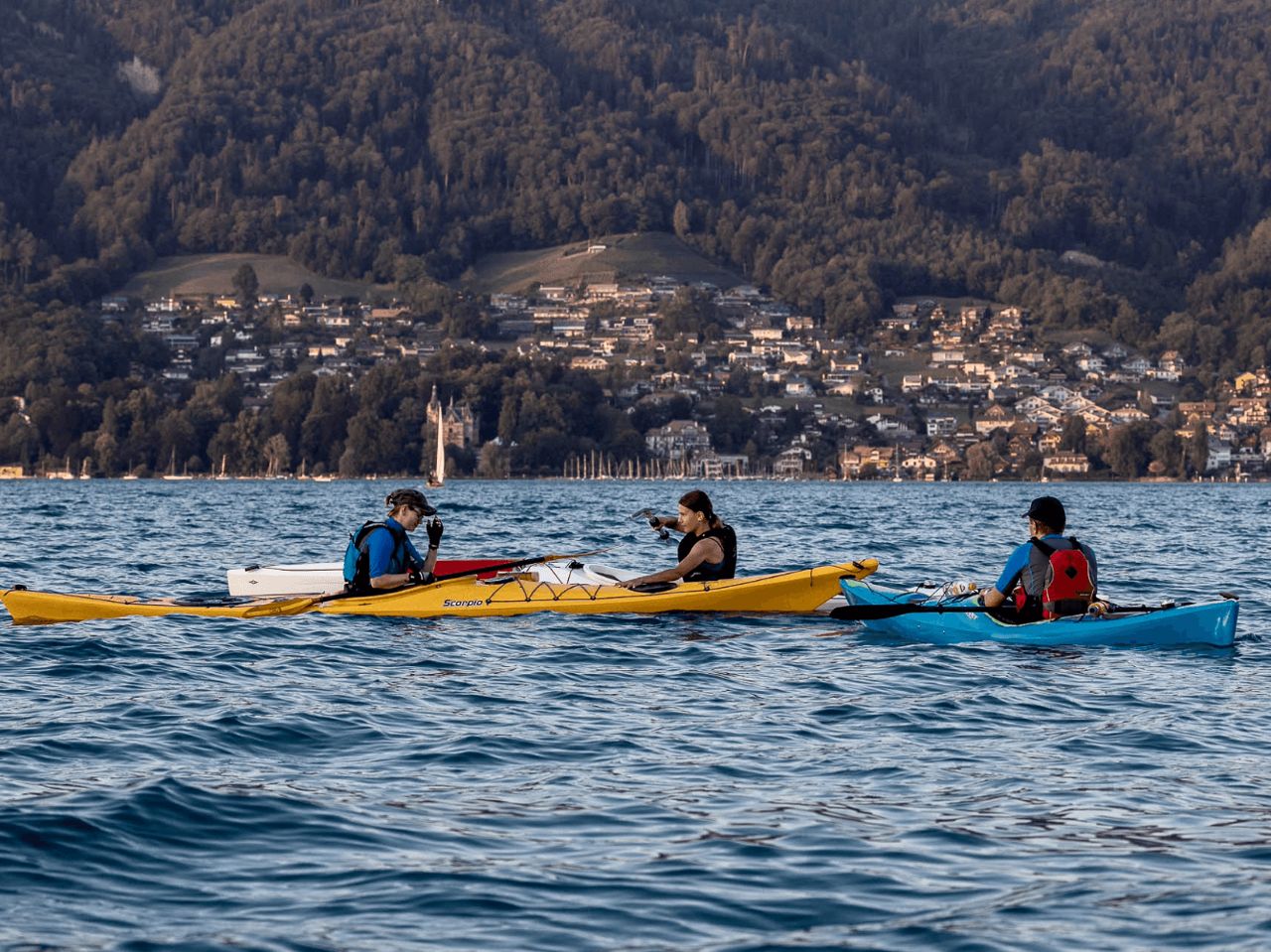
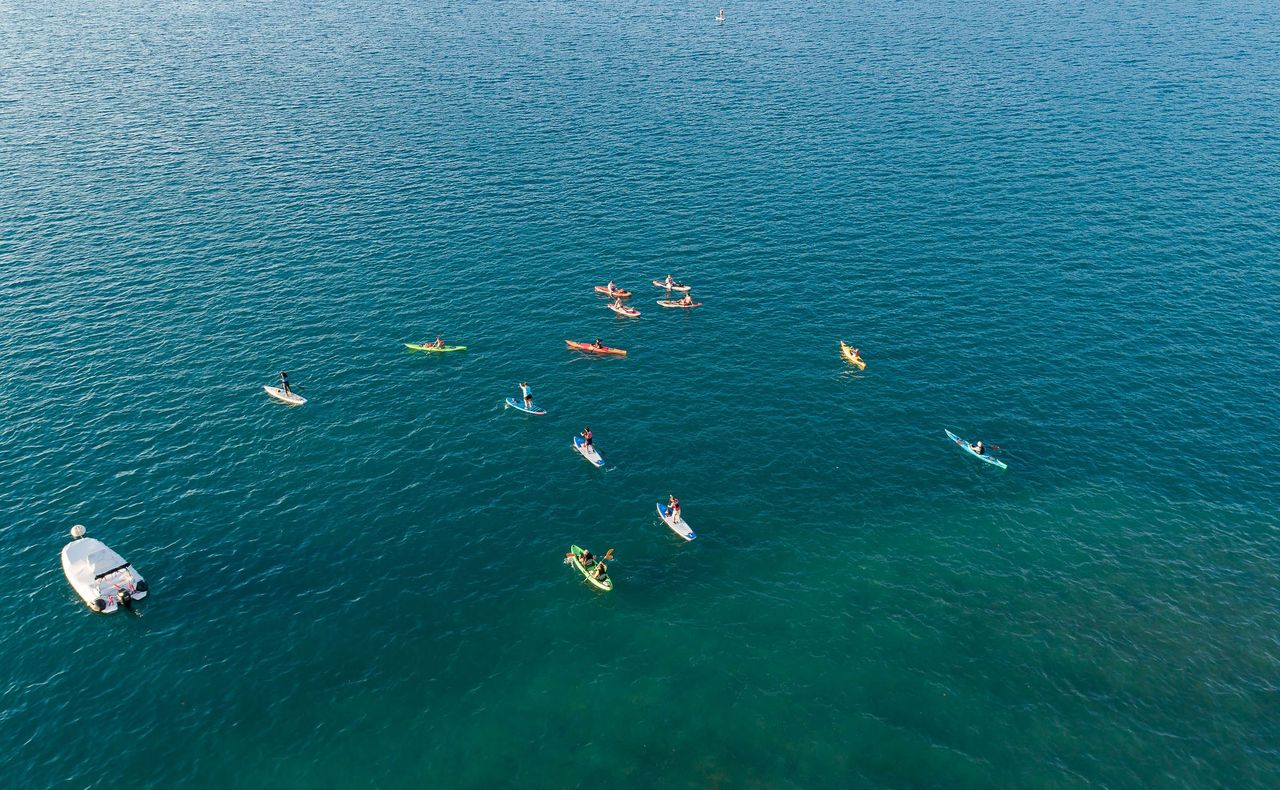
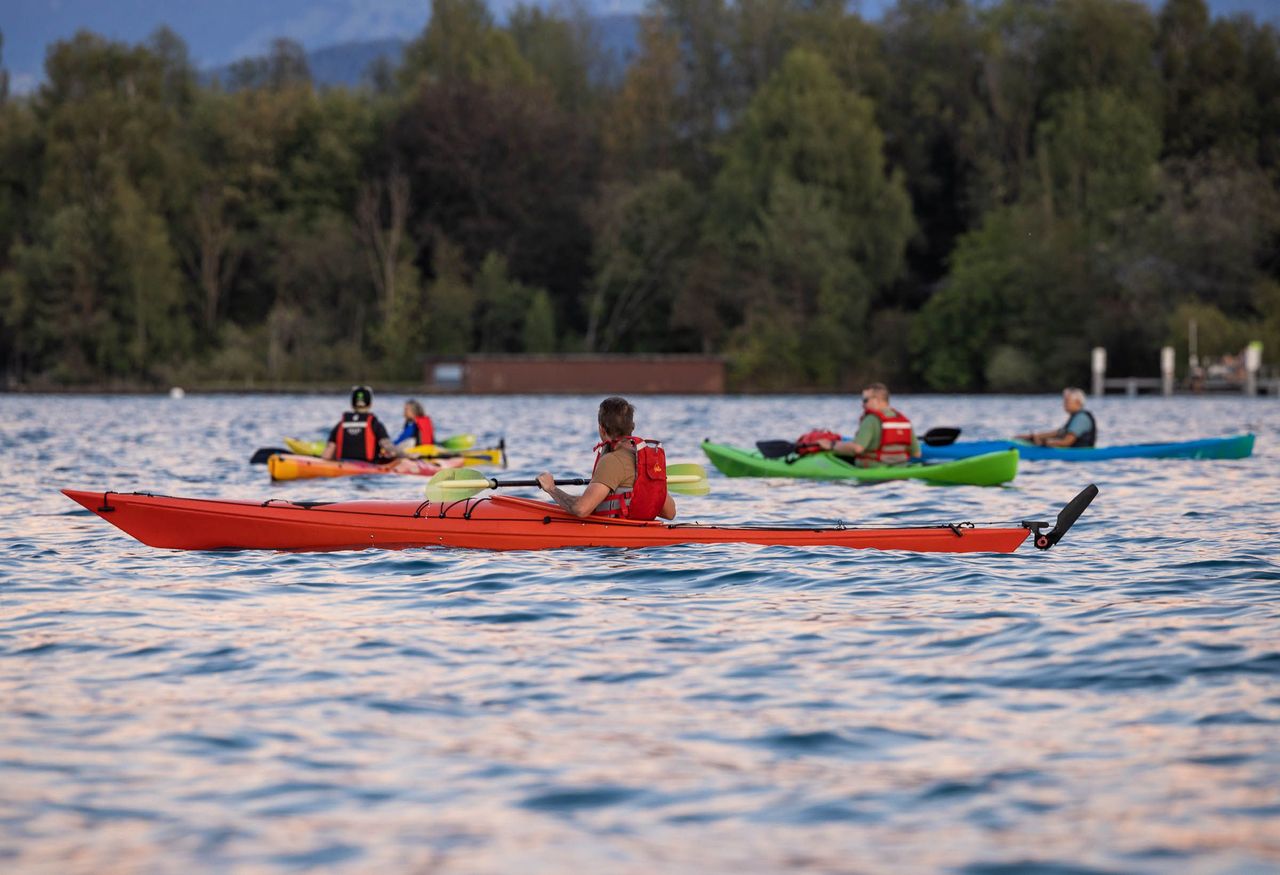
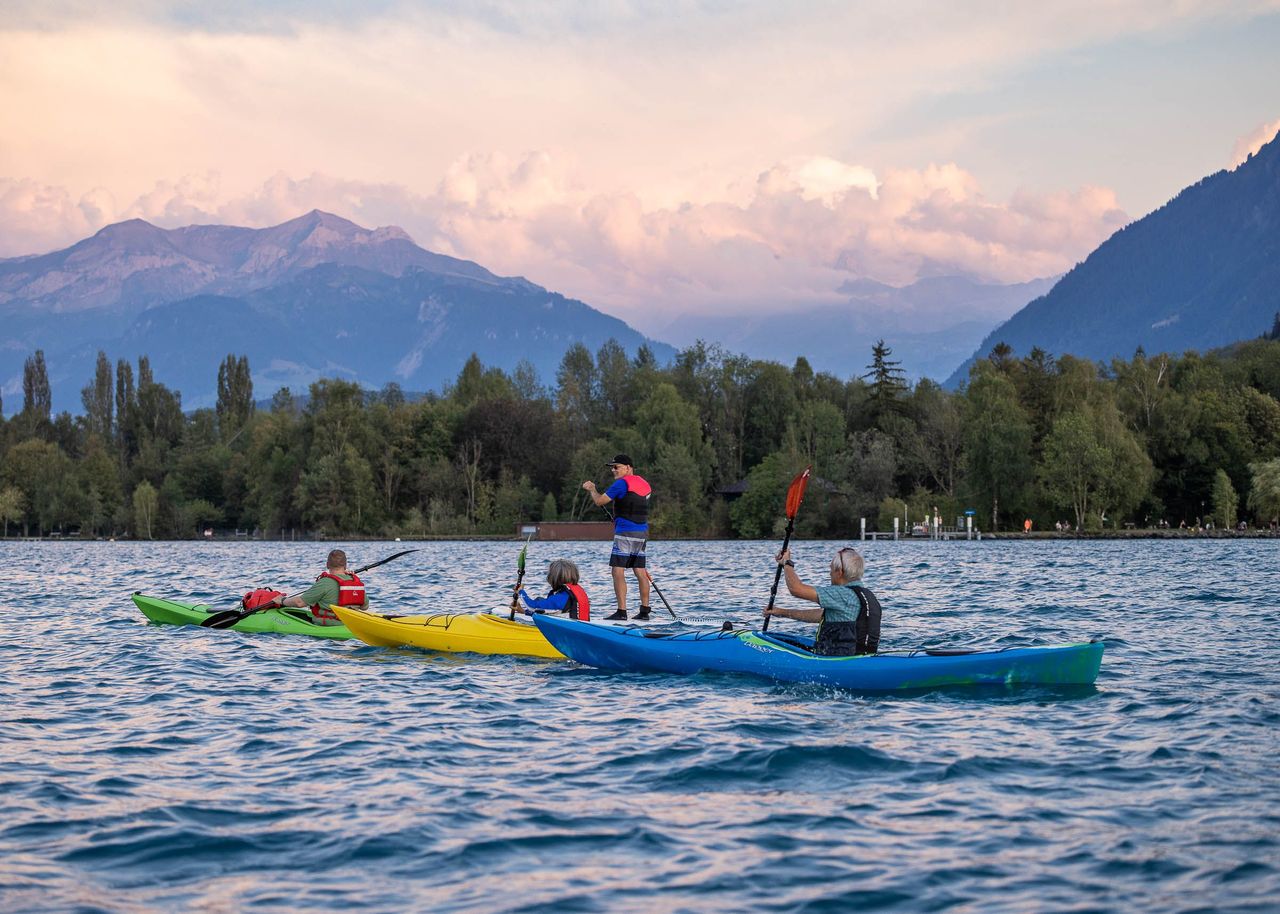
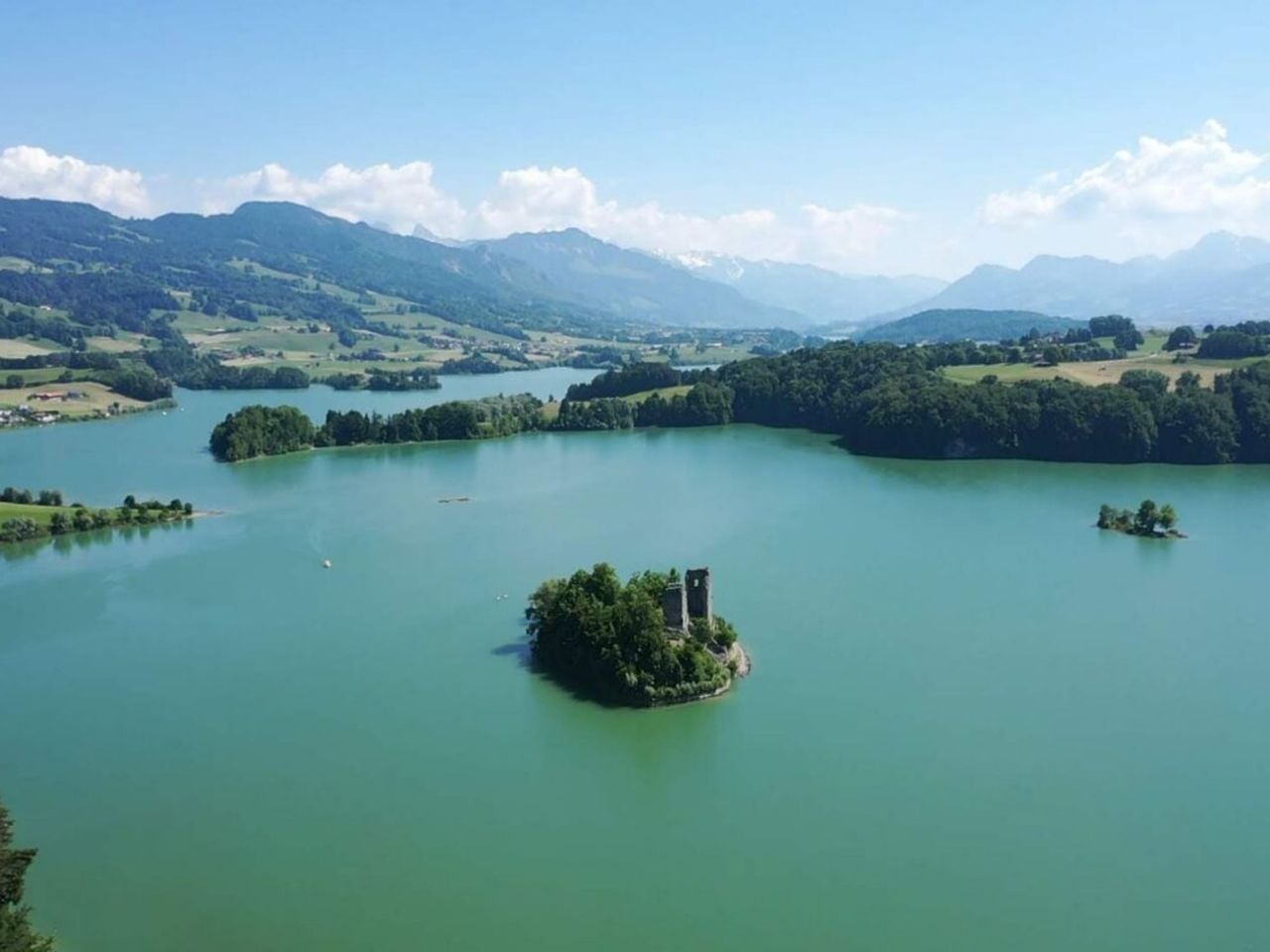
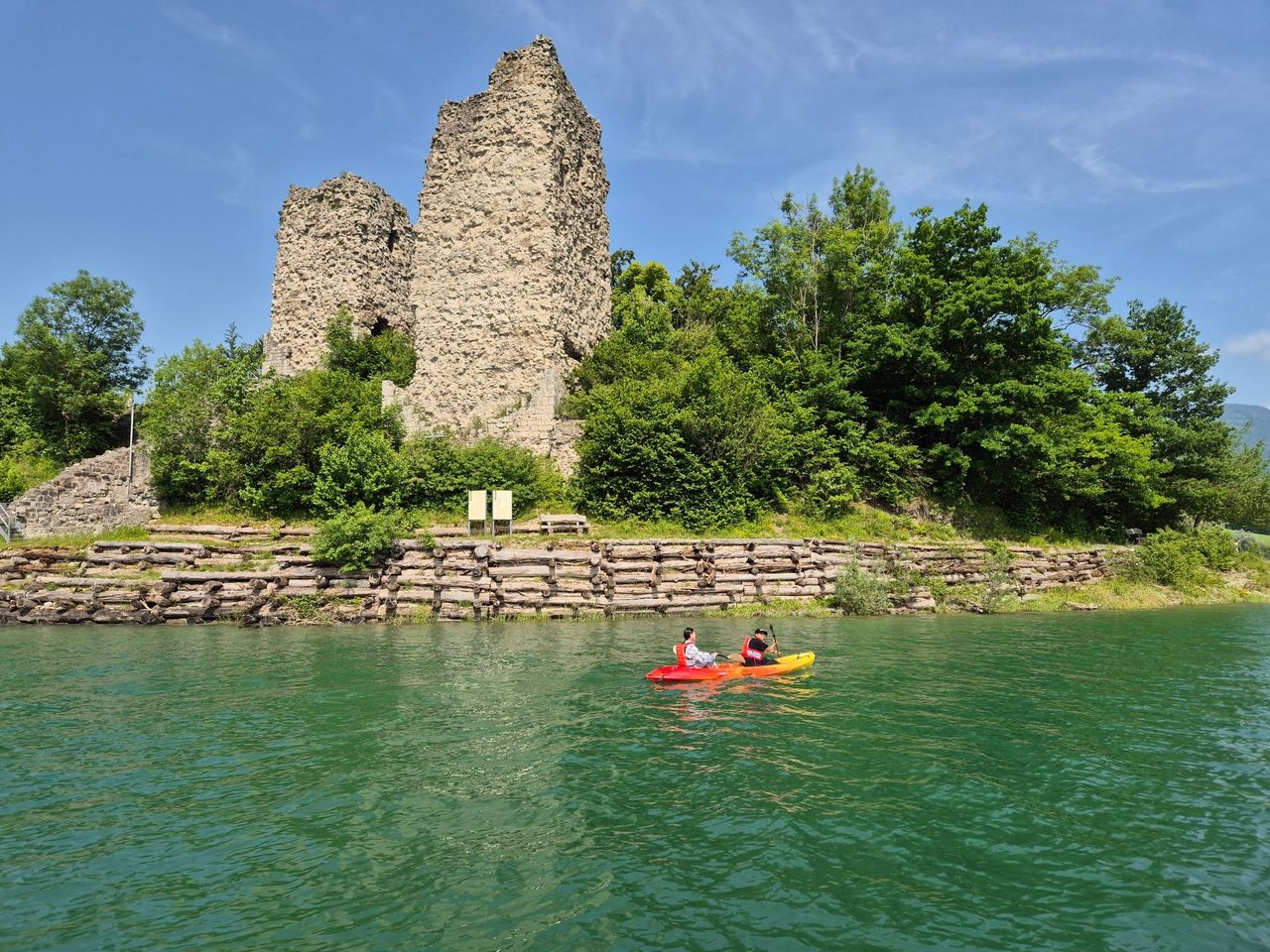
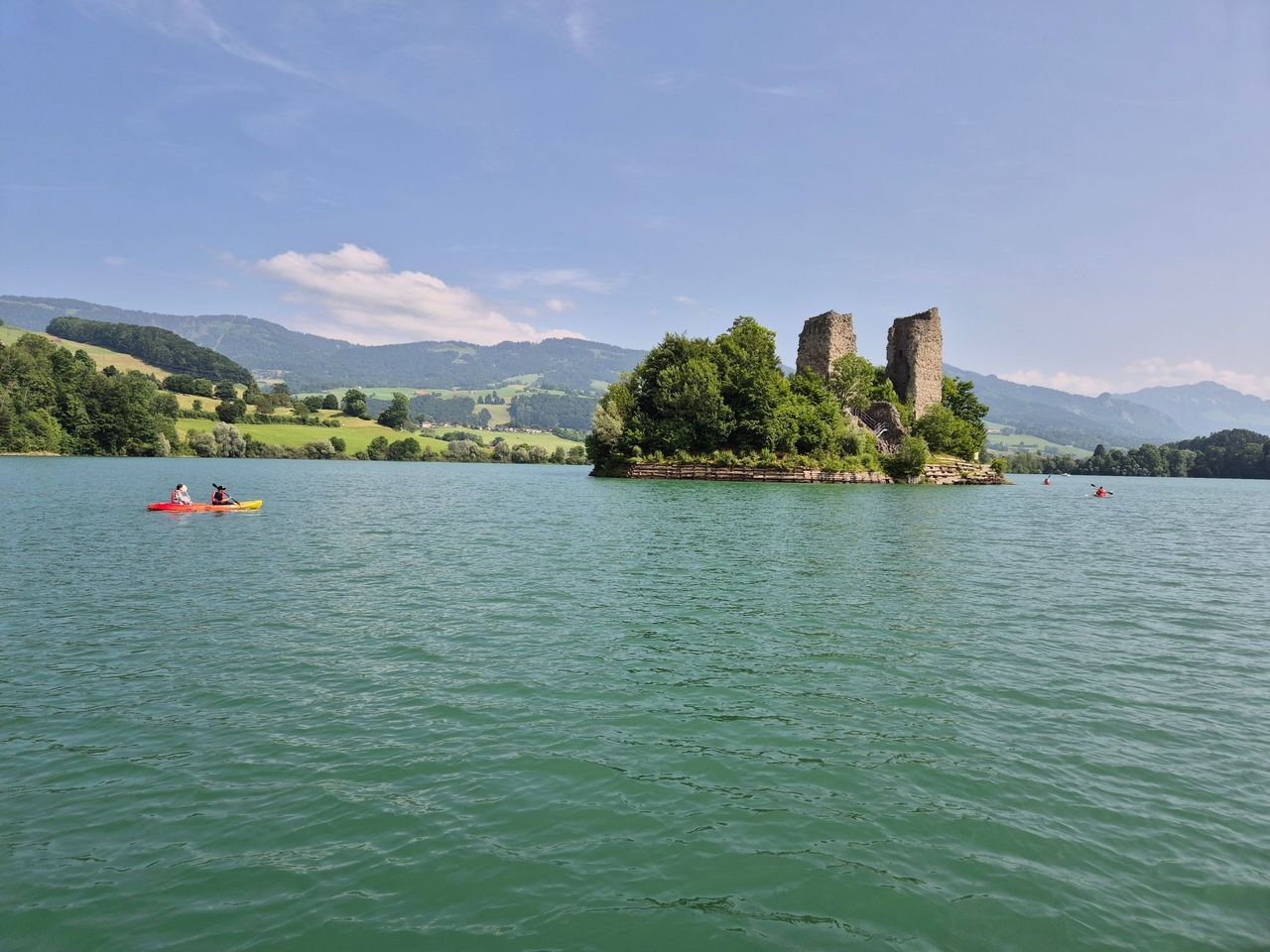
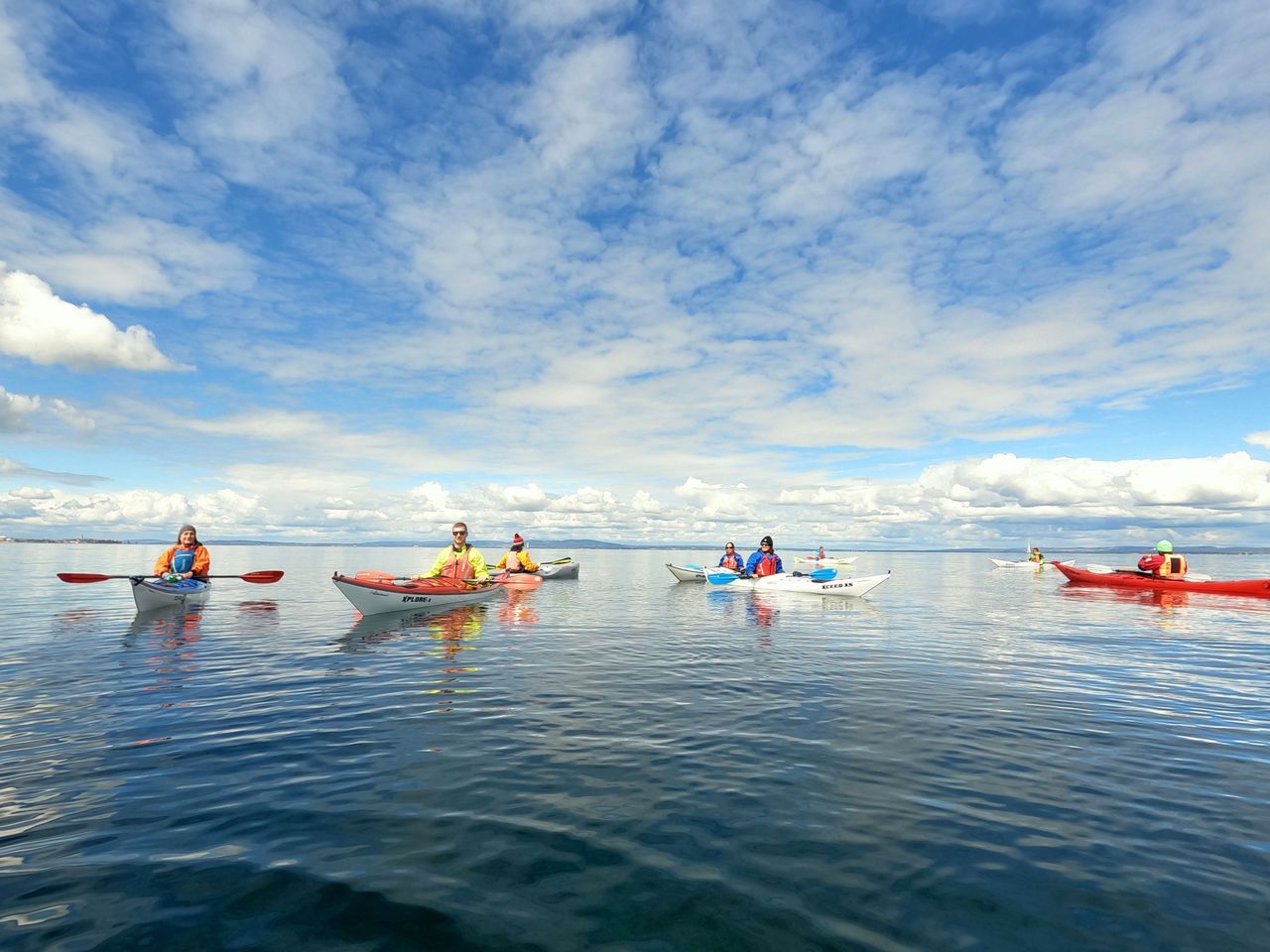
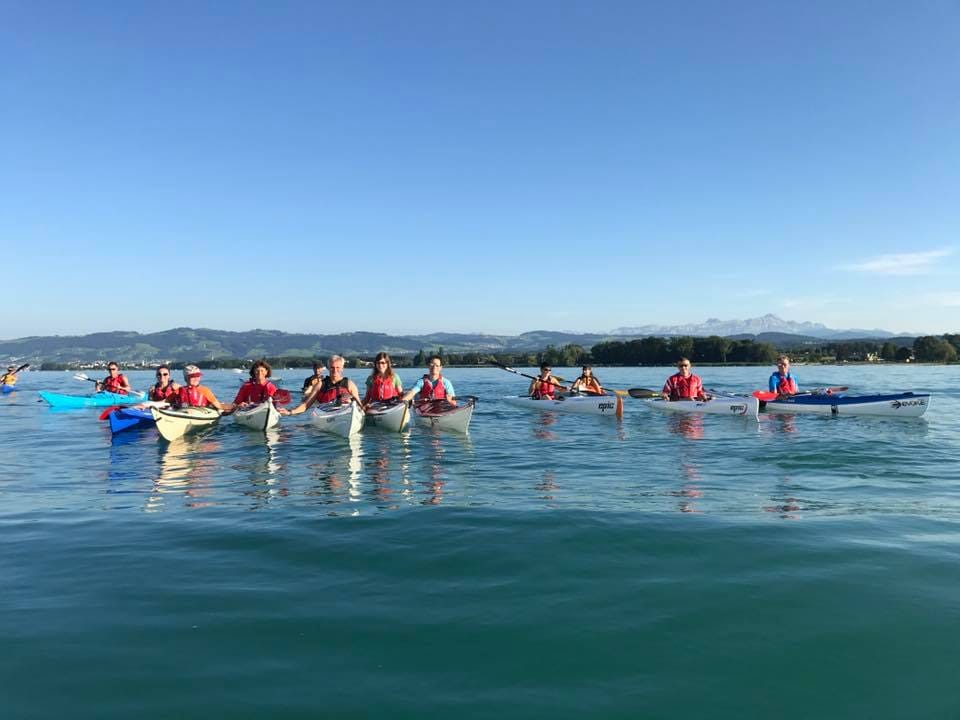
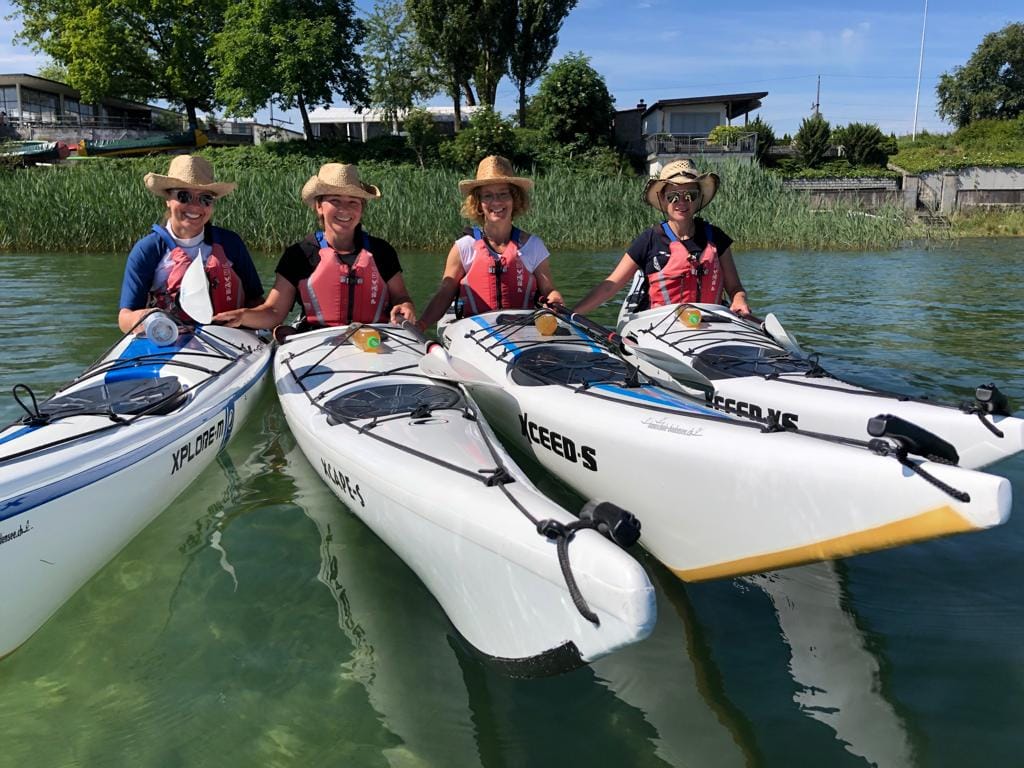
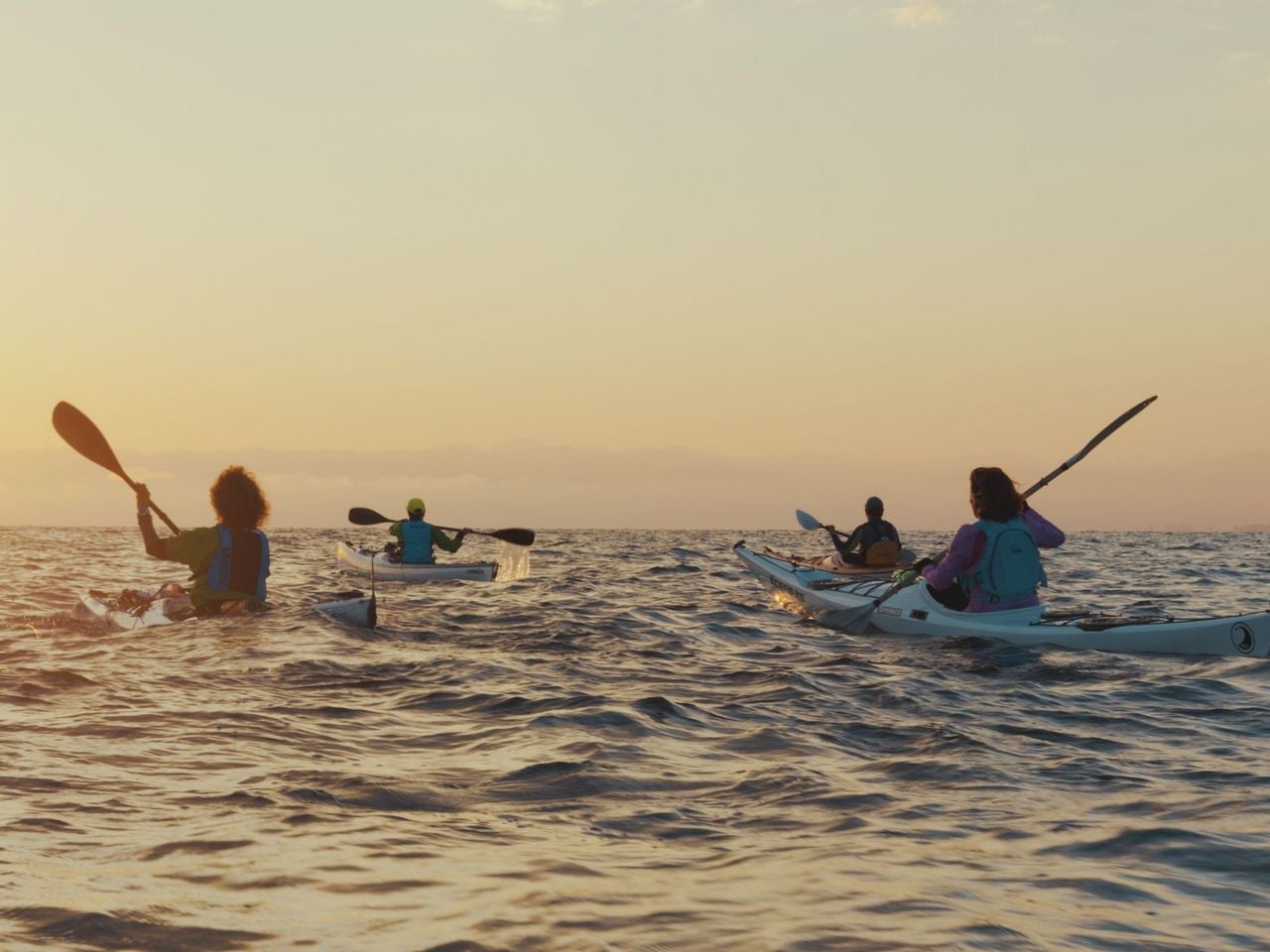
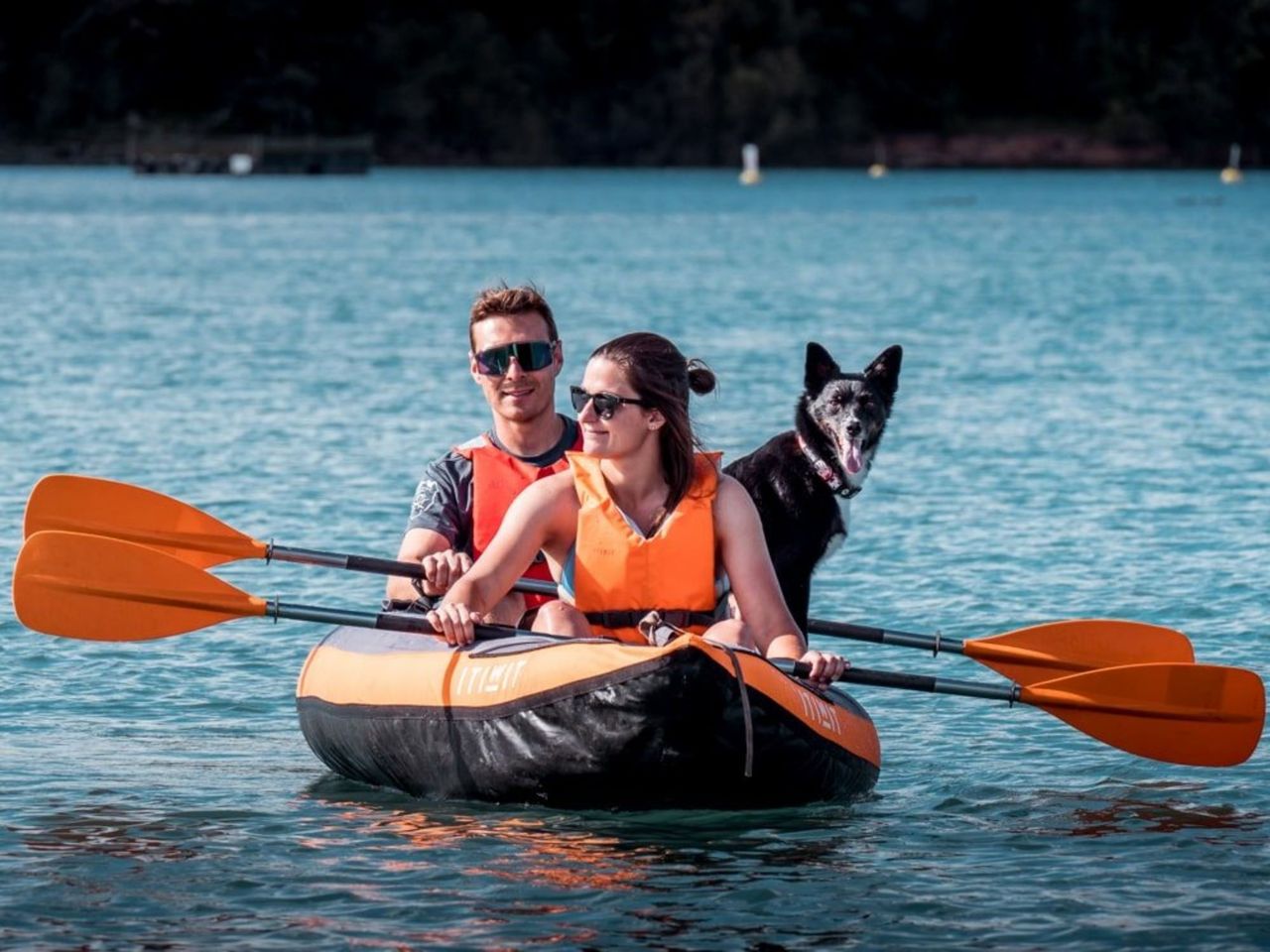
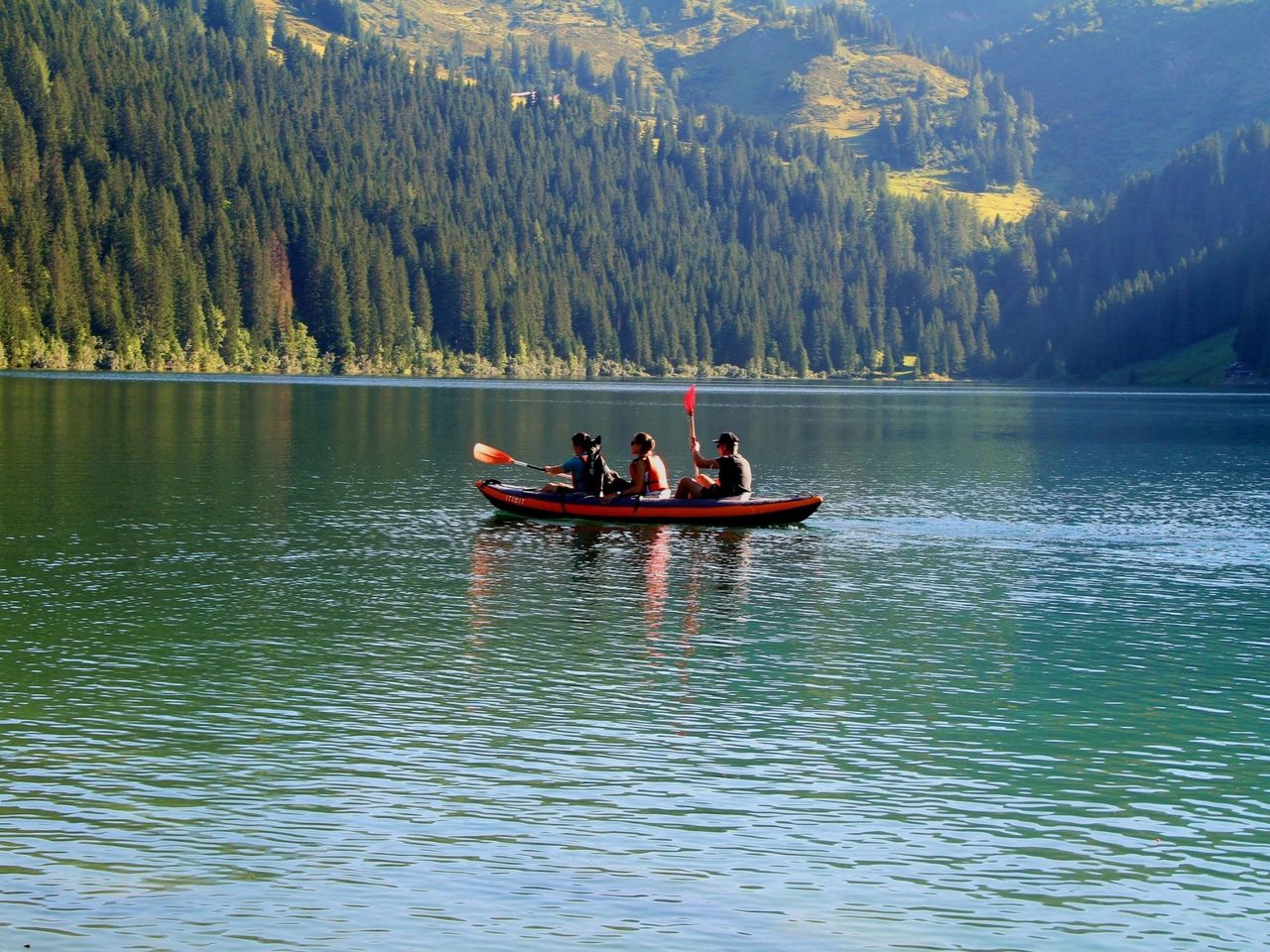
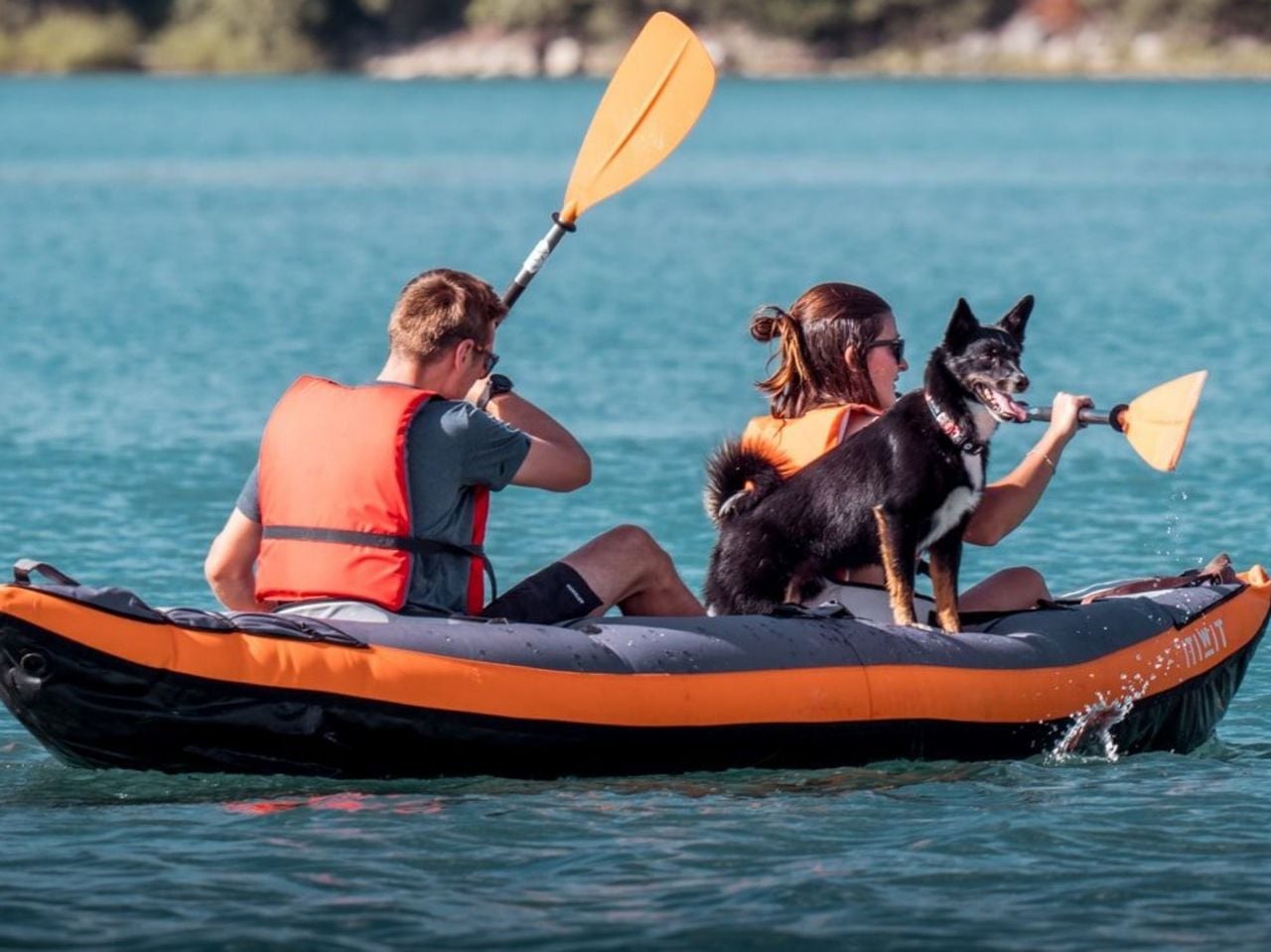
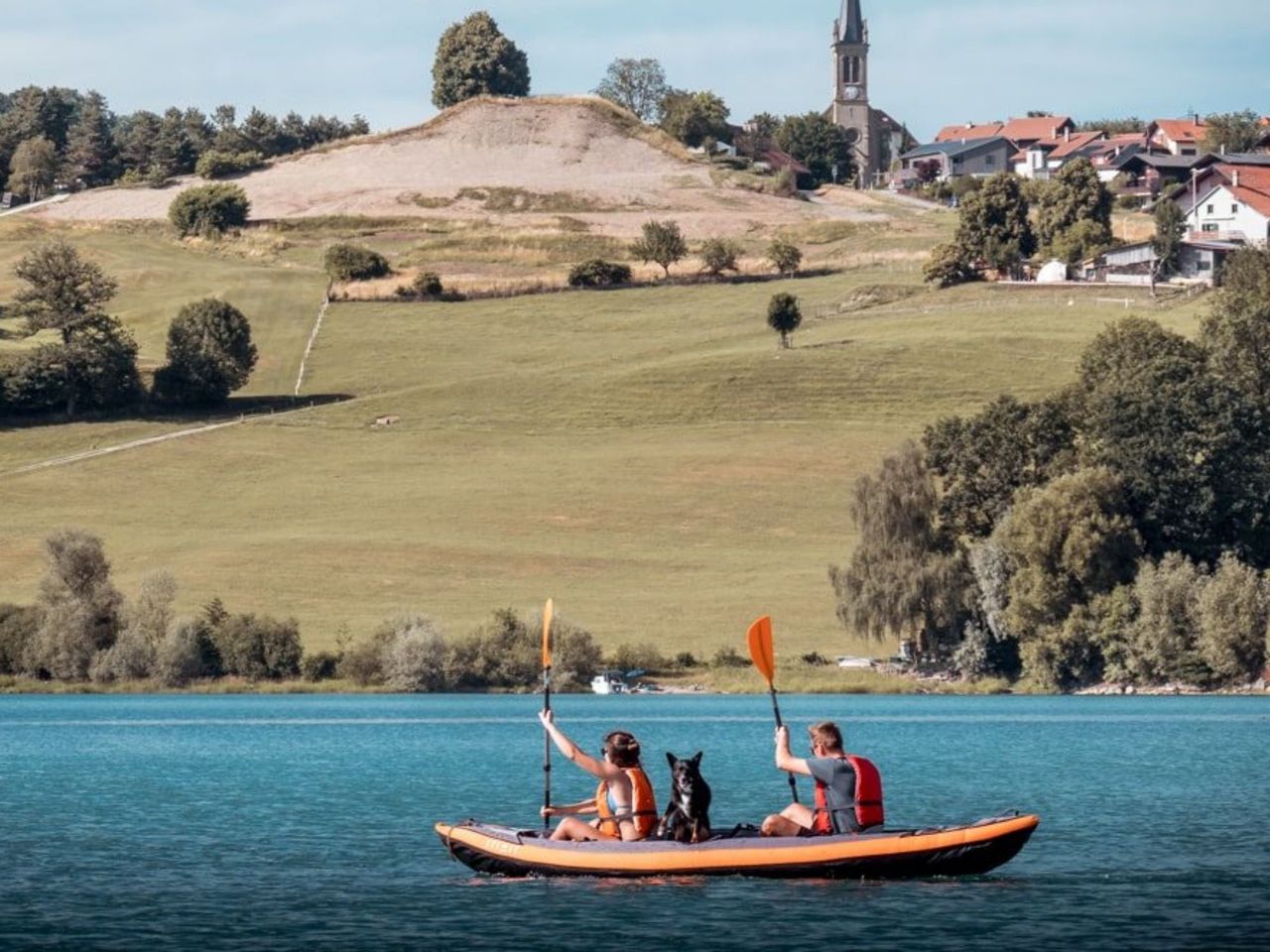
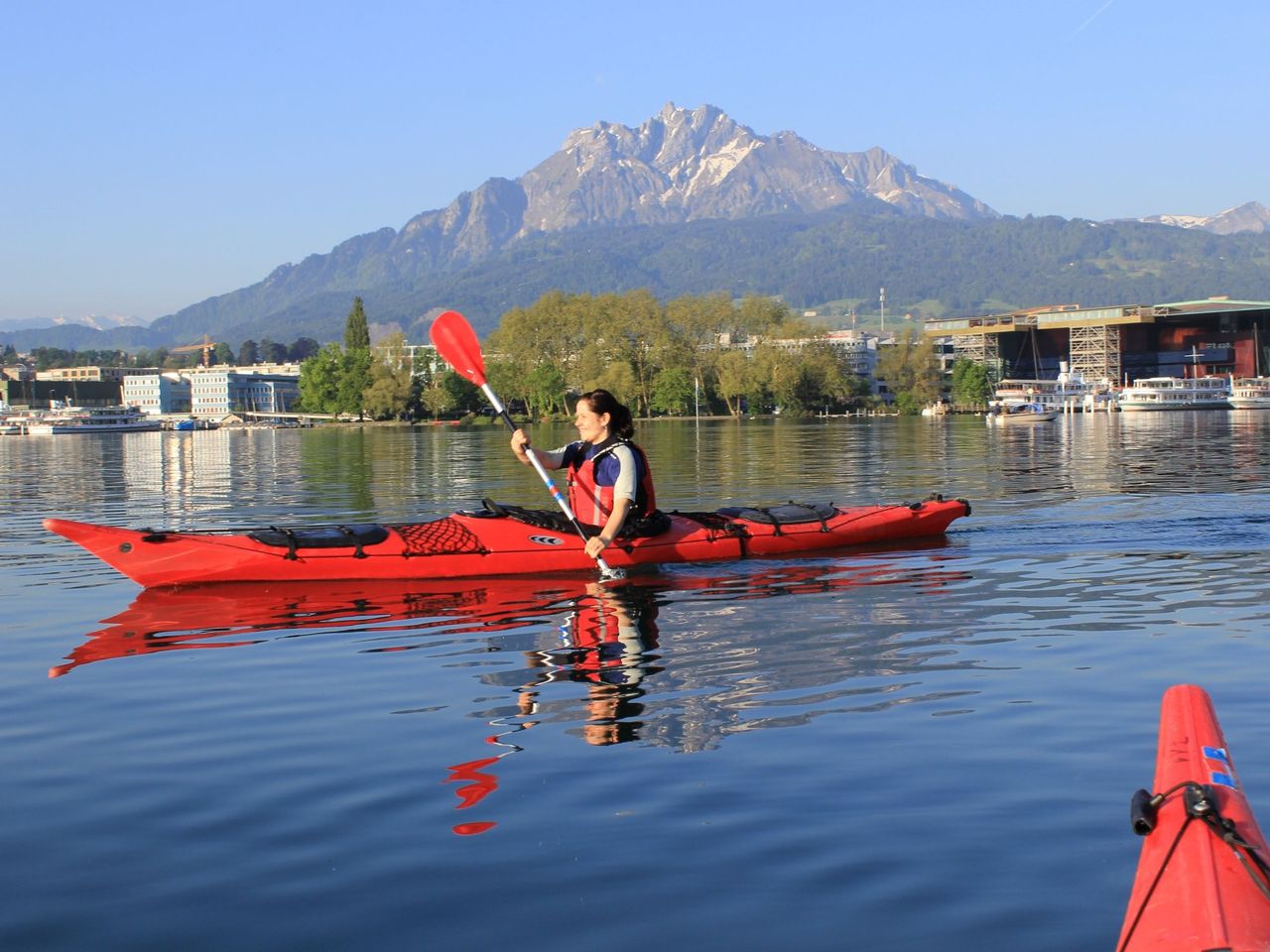
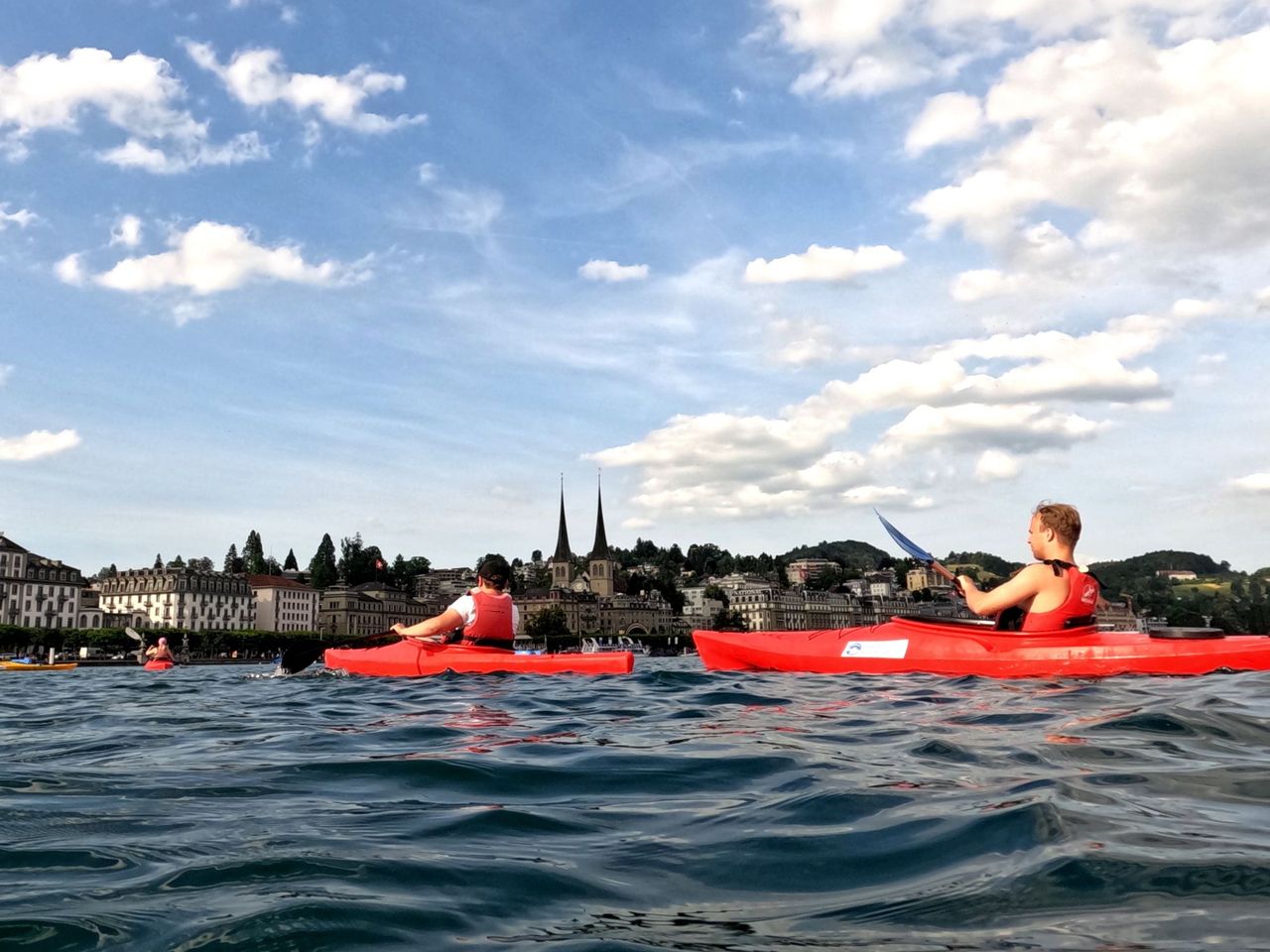
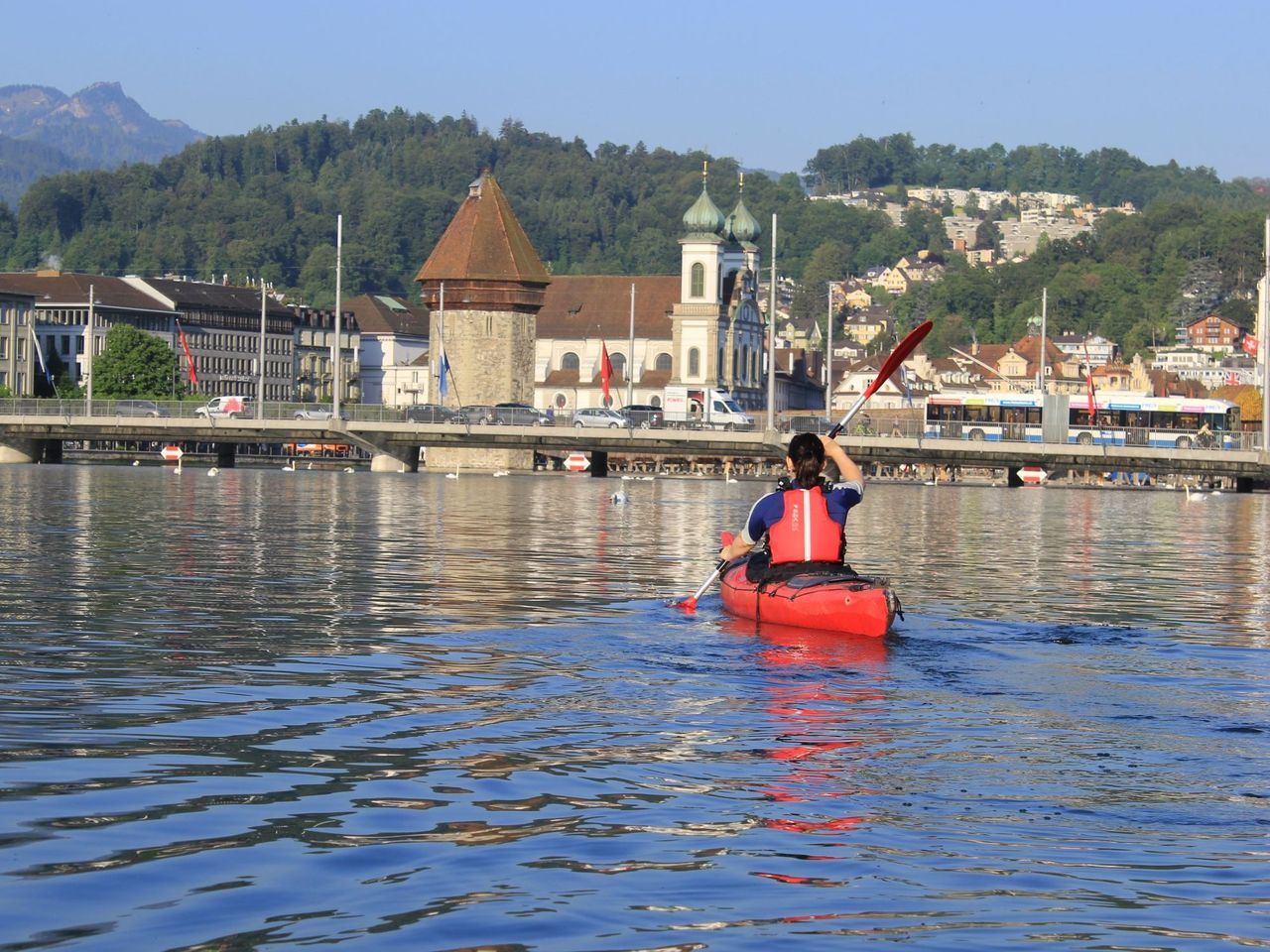
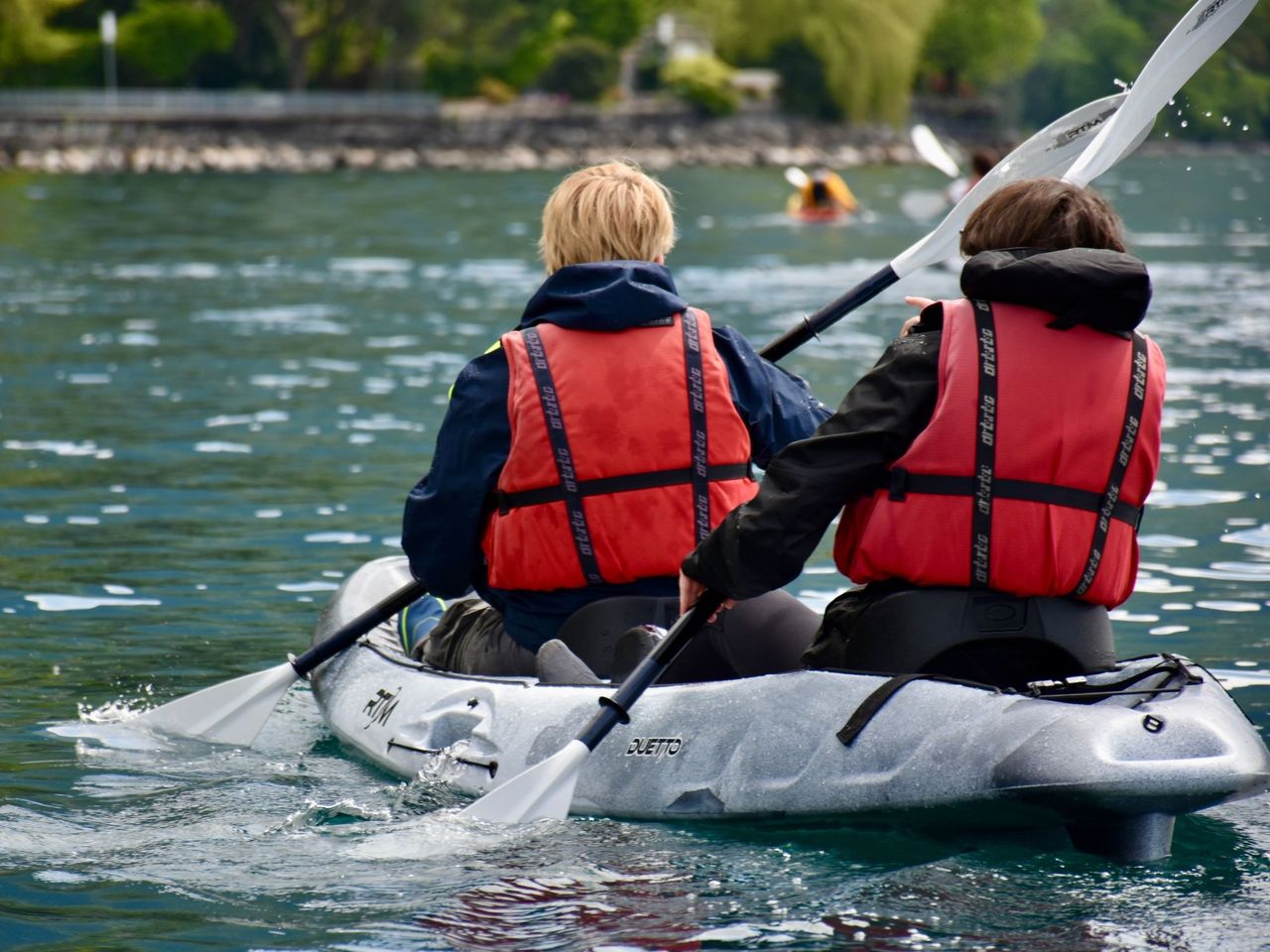
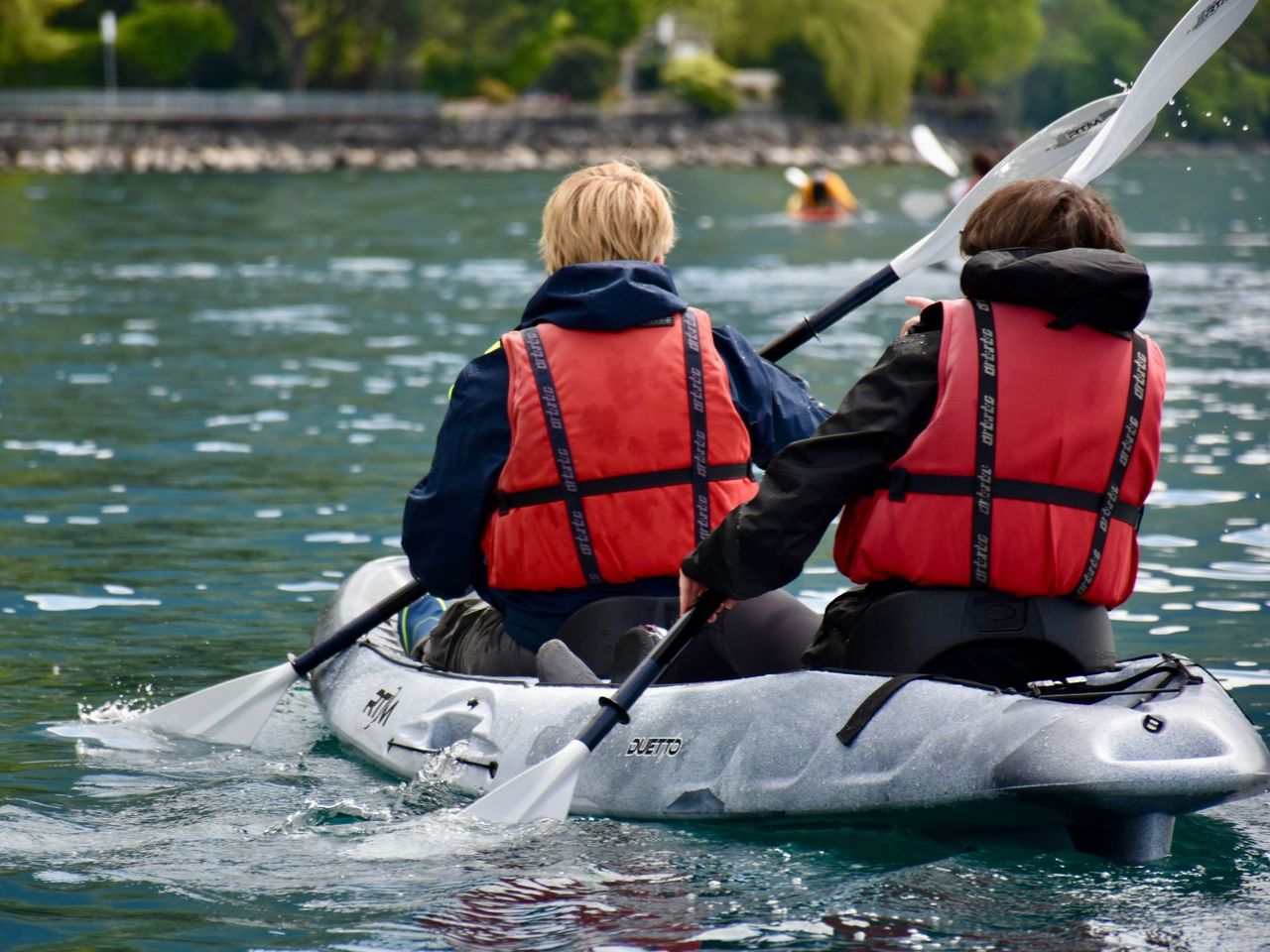
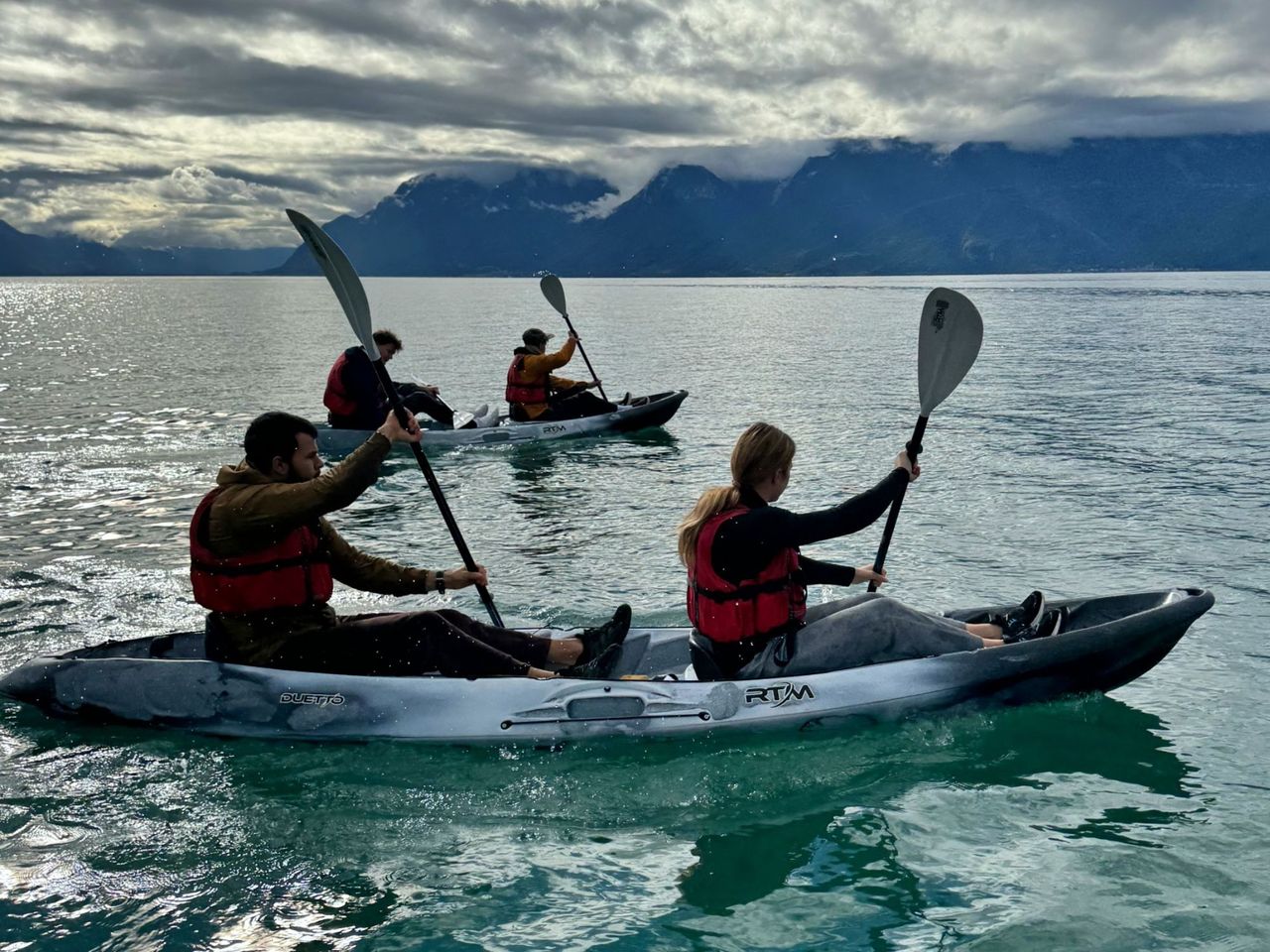
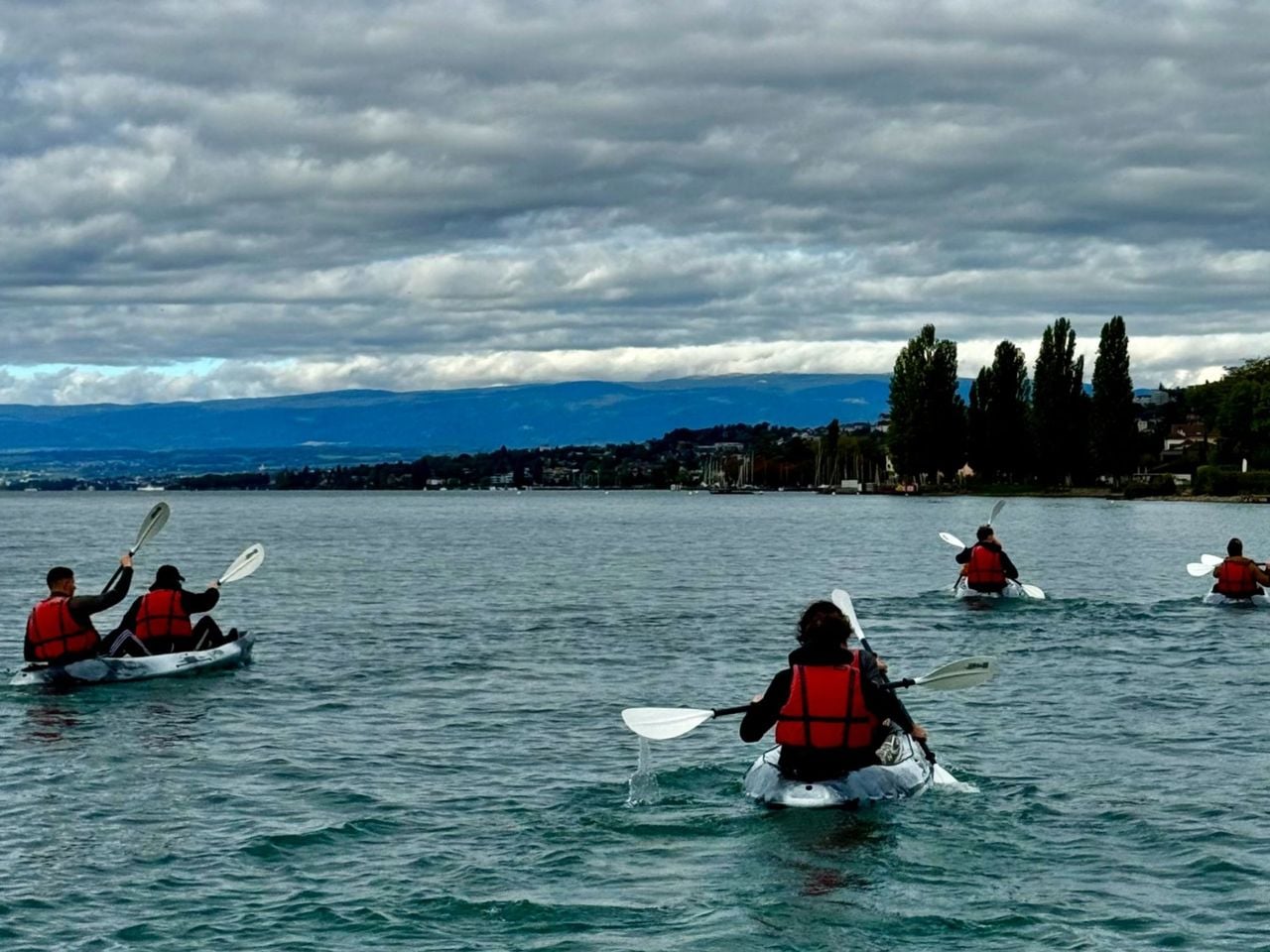
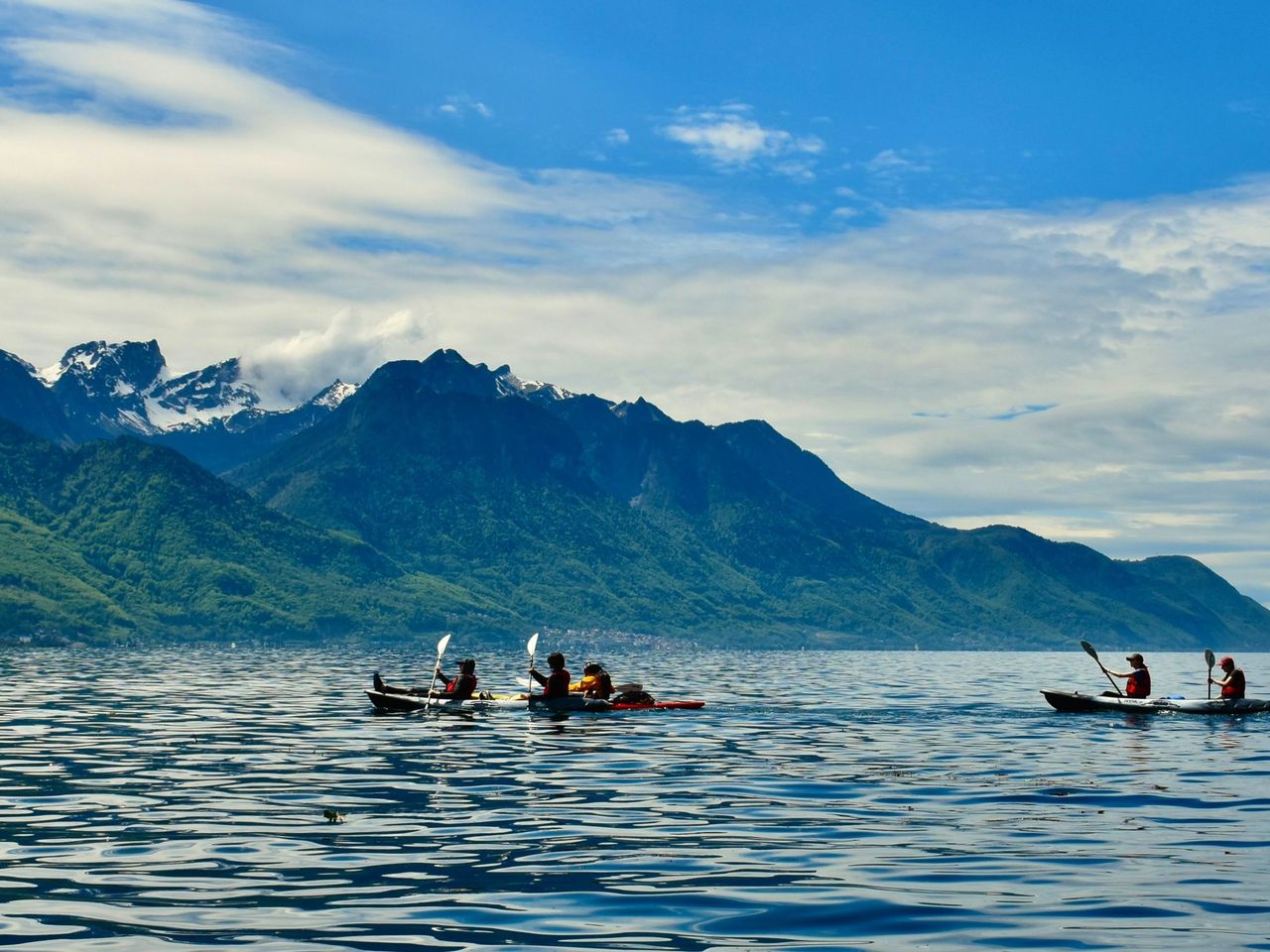
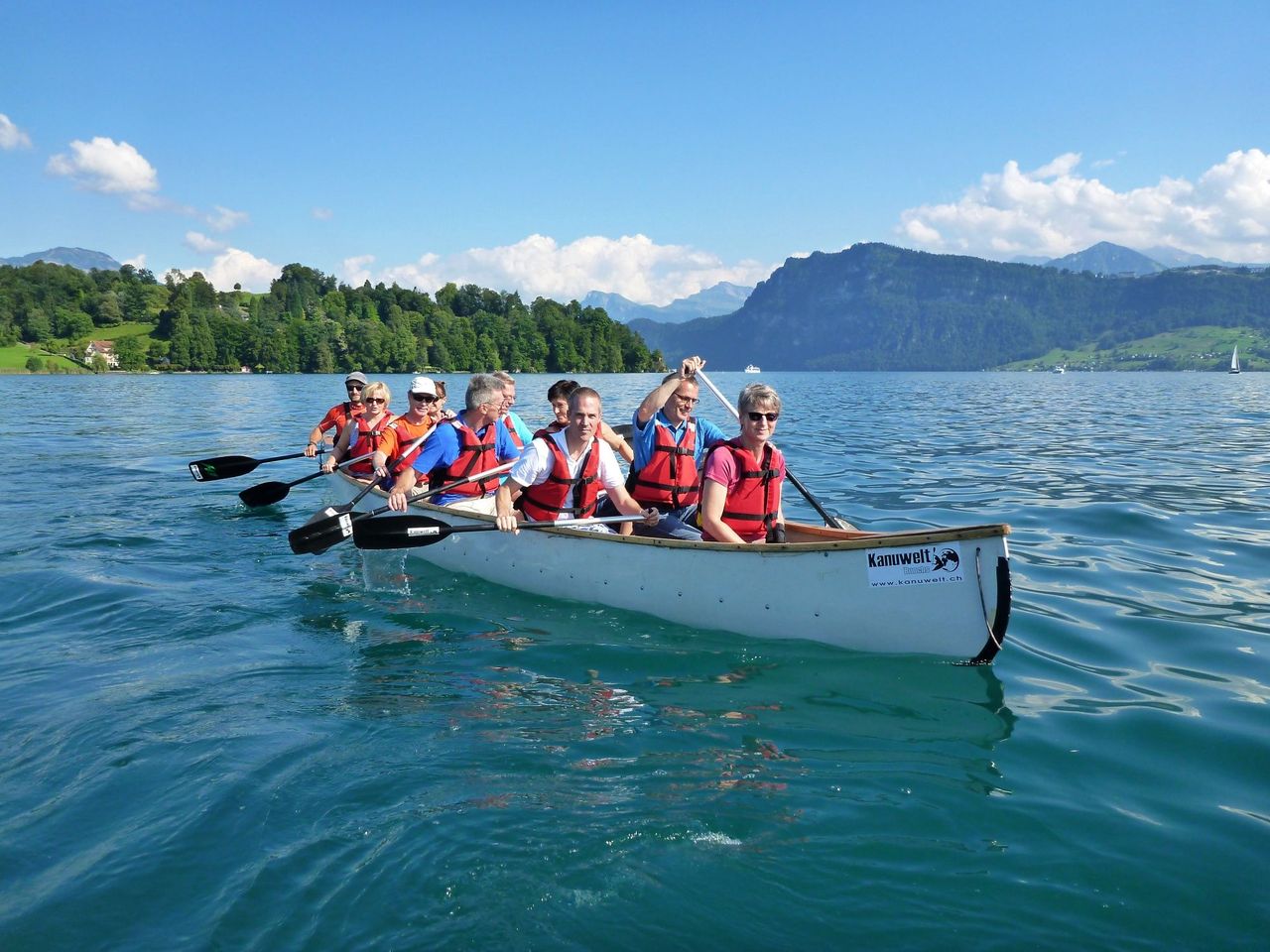
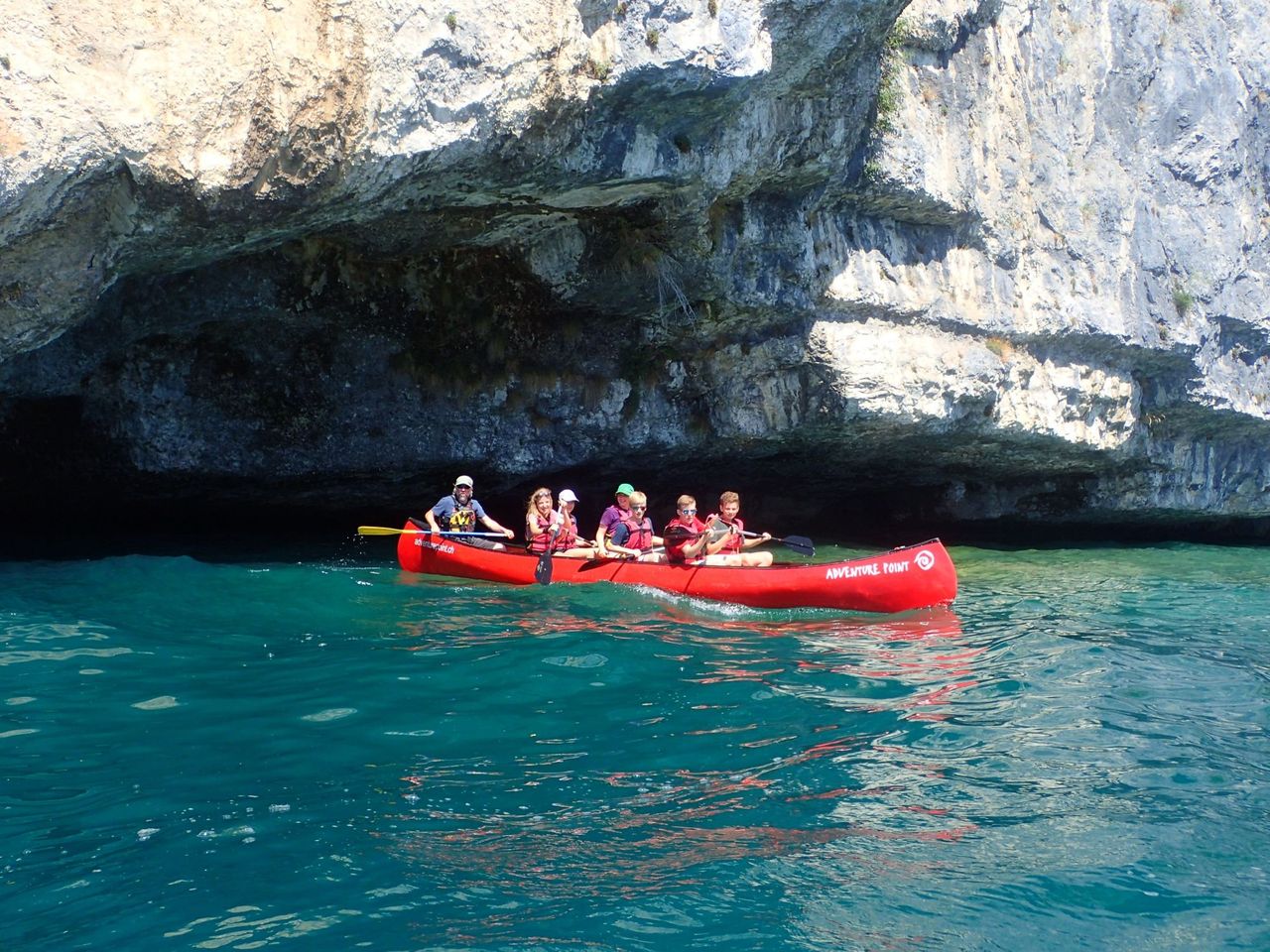
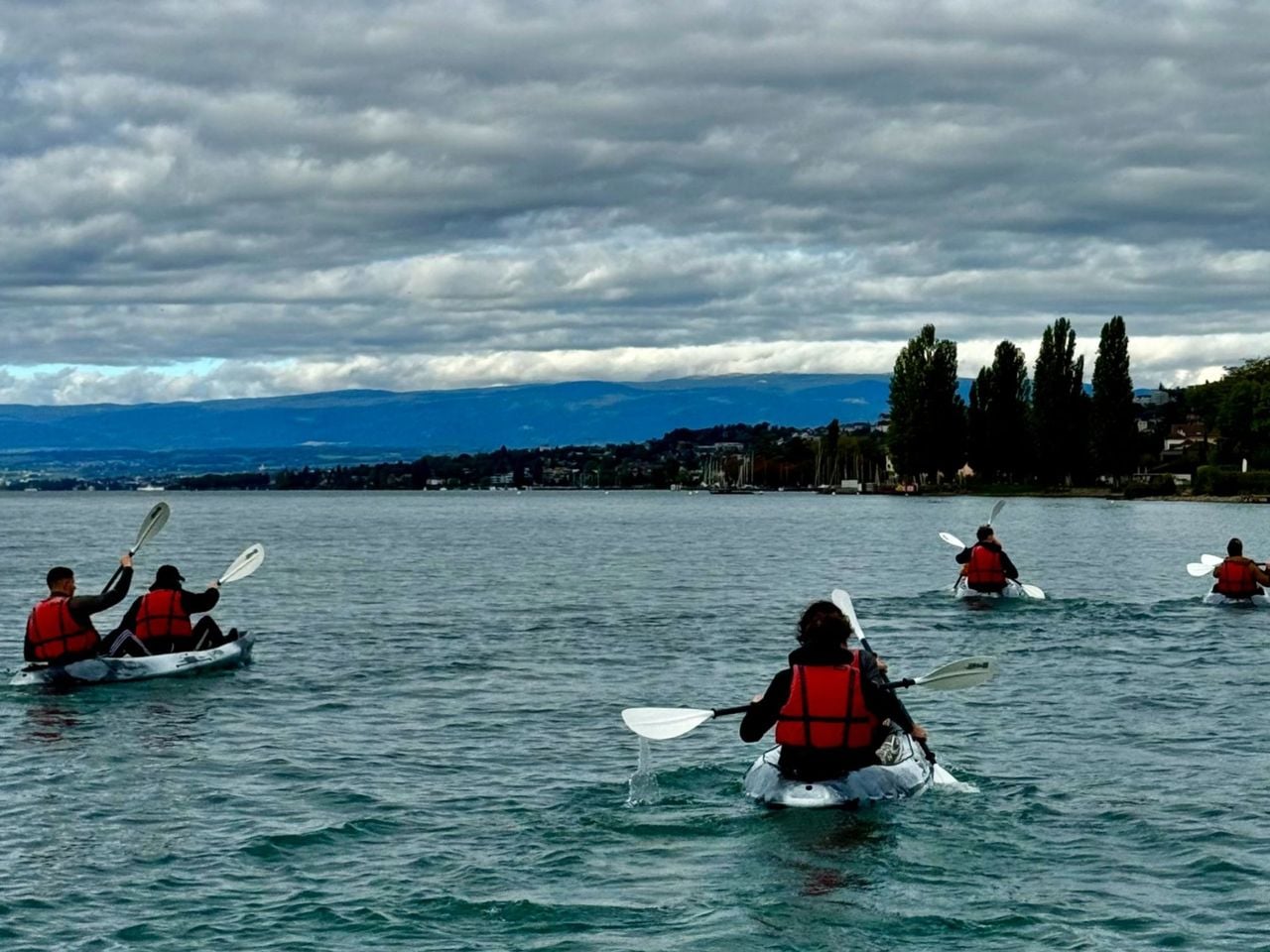
“We went as a group of 8. It was a fun experience for friends. Our guide was knowledgeable about the area, shared interesting facts and tailored the tour to our abilities.”
Kayla
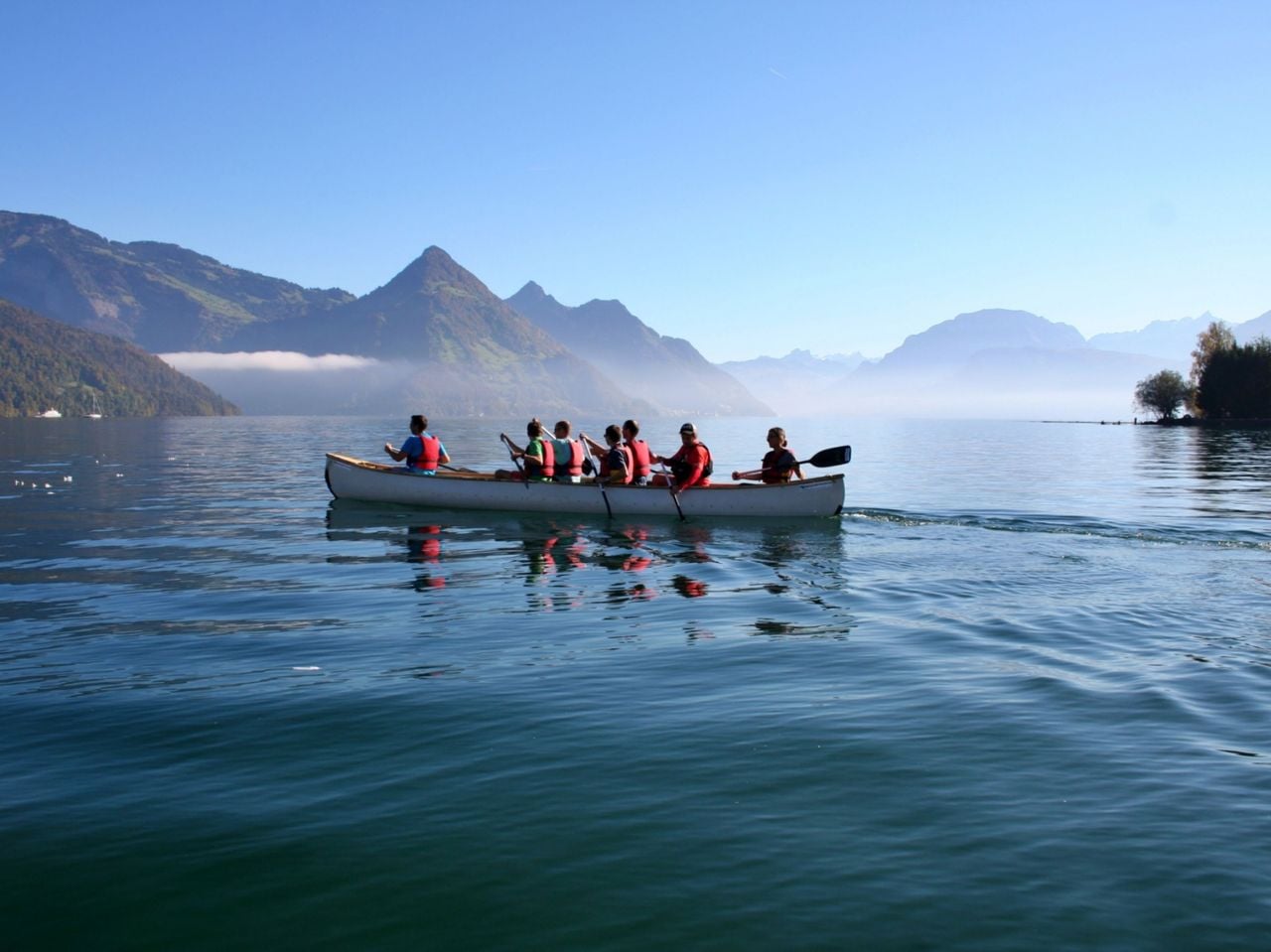
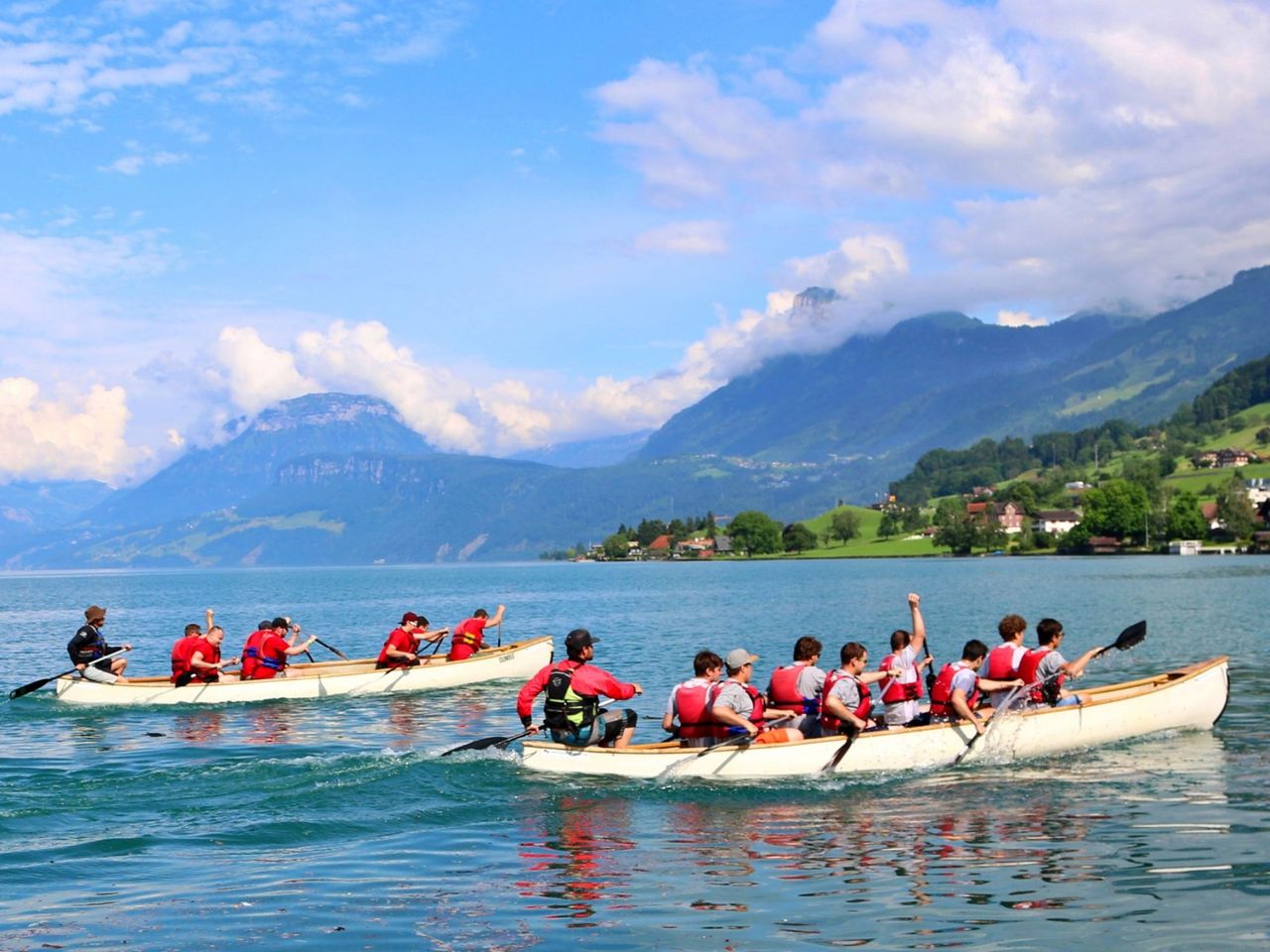
on Team event in a large canoe from Buochs
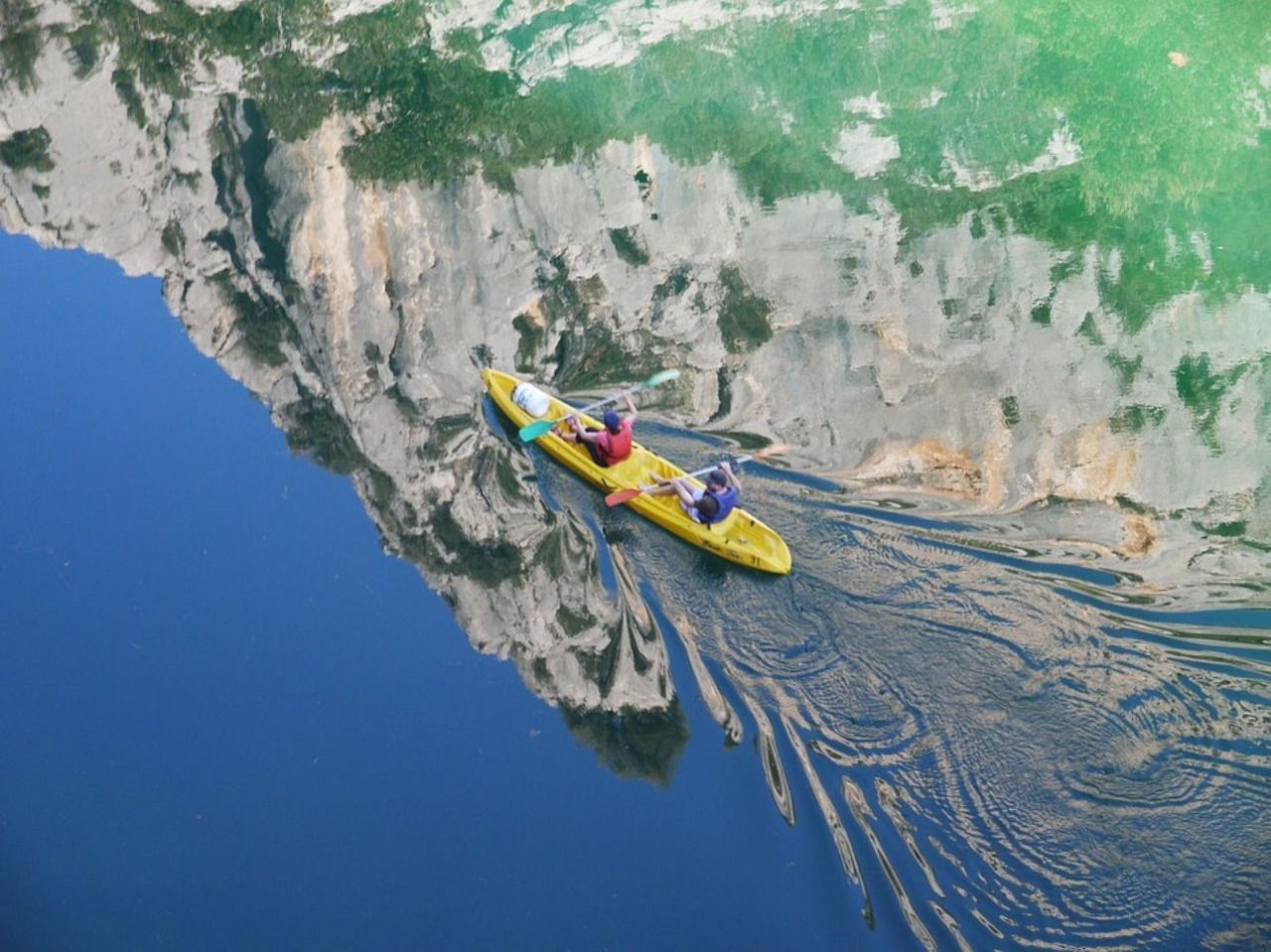
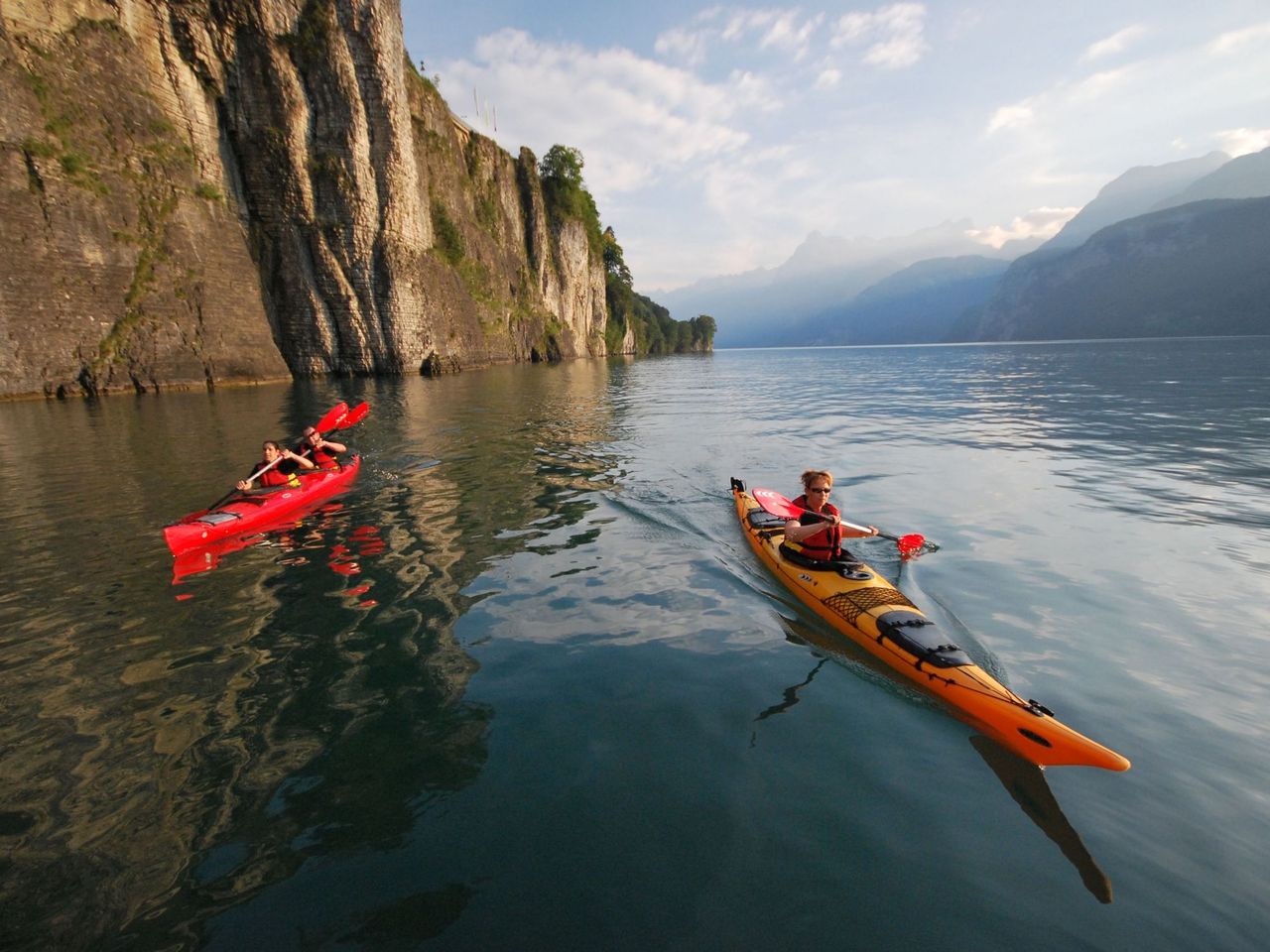
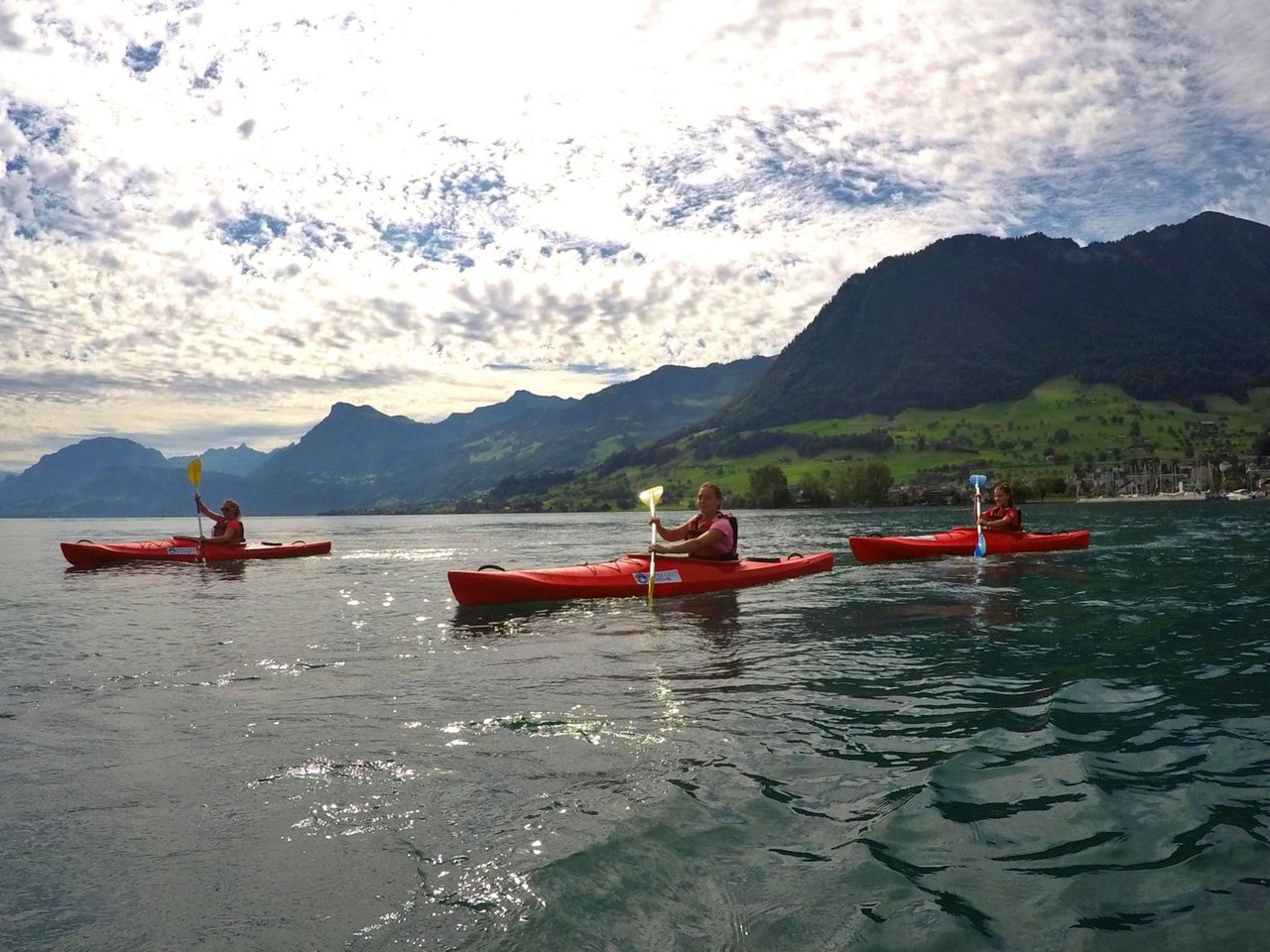
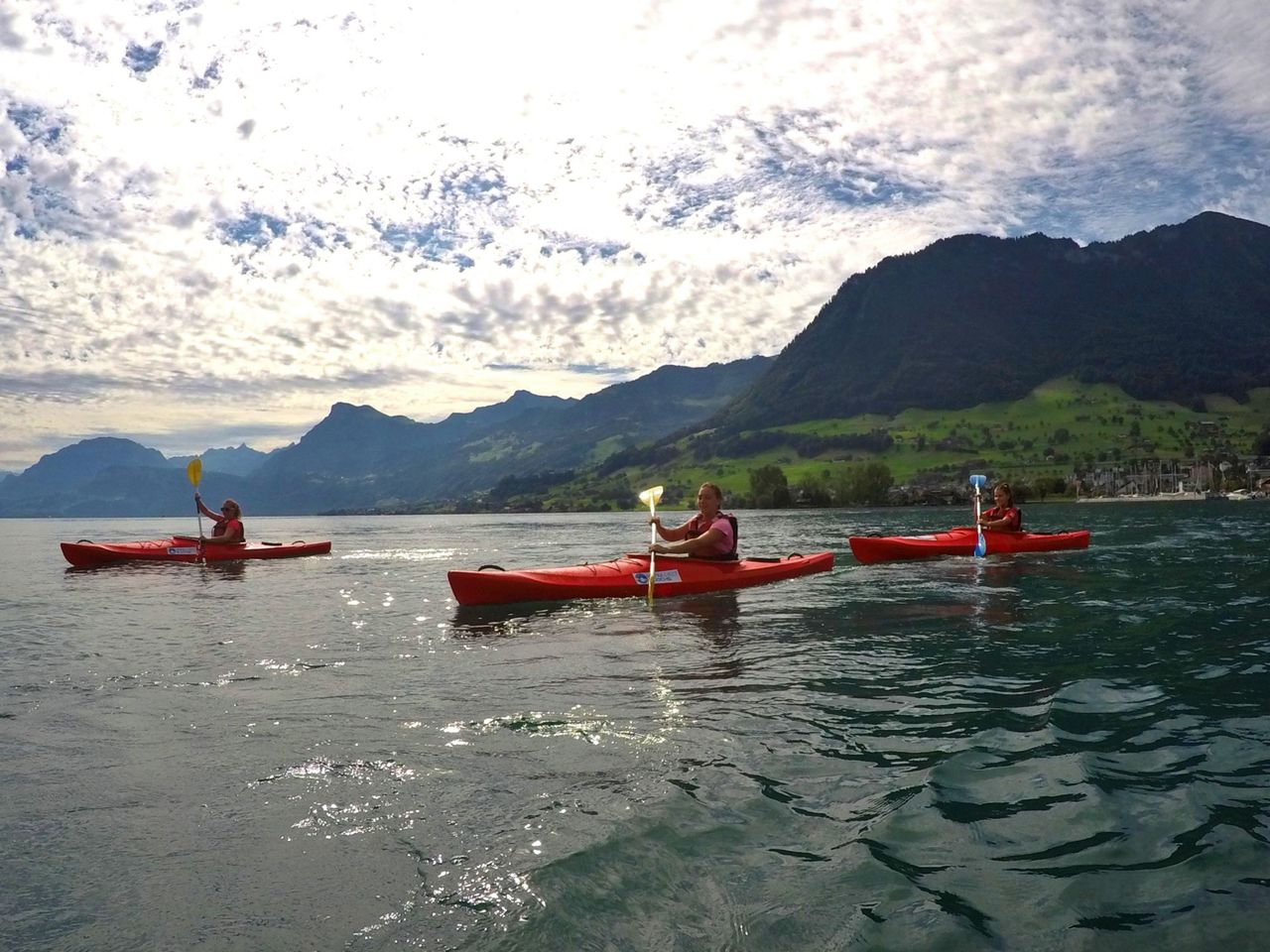
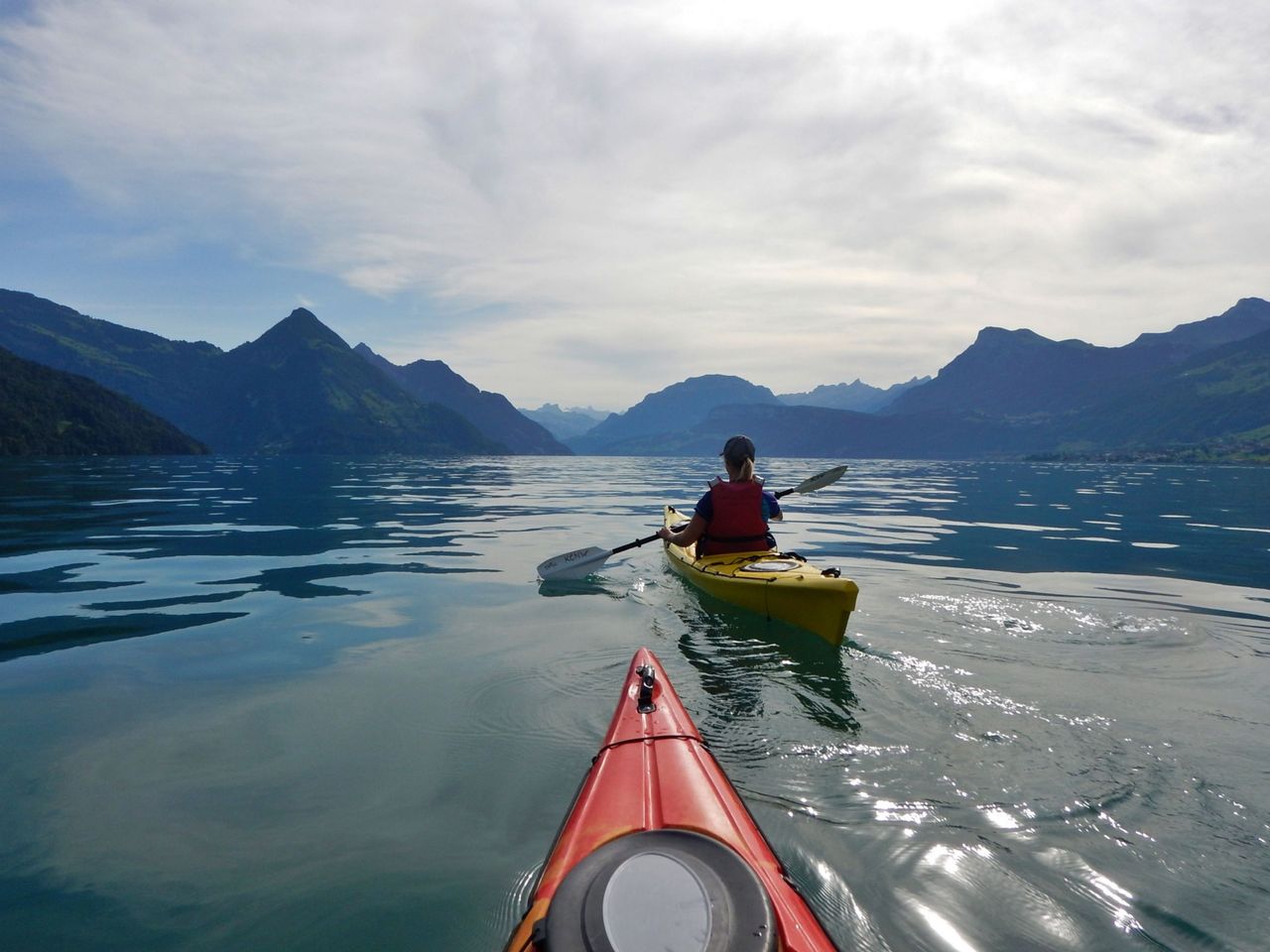
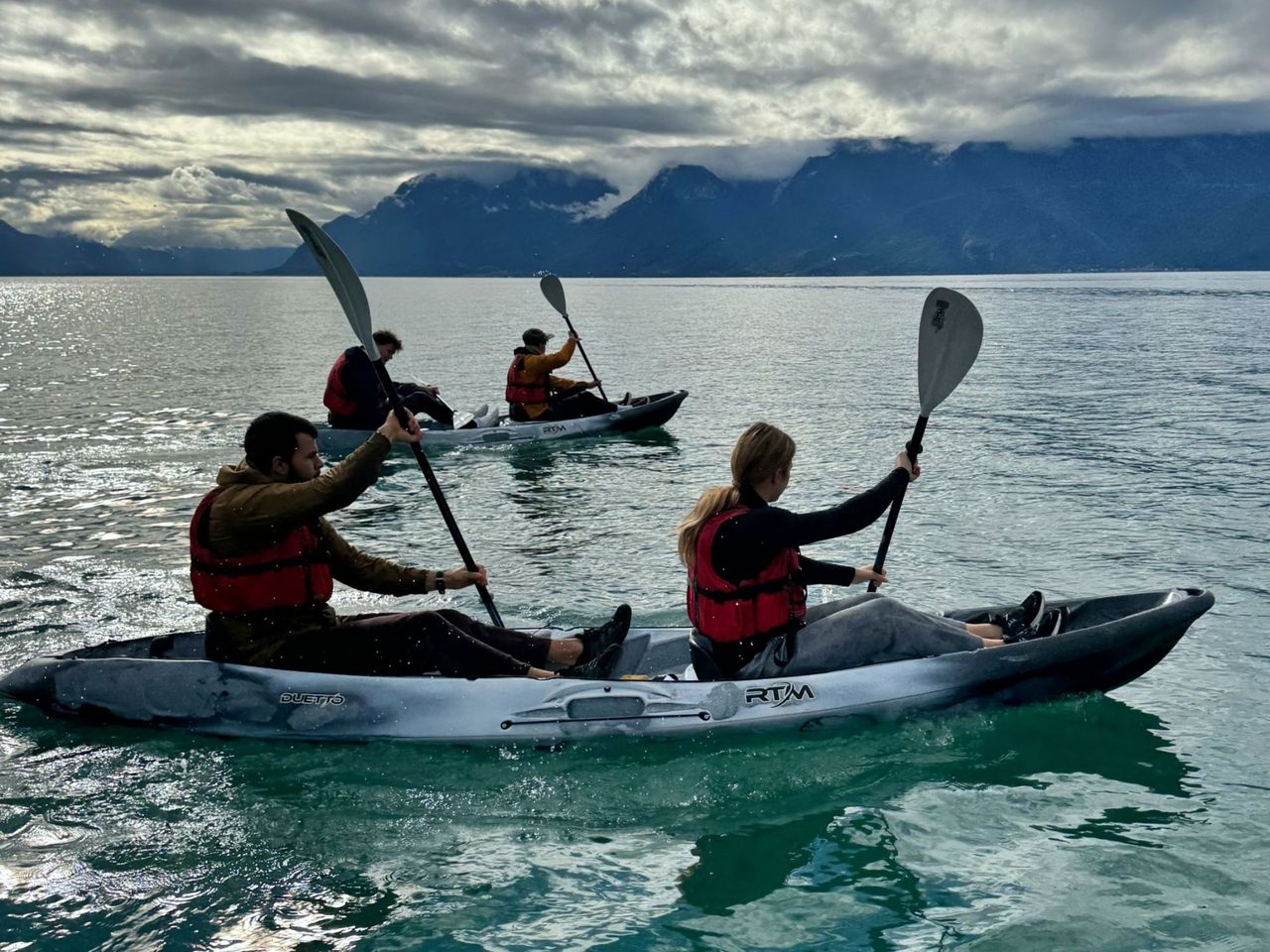
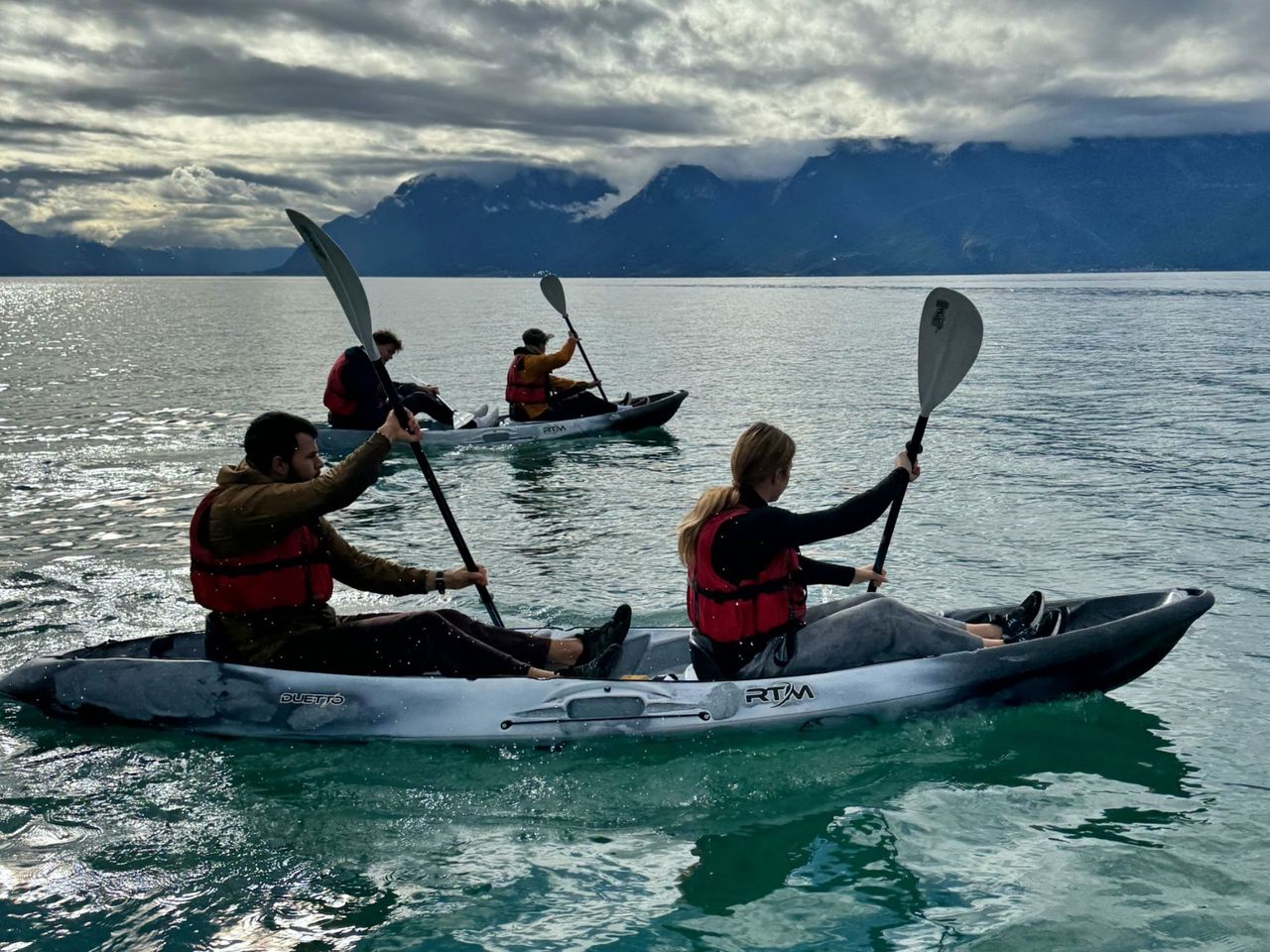
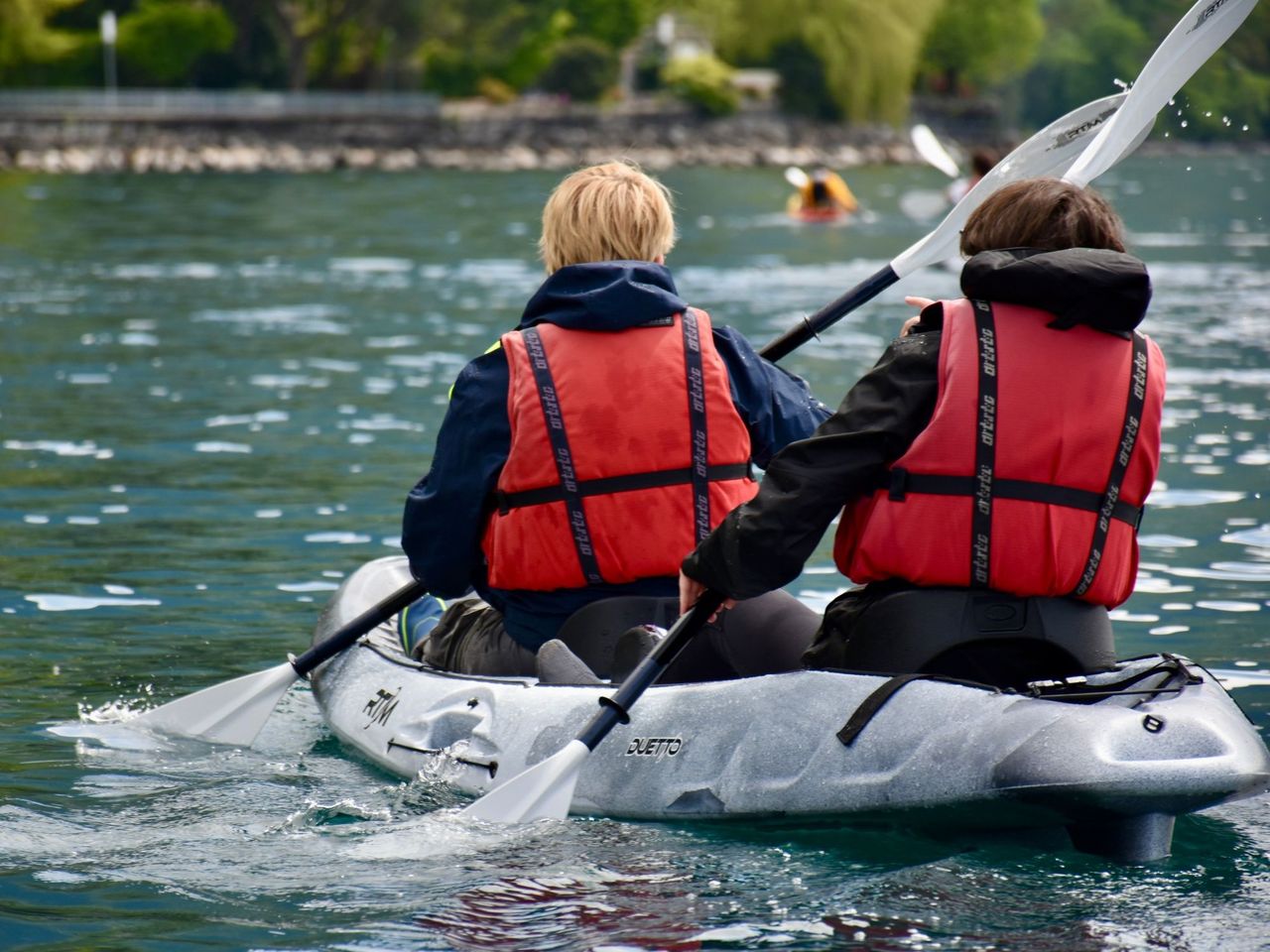
Book your next kayak tour. The choice is yours. You can enjoy the surrounding shores on calm lakes and listen to the splashing of the paddle, or you can conquer raging rivers and rapids. In the water castle of Europe you actively experience the wild nature of Switzerland. Discover the beauty of the Swiss waters from a different perspective, while you enjoy the peace and quiet in your kayak or the one or other adrenaline kick.
18 results
per person
from CHF 66
per person
from CHF 70
per person
from CHF 110
per person
from CHF 115
per person
from CHF 80
per person
from CHF 76
per person
from CHF 340
per person
from CHF 770
per person
from CHF 80
per person
from CHF 90
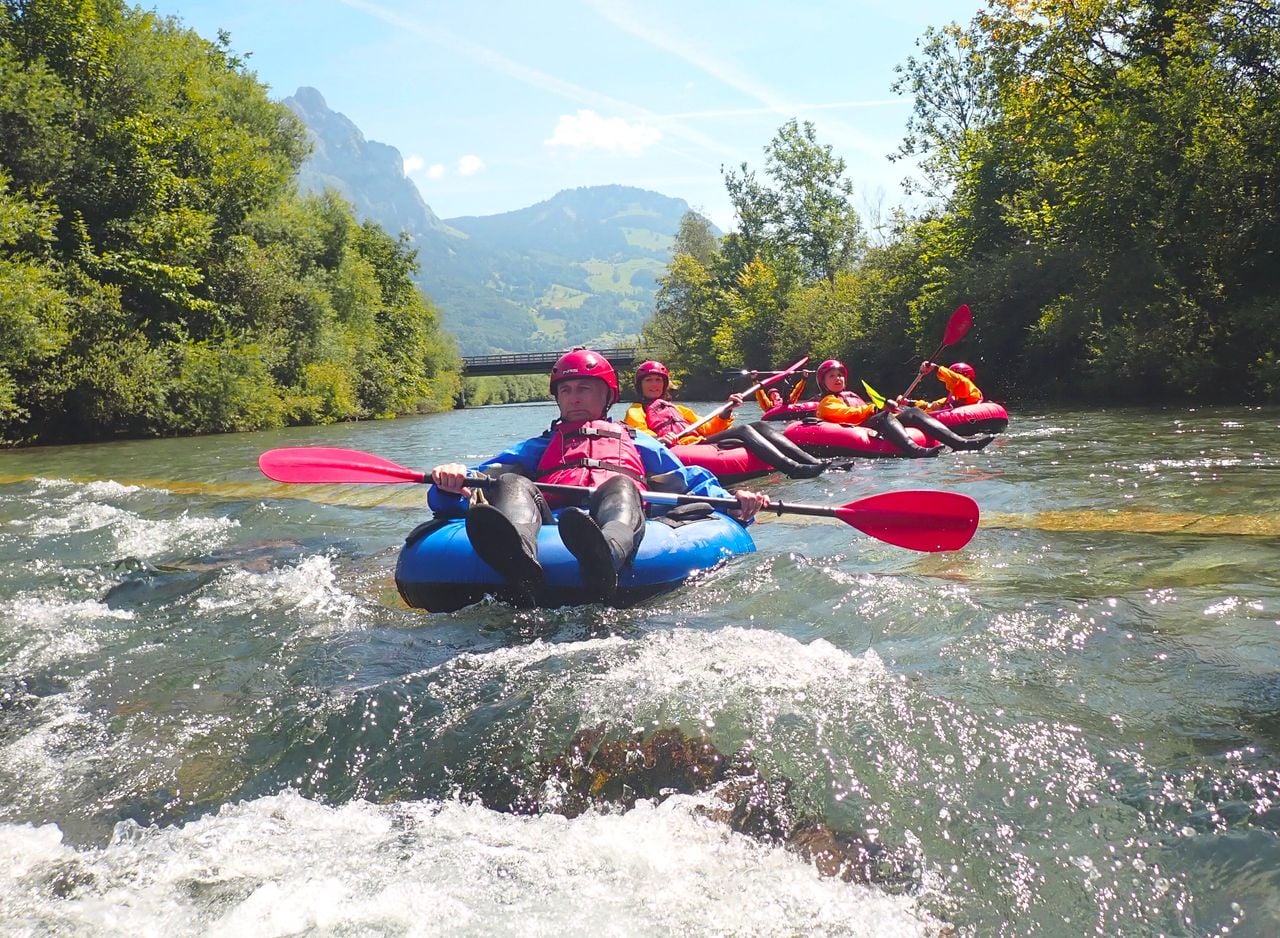
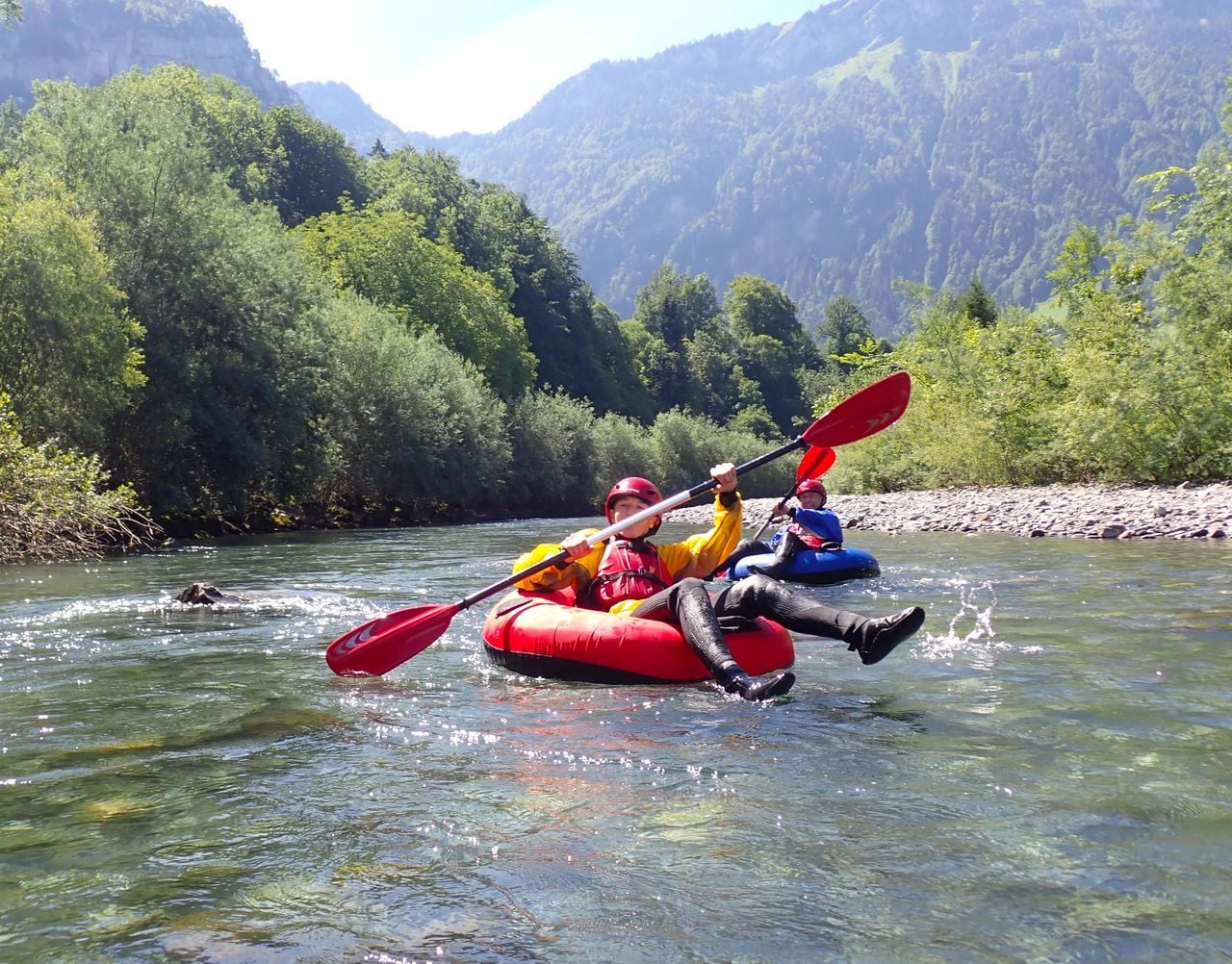
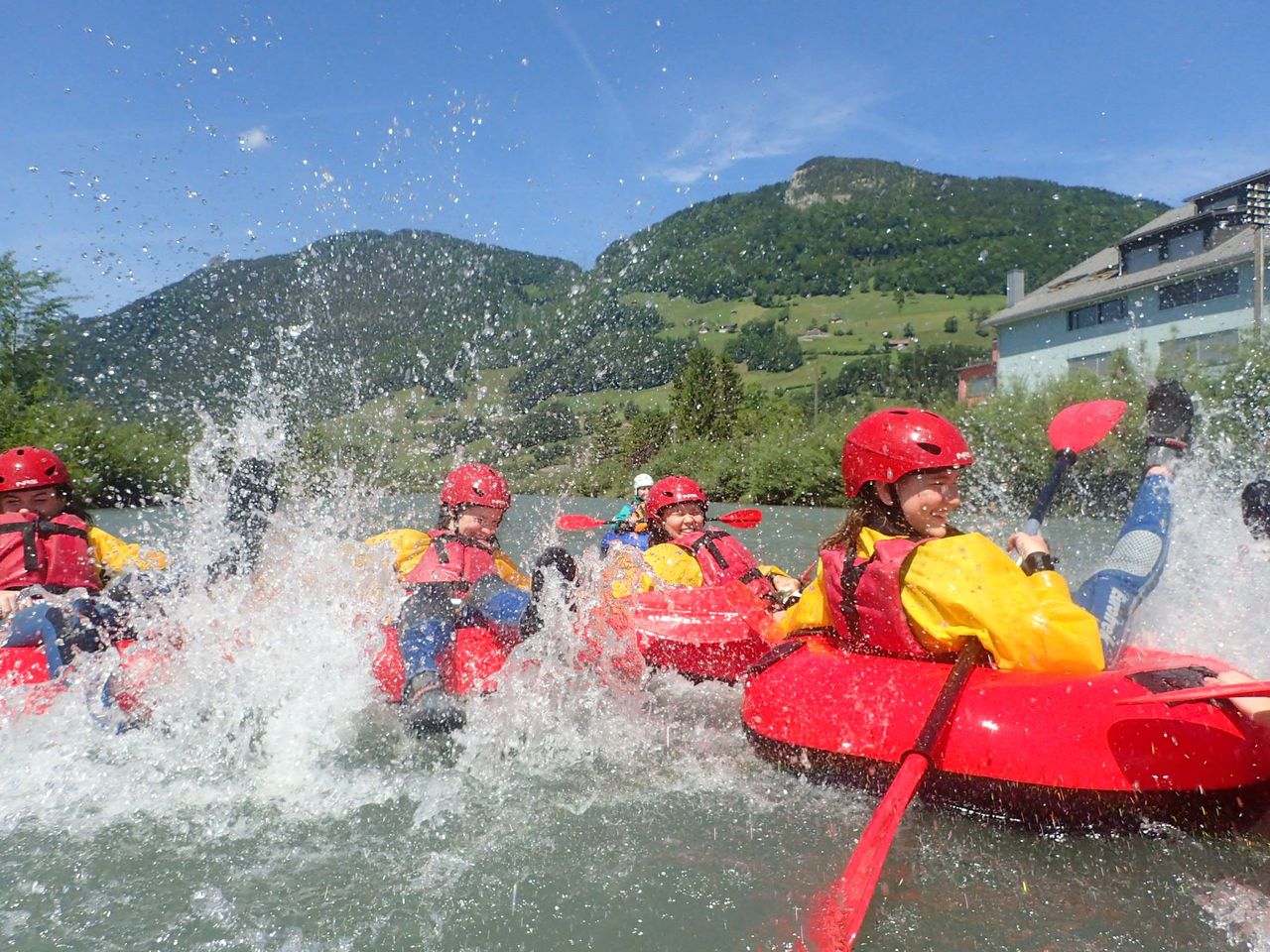
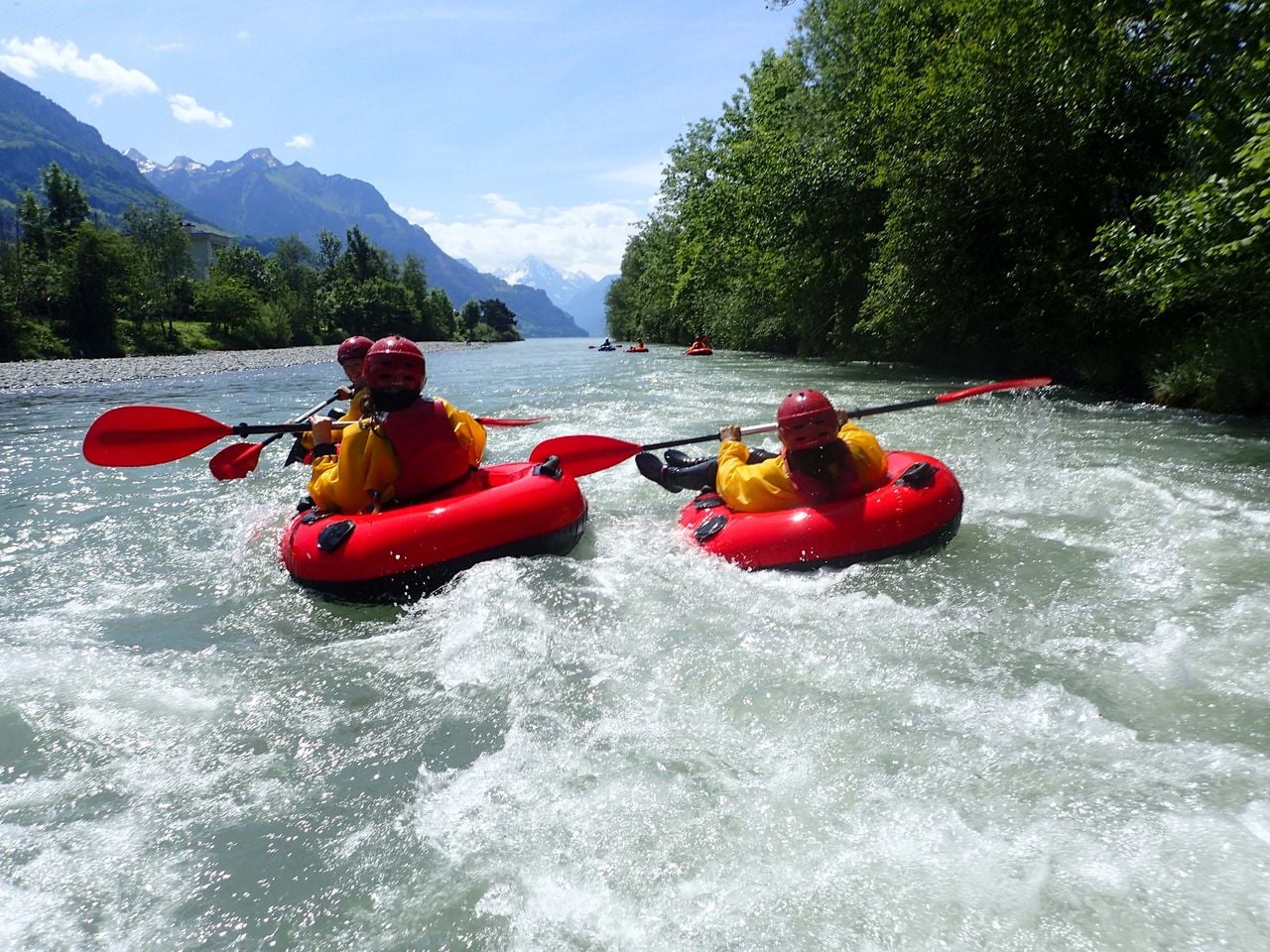
per person
from CHF 500
per person
from CHF 139
Recommended based on recent reviews
“We went as a group of 8. It was a fun experience for friends. Our guide was knowledgeable about the area, shared interesting facts and tailored the tour to our abilities.”
“Friendly, great members.”
“That was a wonderful event, Yanis took excellent care of us. Thanks”
“A really great afternoon, we all enjoyed it a lot.”
“It was a mystical experience.”
“Amazing experience and outstanding guide.”
Travel guide
Kayaking - the popular summer activity in Switzerland for active nature lovers. Countless rivers and lakes suitable for kayaking are on the Swiss map. Our guide will help you choose the most suitable routes across lakes and rivers. Our FAQ at the bottom of the page will give you important information about safety and specific dangers when kayaking. You can also read about the differences between kayak, canoe and Canadian canoe.


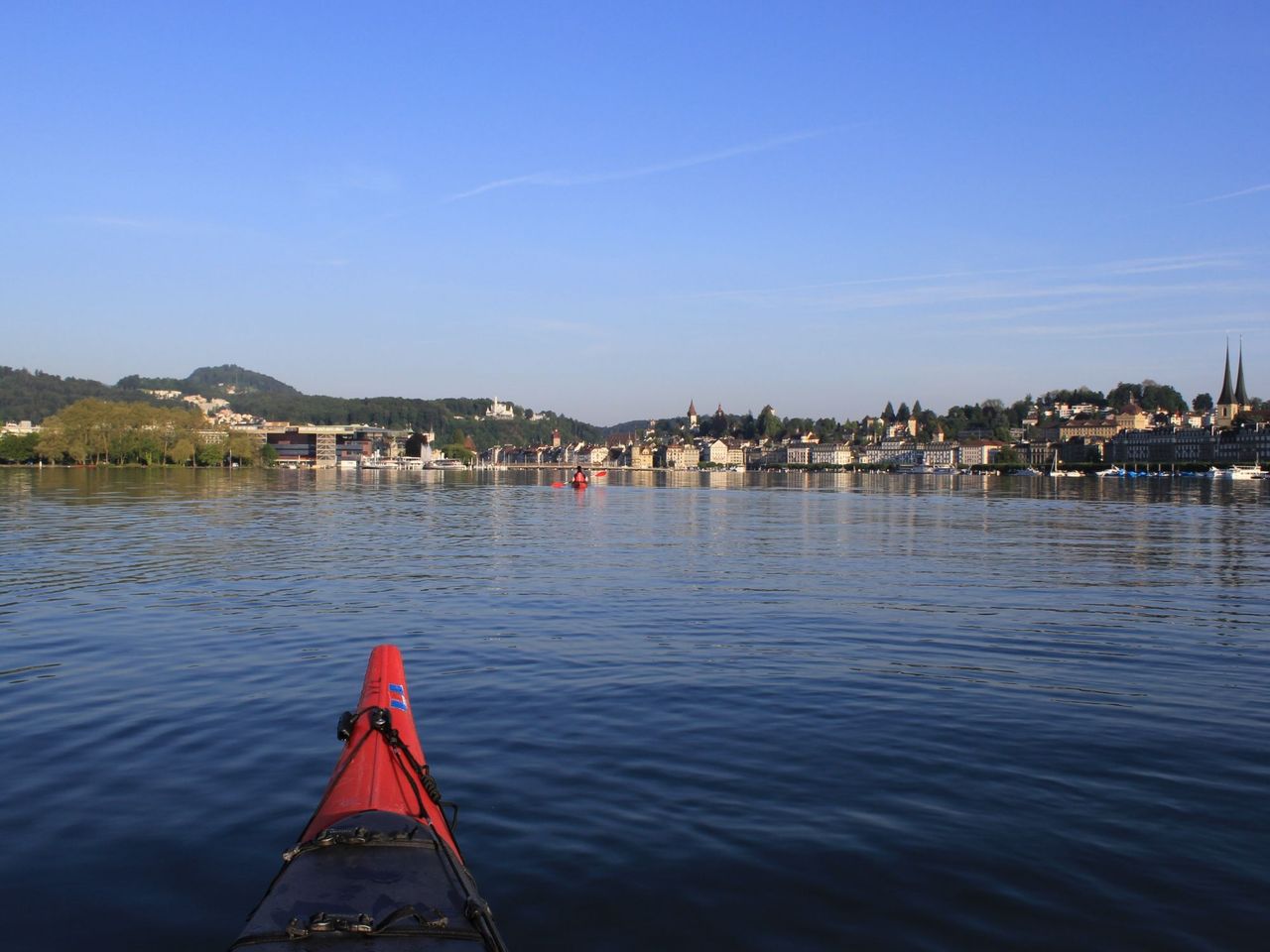
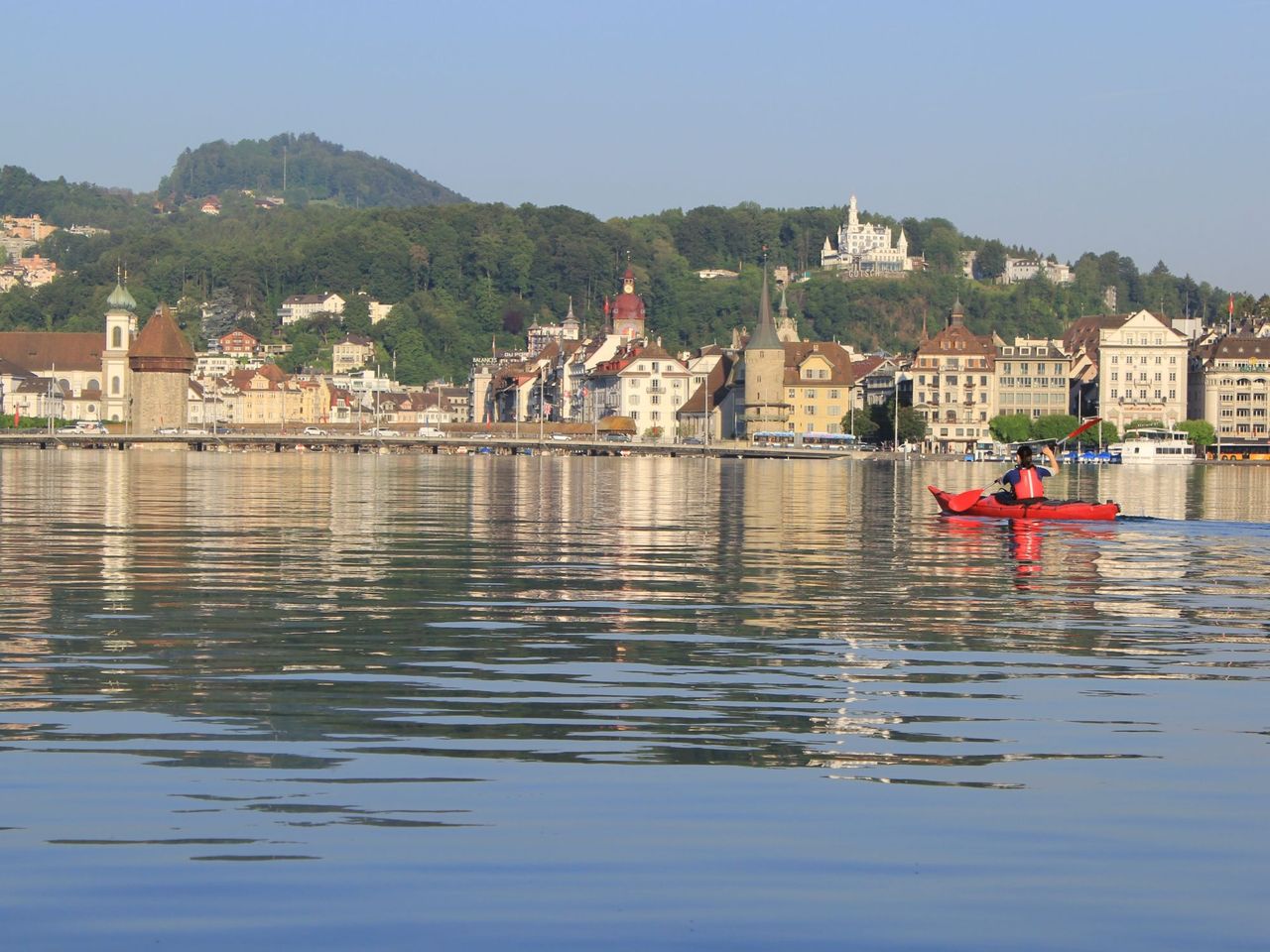
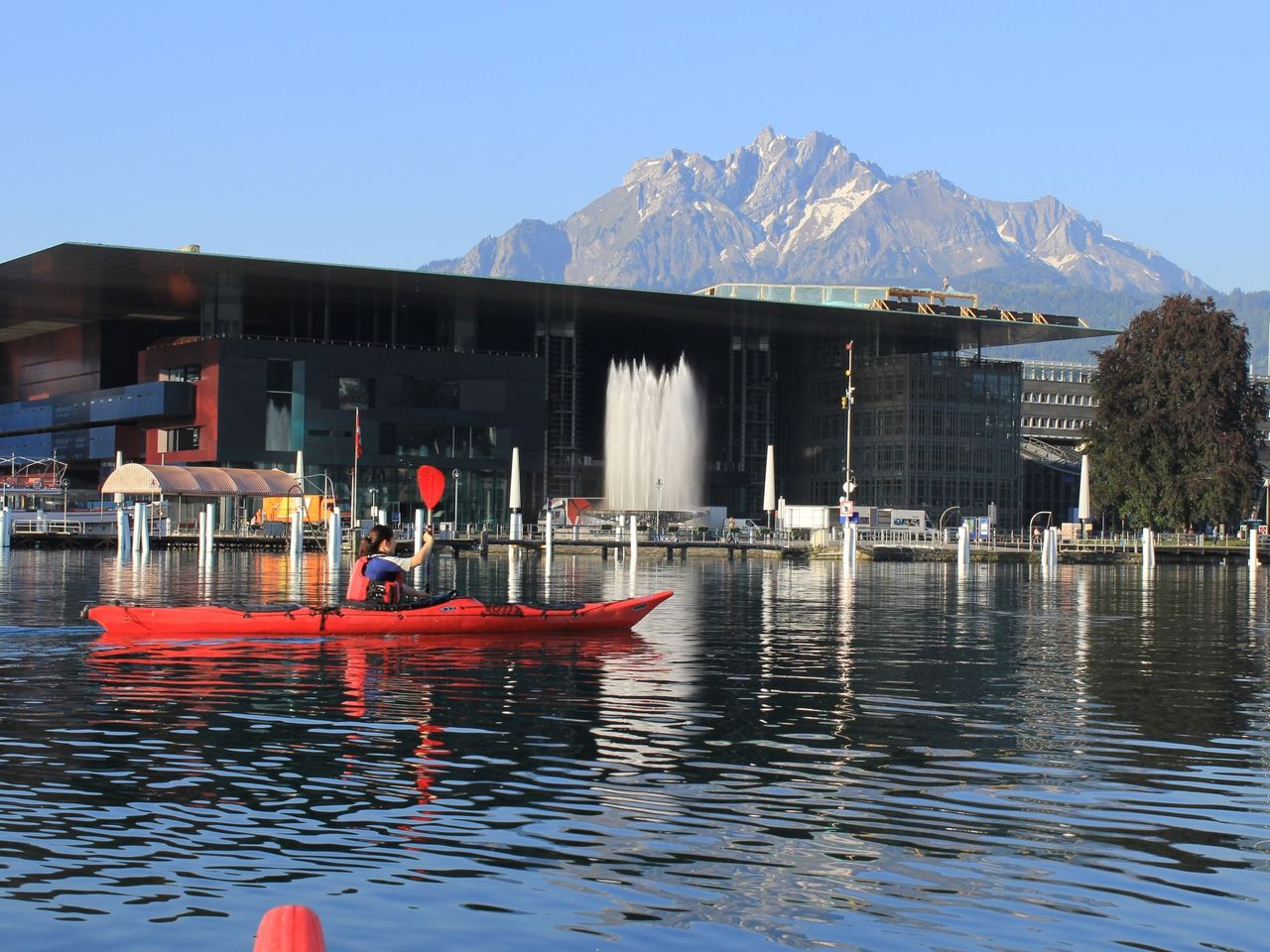
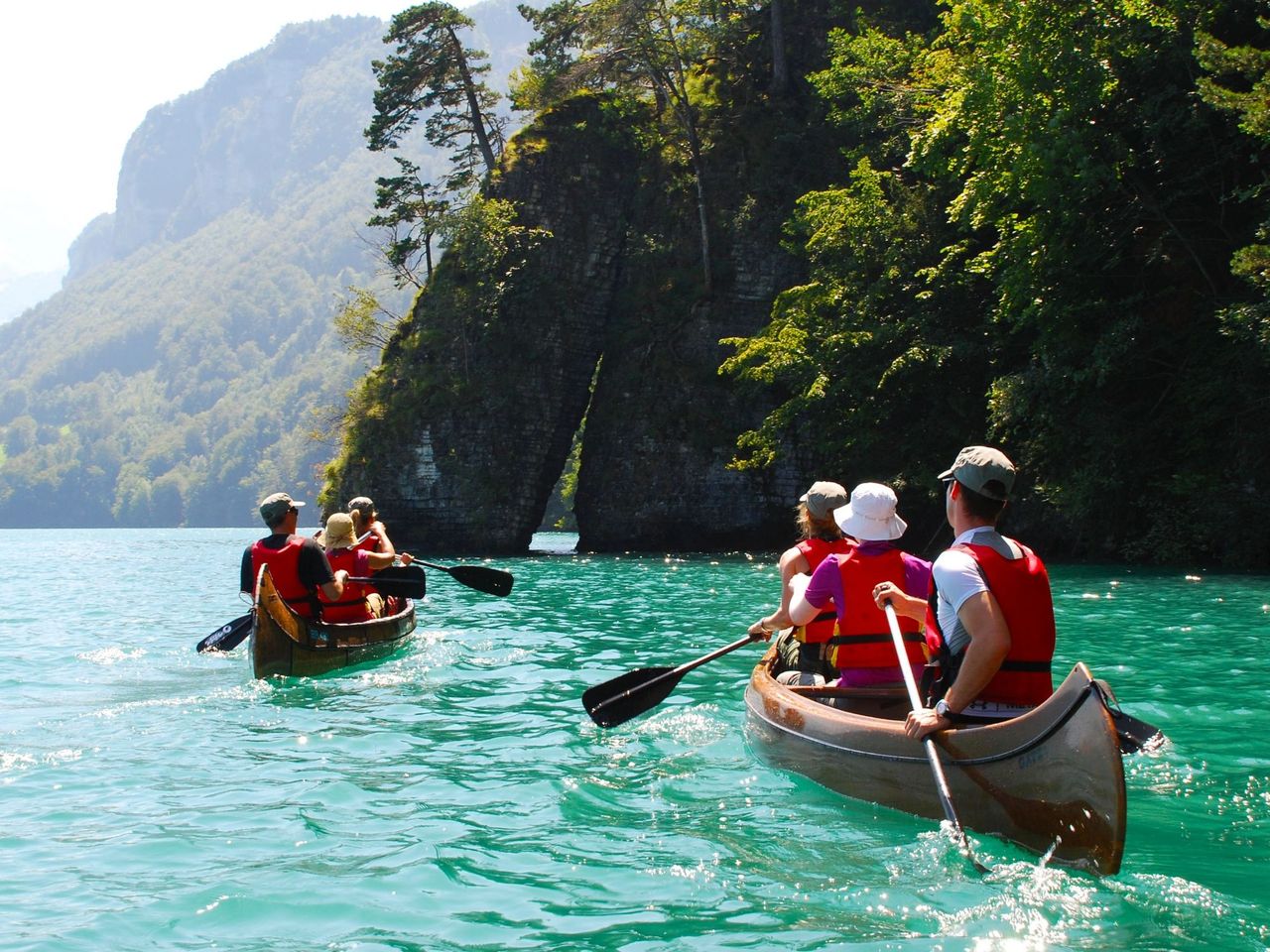
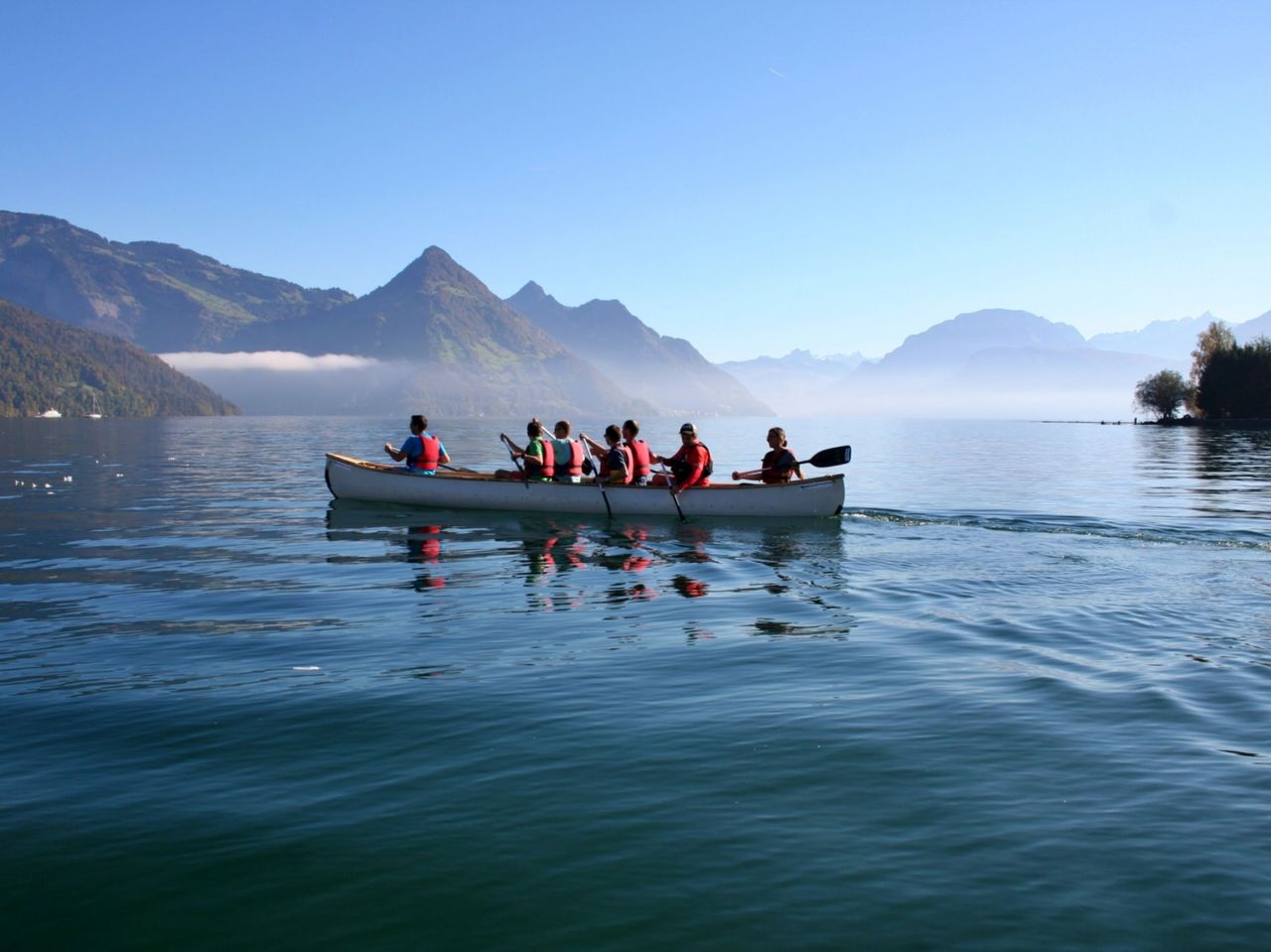
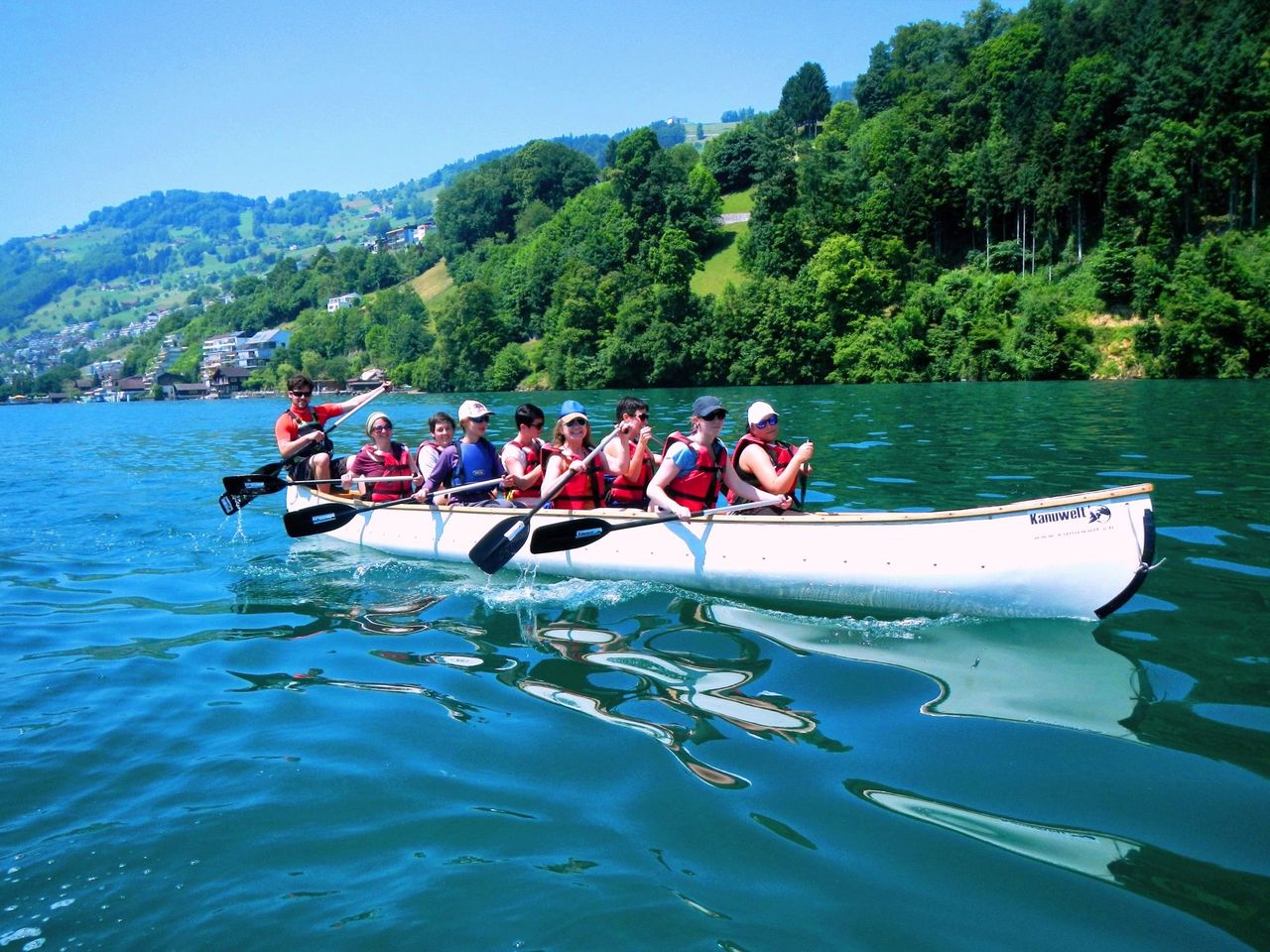
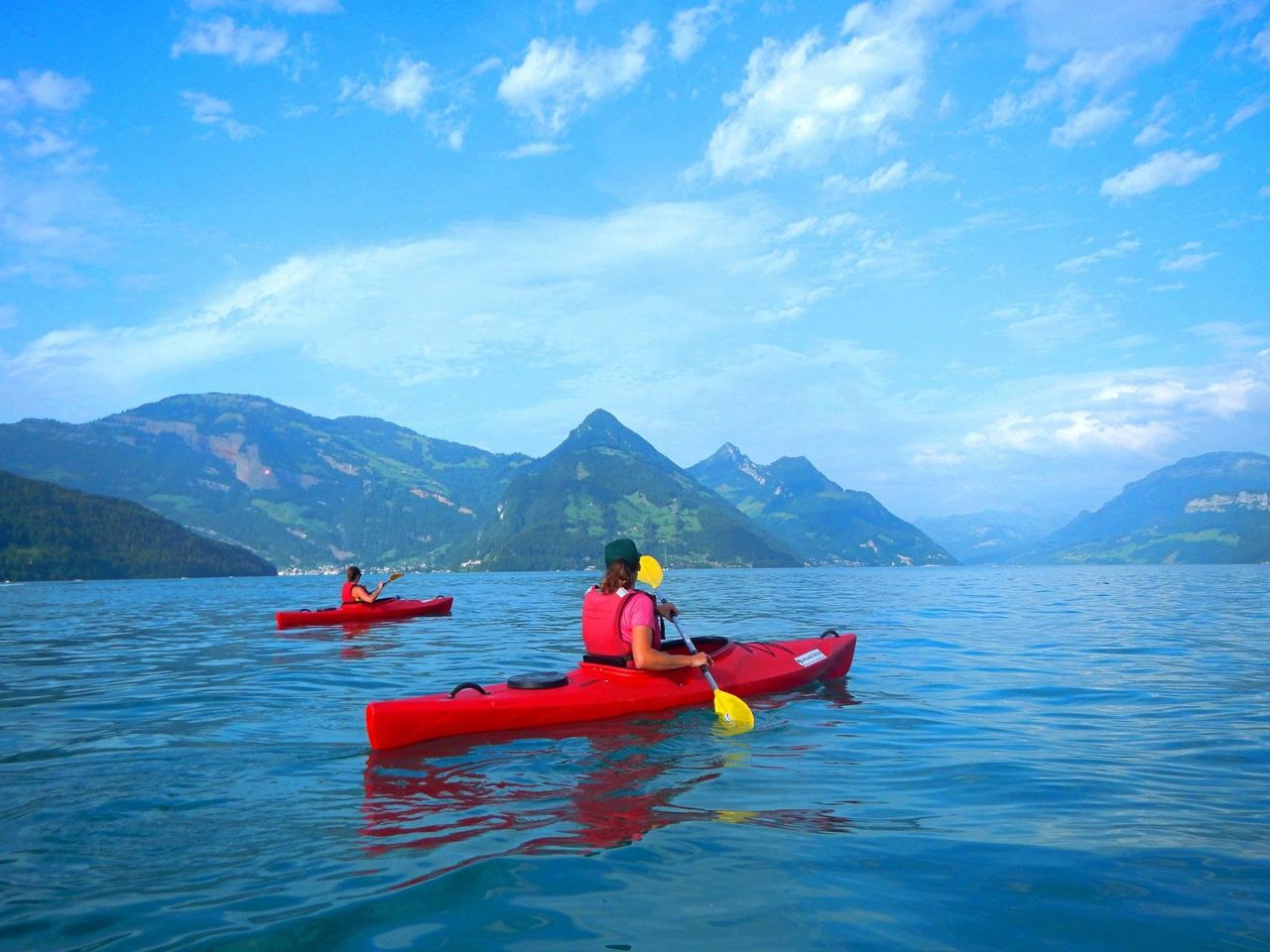
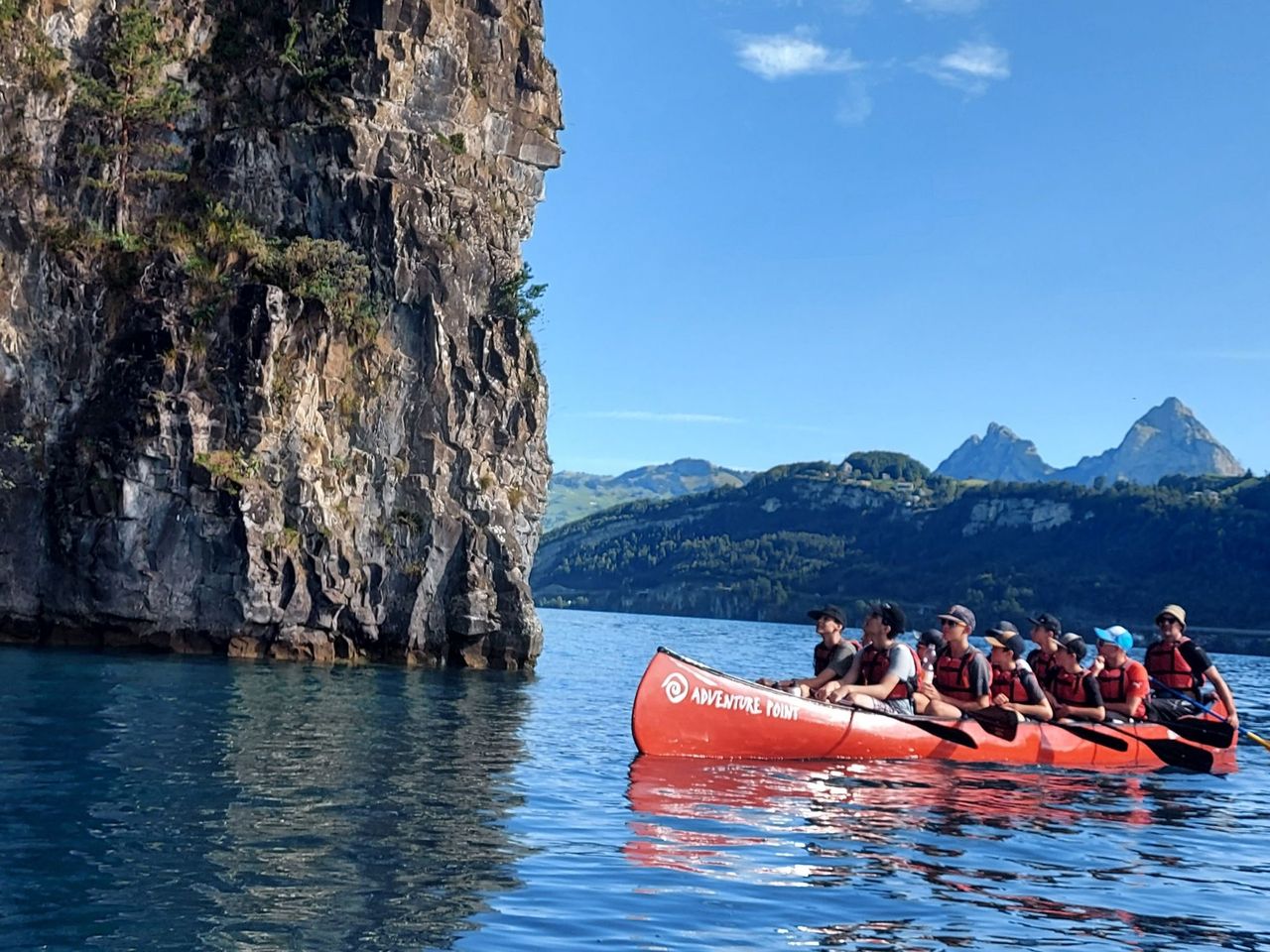
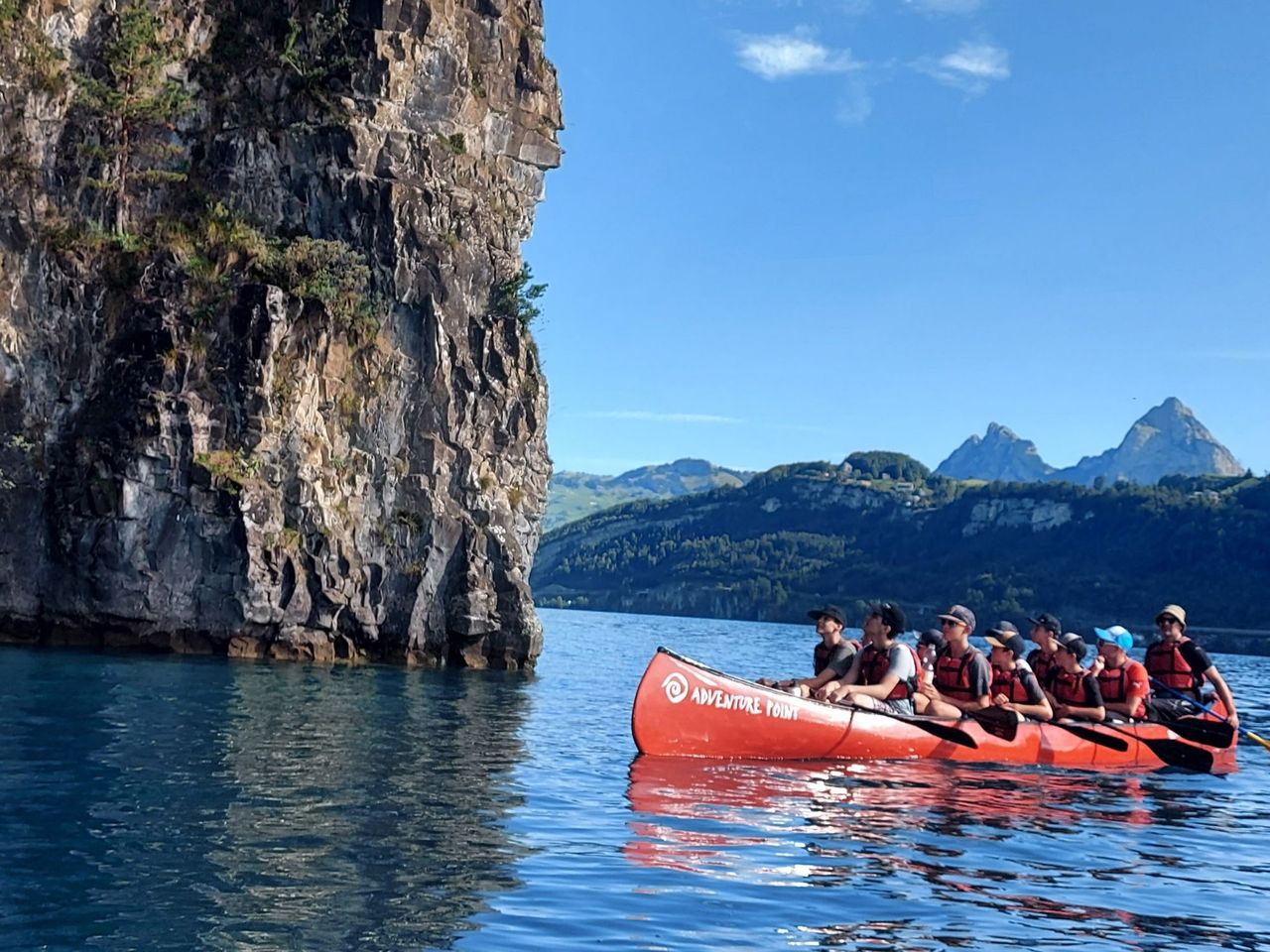
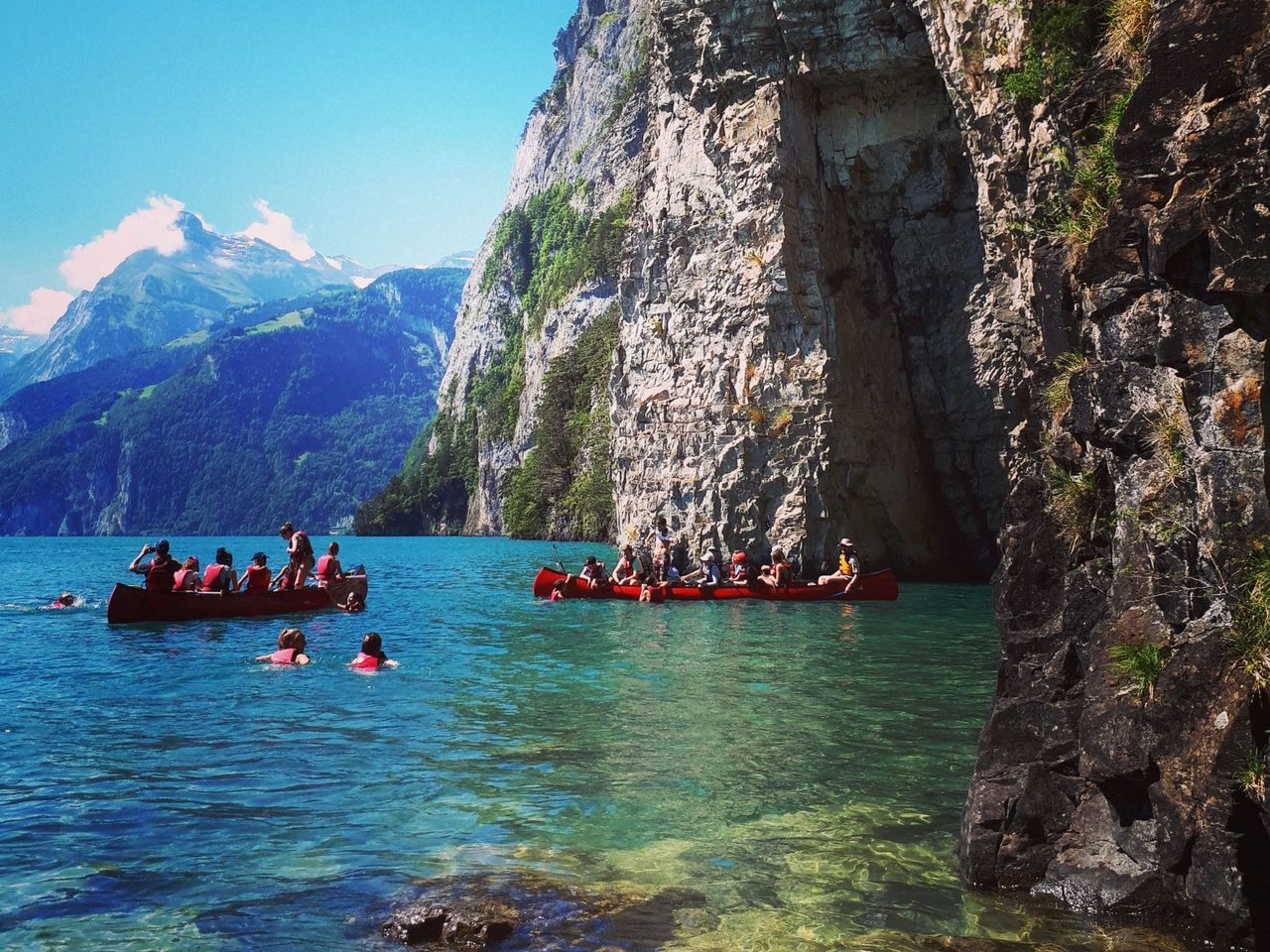
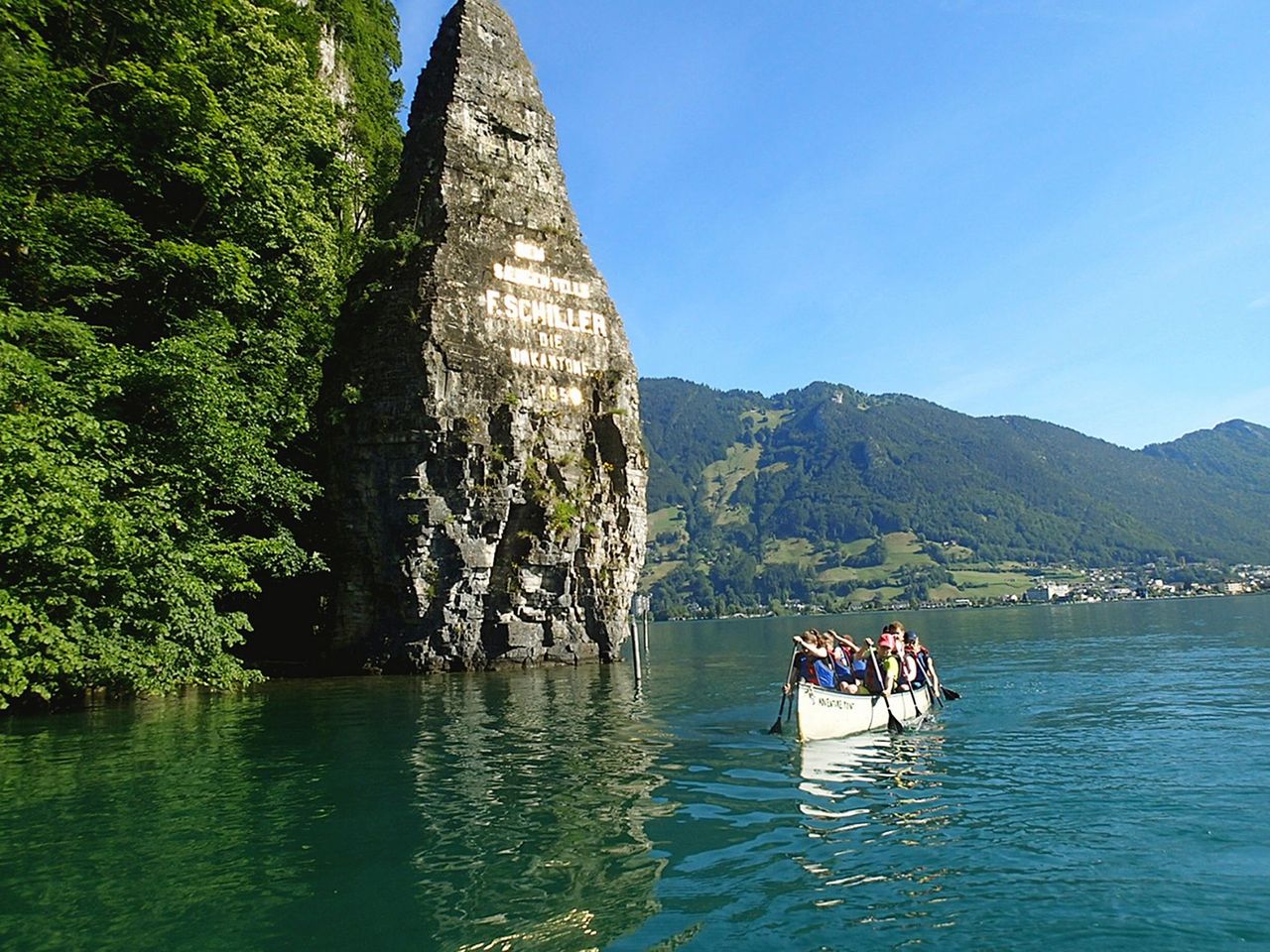
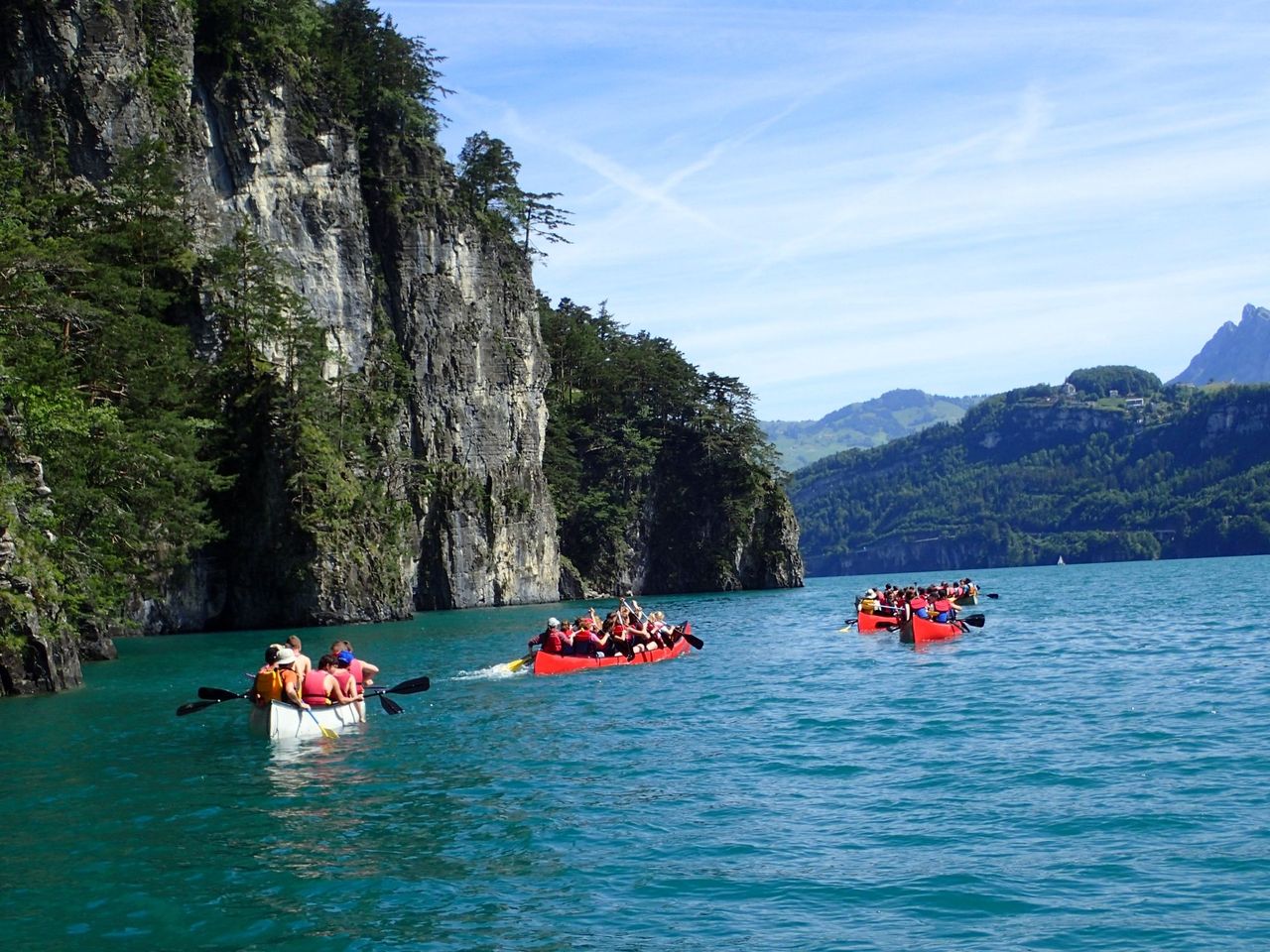
Kayaking on the Lake Lucerne is an absolute highlight! The lake is known for its winding inlets and deep blue color, making it one of the most stunning lakes in Switzerland. With a maximum depth of 214 meters and an area of 114 km², it spans across five Swiss cantons: Lucerne, Uri, Schwyz, Obwalden, and Nidwalden.
Your heart will race while kayaking on Lake Lucerne! You can explore nine different routes around the beautiful azure lake and the wonderful surroundings of its mountain-enclosed shores.


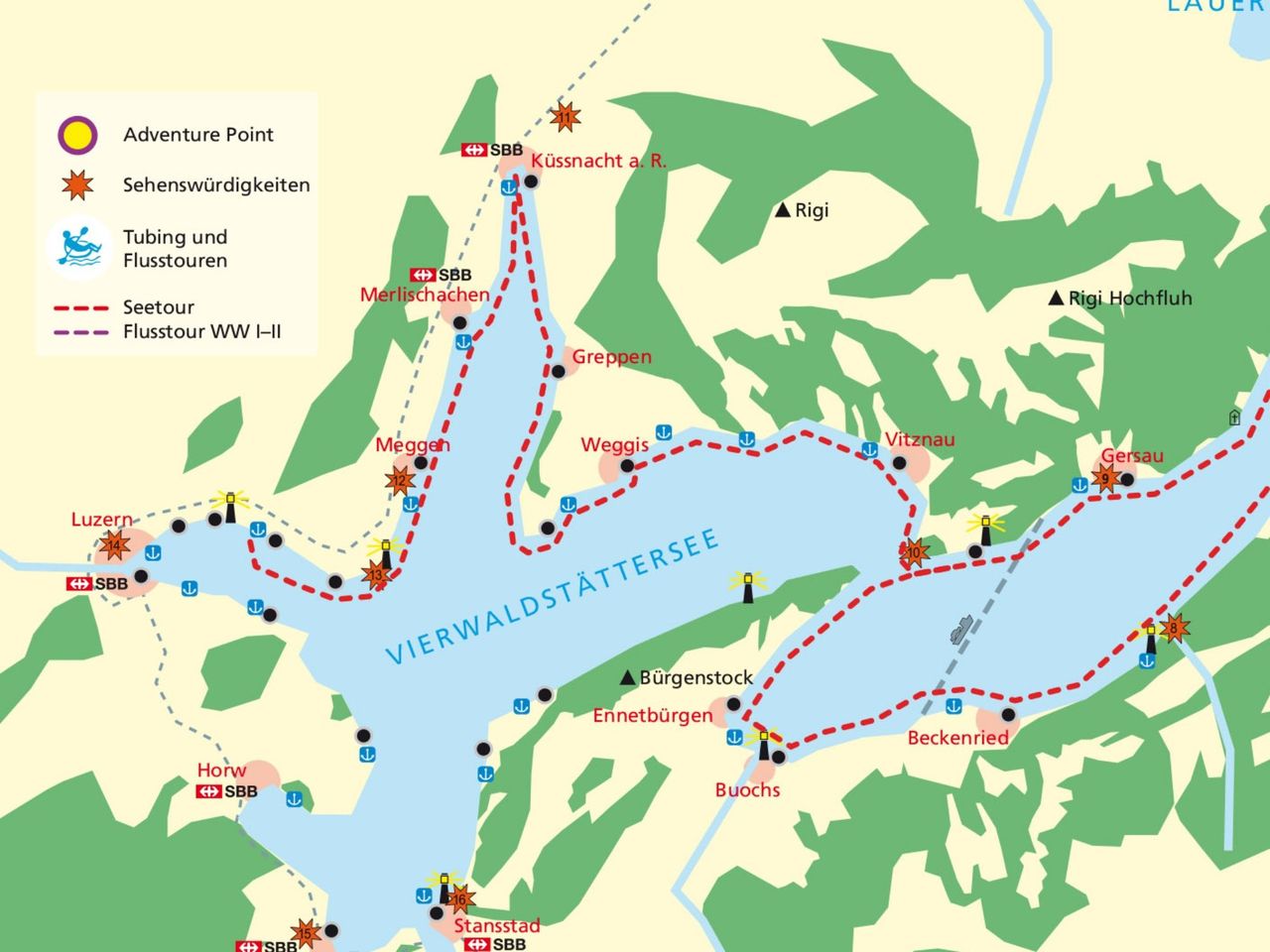
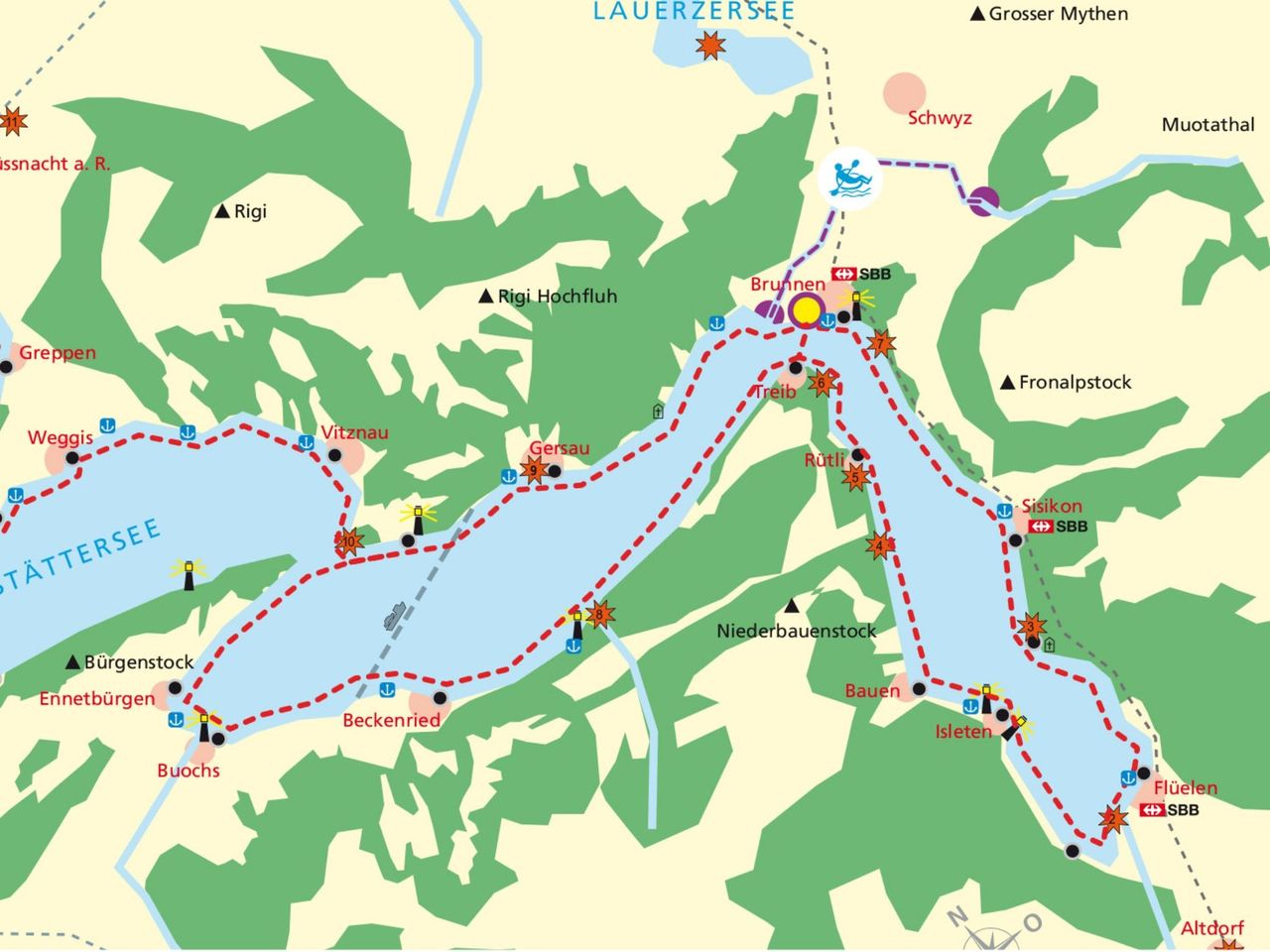
The so-called Canoe Route around Lake Lucerne consists of nine paths that can be navigated even without much prior knowledge of canoeing or kayaking. If you manage to complete all nine stages, which can also be planned as day trips, you'll actually circle the entire Lake Lucerne!
The incredibly beautiful view of the Swiss pre-Alps is what makes this waterway stand out. You can rent canoes or kayaks on-site and find all the gear you might need (or still need). Guided tours or kayak/canoe courses can also be booked as desired.
You can either put together your own canoe routes or follow one of the already established paths. The materials and guides for these trips include the best entry and exit points, rest stops, campsites, toilets, and areas with traffic restrictions or hazards. On the Canoe Route around Lake Lucerne, you’re perfectly equipped to paddle into a scenic and active adventure!
Starting points for the canoe route include Lucerne, Horw, Stansstad, Brunnen, Weggis, or Küssnacht. All these places are easily reachable by car or public transport.
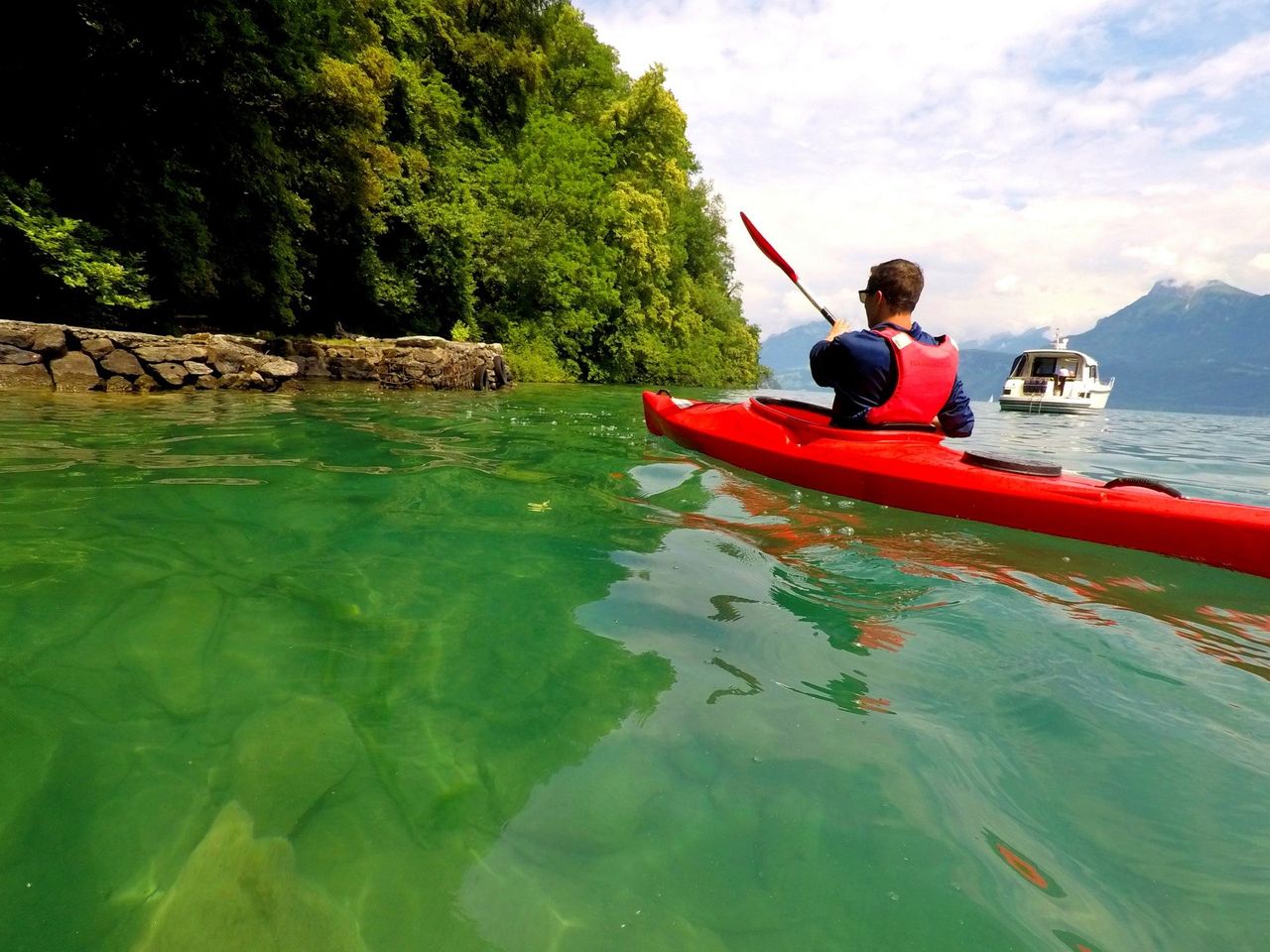
Located in the canton of Bern, Lake Brienz is nestled between the Bernese and Emmental Alps. Its shores drop off steeply, so it has almost no flat areas, and it's amongst the cleanest lakes in Switzerland. The municipality of Brienz, which gave the lake its name, lies on the northern shore, while the well-known towns of Interlaken, Matten, and Unterseen are located on the southern shore.
For instance, in the village of Bönigen, which is right by Lake Brienz, you can rent kayaks and other water sports equipment to explore the lake on a tour. Schools located right by the lake also offer kayak courses, coaching, and guided tours.


The tours also head upstream to the truly impressive Giessbach Falls, where the Giessbach cascades over an incredible height of 500 meters down rocks and cliffs. There is even a path that runs underneath the waterfall, which can be explored on foot. You can enjoy this breathtaking sight combined with a leisurely kayak tour.
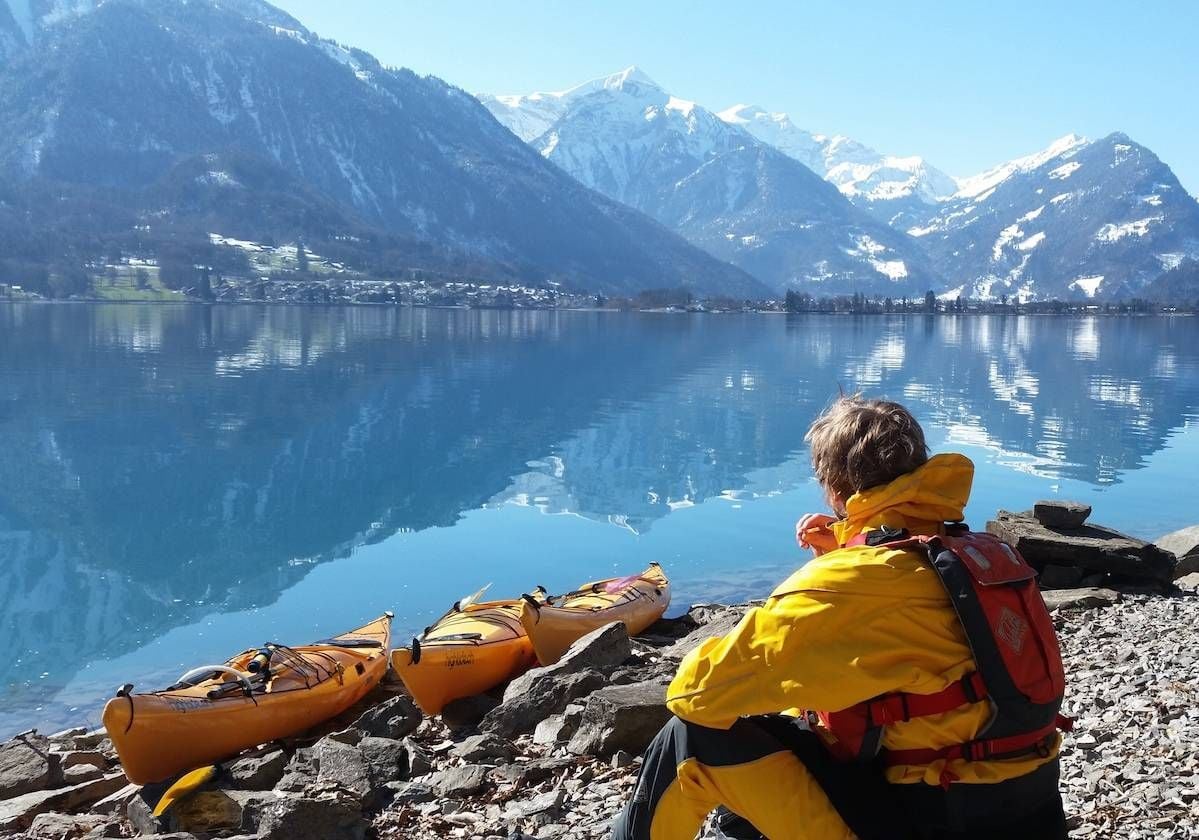
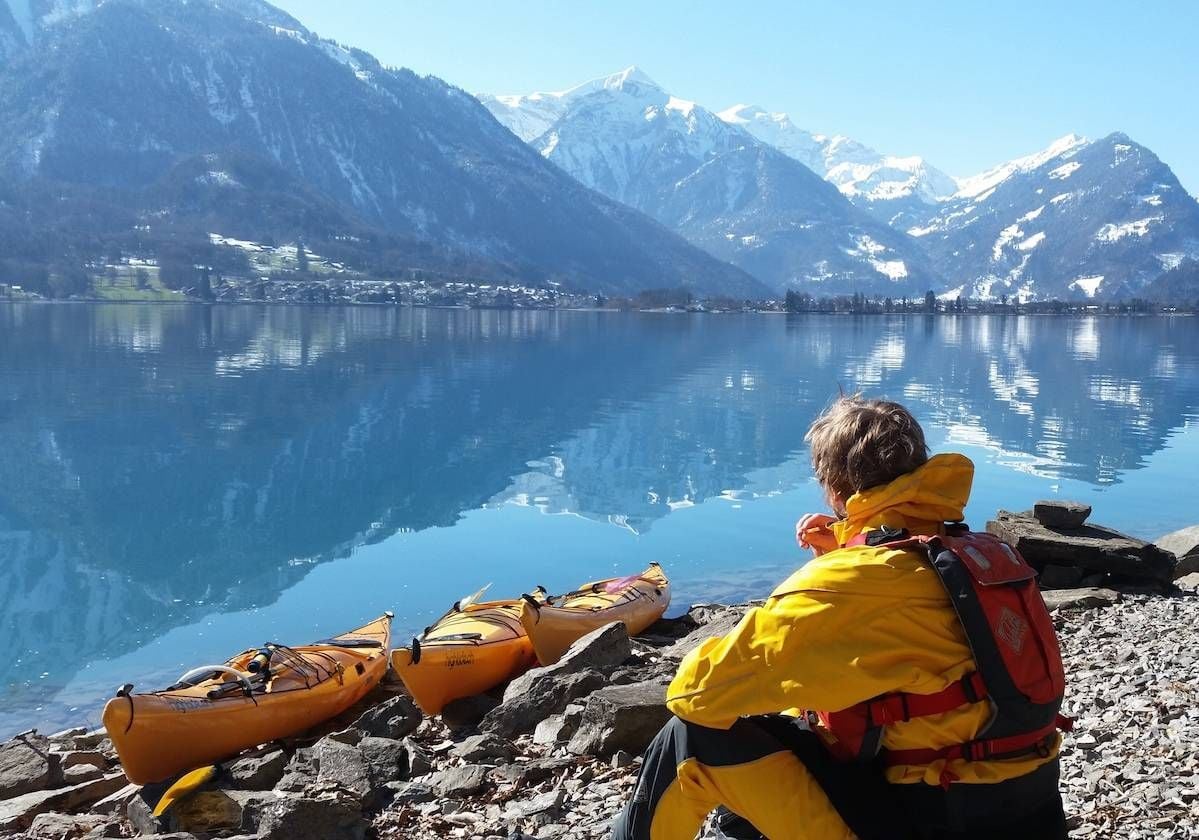
Experience the stunning view of the mirror-smooth lake and the surrounding mountain peaks while actively steering your kayak and soaking in the pure atmosphere of nature: the kayak tours on Lake Brienz will enchant you!
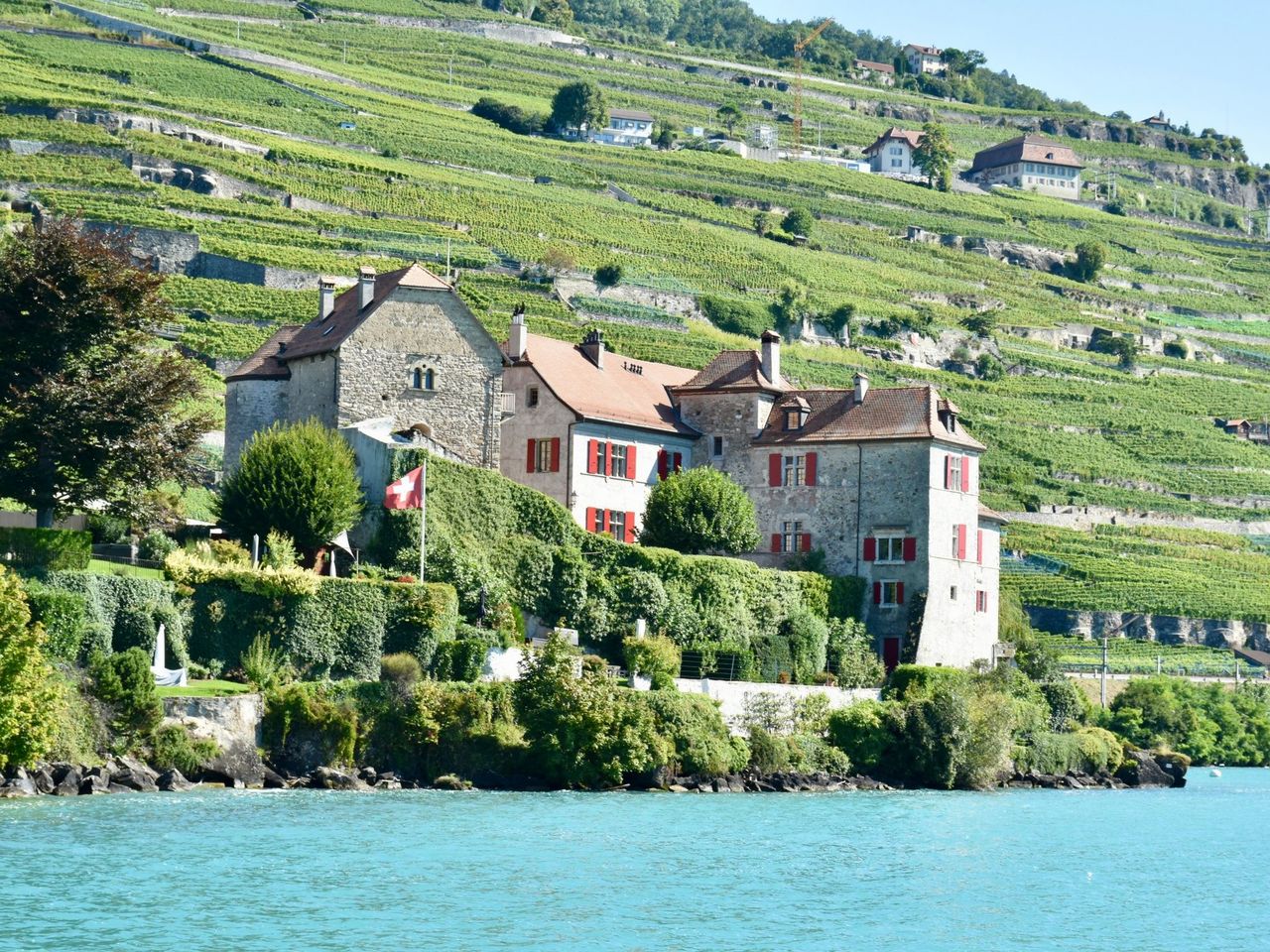
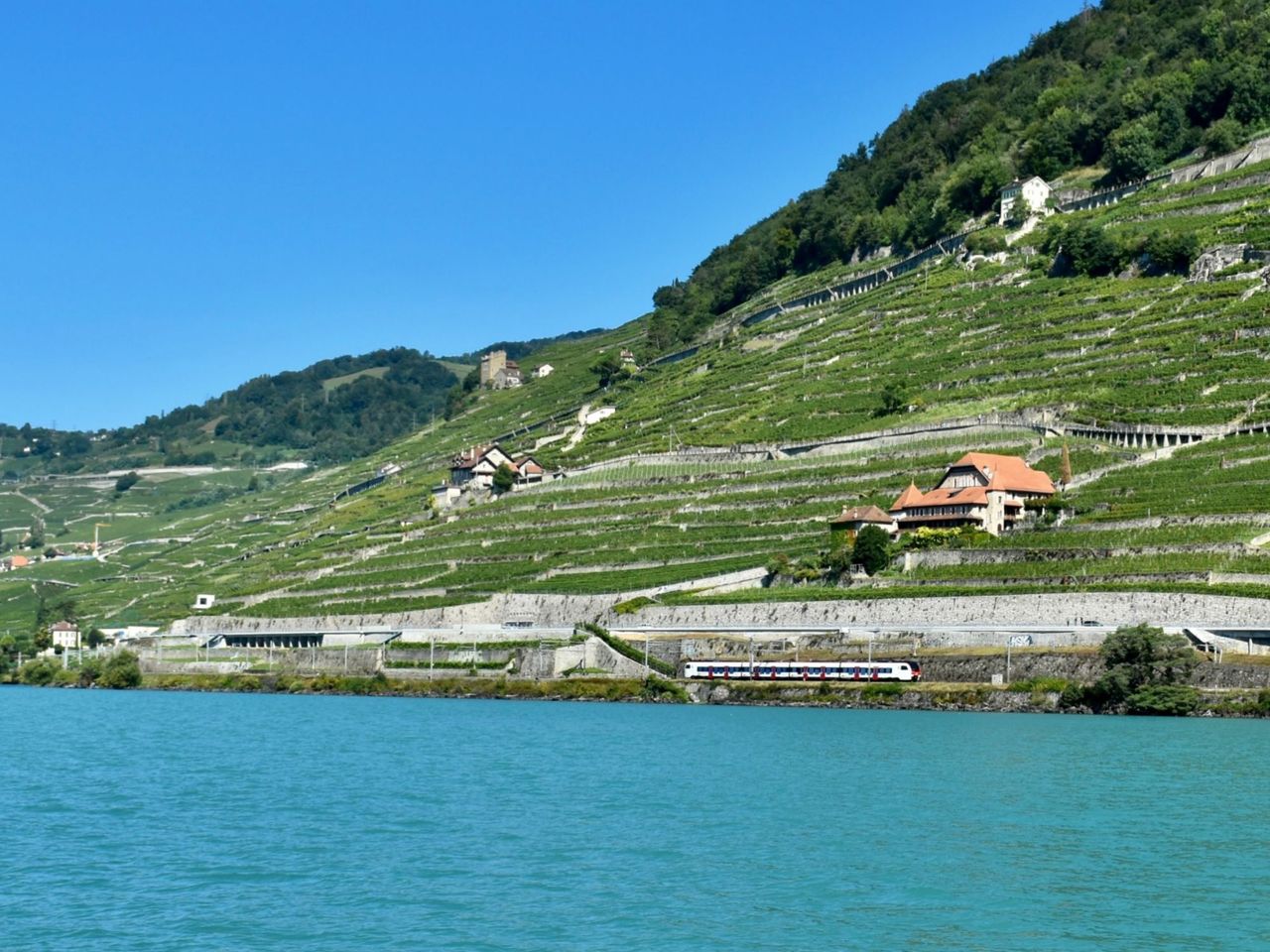
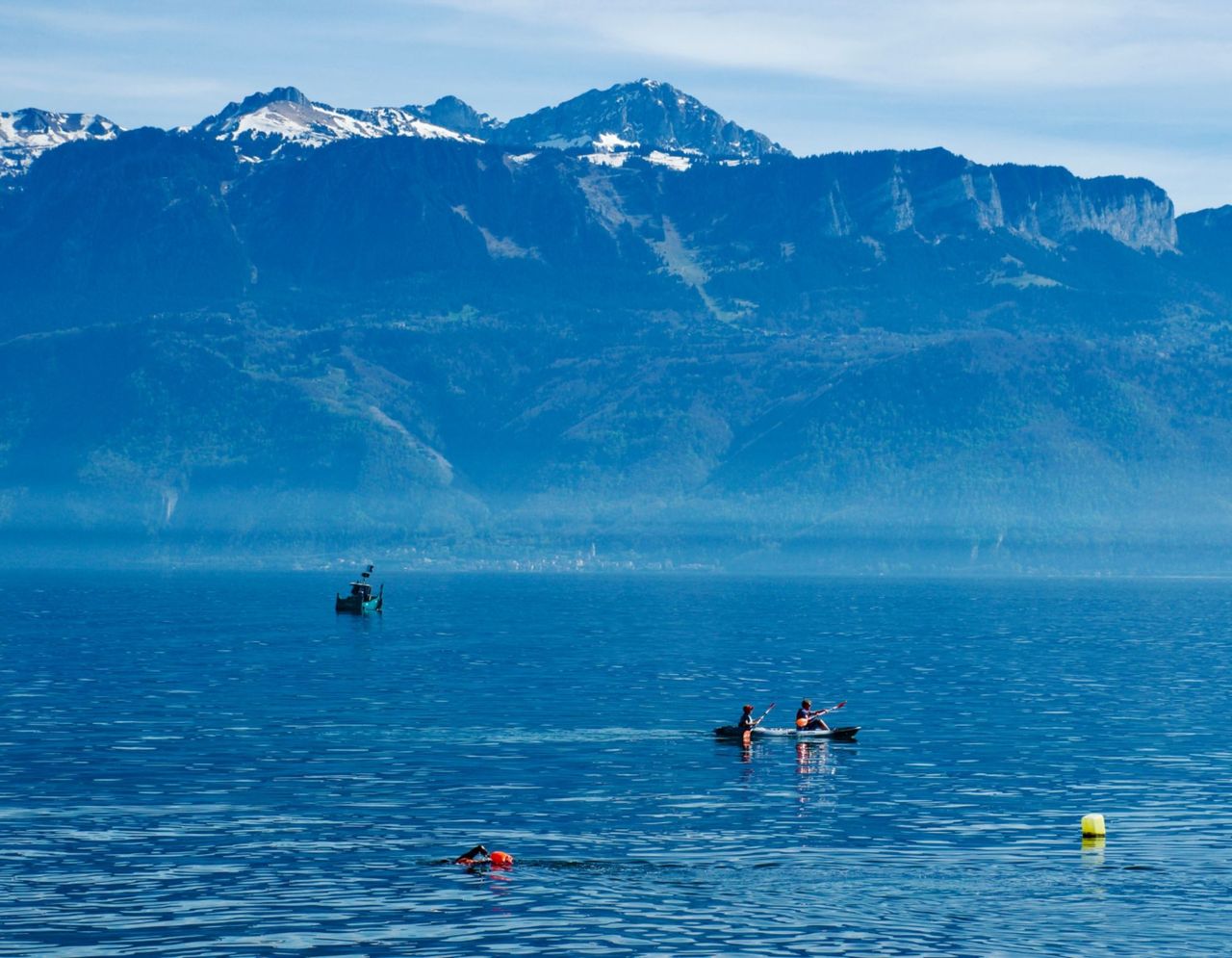
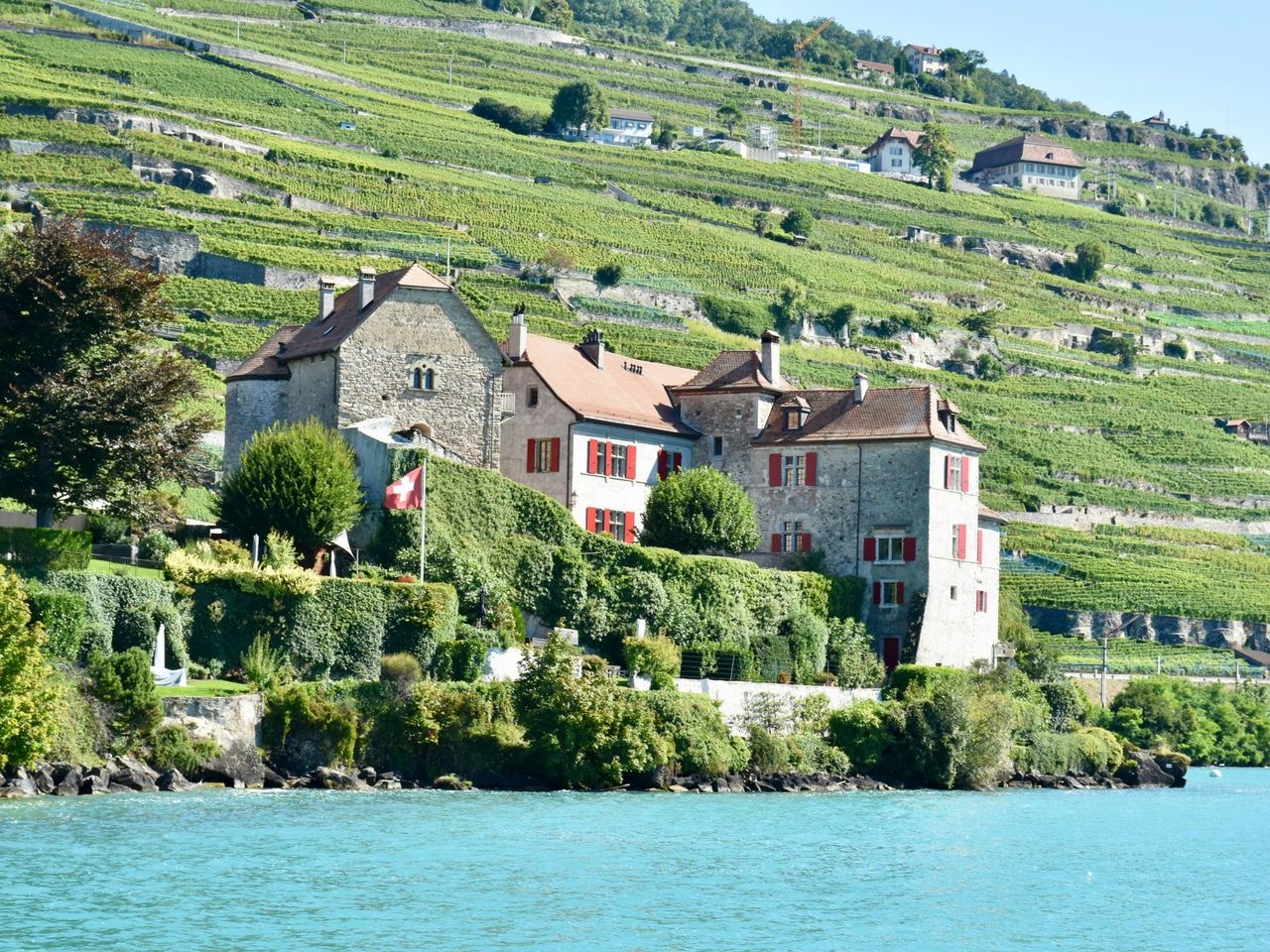
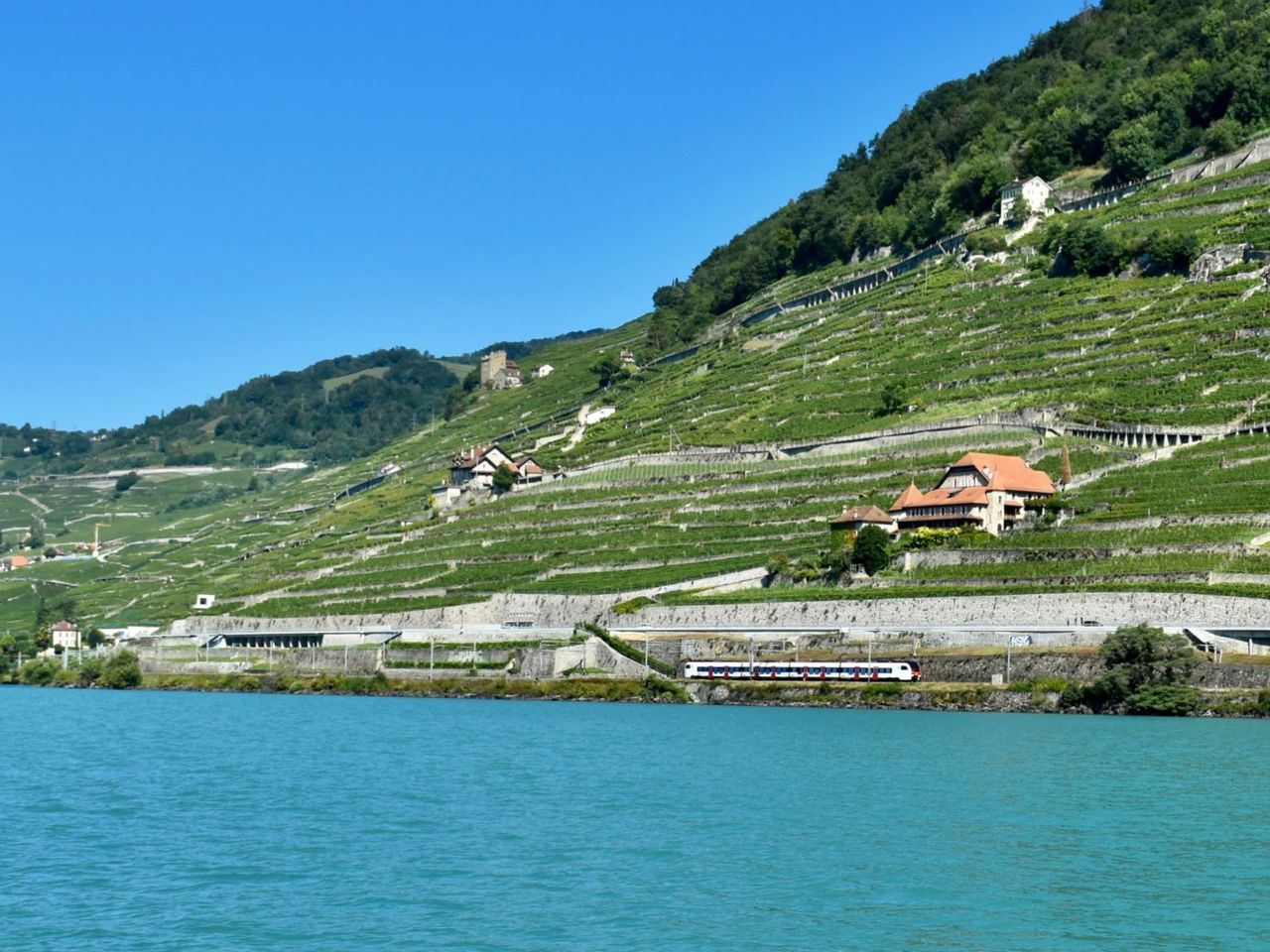
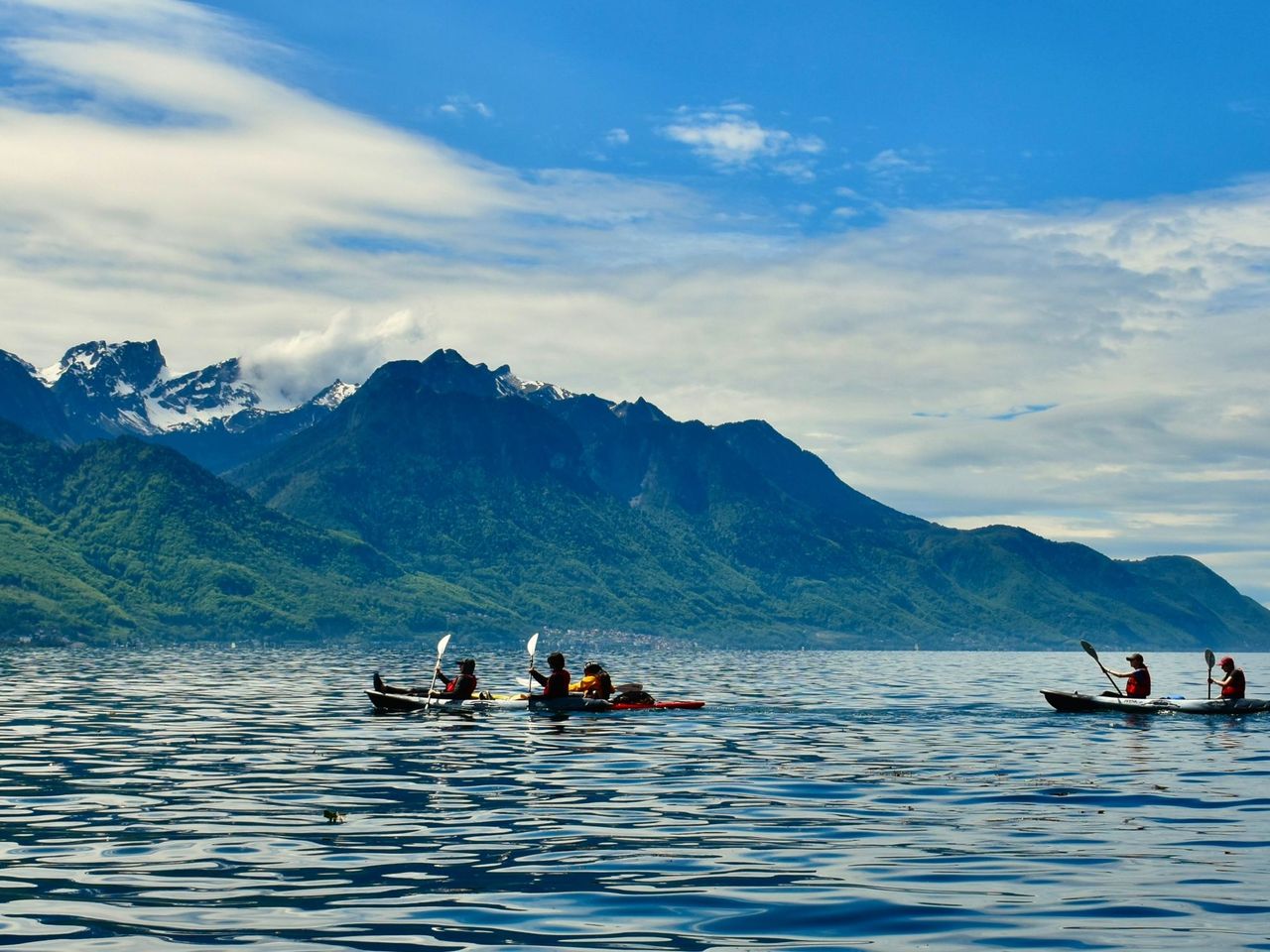
On the largest lake in Switzerland and France, kayaking has long been a common activity. The lake spans three different Swiss cantons (Geneva, Vaud, Valais) and France. Along the southern shore, you can enjoy magnificent views of the Mont Blanc massif, as well as the popular Swiss city of Geneva, while the northern shore is home to the well-known cities of Lausanne and Nyon.
On the various tours, you’ll find not only wonderful natural landscapes and different nature reserves but also historical highlights: the world-famous Château de Chillon, which is regarded as the “jewel of the Lake Geneva,” looms on the shore and can be reached by kayak. A short tour through this historic water castle provides a welcome change from paddling.
Or how about a tour to Jet d’Eau, the landmark of Geneva? The fountain of the spring, located directly in the water of Lake Geneva, reaches a height of up to 140 meters and is the most famous attraction in Geneva. The only way to see it up close is from the water.


The Lake Geneva area is incredibly scenic, with many hidden beaches that are often only accessible by water, all of which are untouched and offer spectacular views of the Alps.
There are numerous kayak rentals and tour providers scattered along the entire shoreline, and they are mostly reachable by car or public transport.
Enjoy the stunning surroundings on a crystal-clear mountain lake at over 1700 m above sea level, all while kayaking? The Trübsee between Engelberg and Titlis makes that possible!
This beautiful mountain lake is right in the middle of an alpine plateau. Its deep blue color contrasts beautifully with the greenery of the alpine nature and the surrounding mountain ranges.
The breathtaking views of the Titlis mountain panorama and beyond will accompany you throughout your journey across the lake. From July to August, guided kayak tours on Trübsee can be enjoyed when the weather is good.


Lake Trüeb offers not only cozy and scenic spectacular moments, but also hidden bays in the quiet mountain world to discover. A bath towel, sporty clothes and a change of clothes should be brought along, other equipment (kayak, paddle, helmet, life jacket) will be provided
Without any previous knowledge, you can marvel at the flora and fauna of the Alps while kayaking and at the same time do some sports. The Engelberg Ski School offers tours here for beginners and leisurely paddlers, starting at six people. A reservation is therefore advisable.
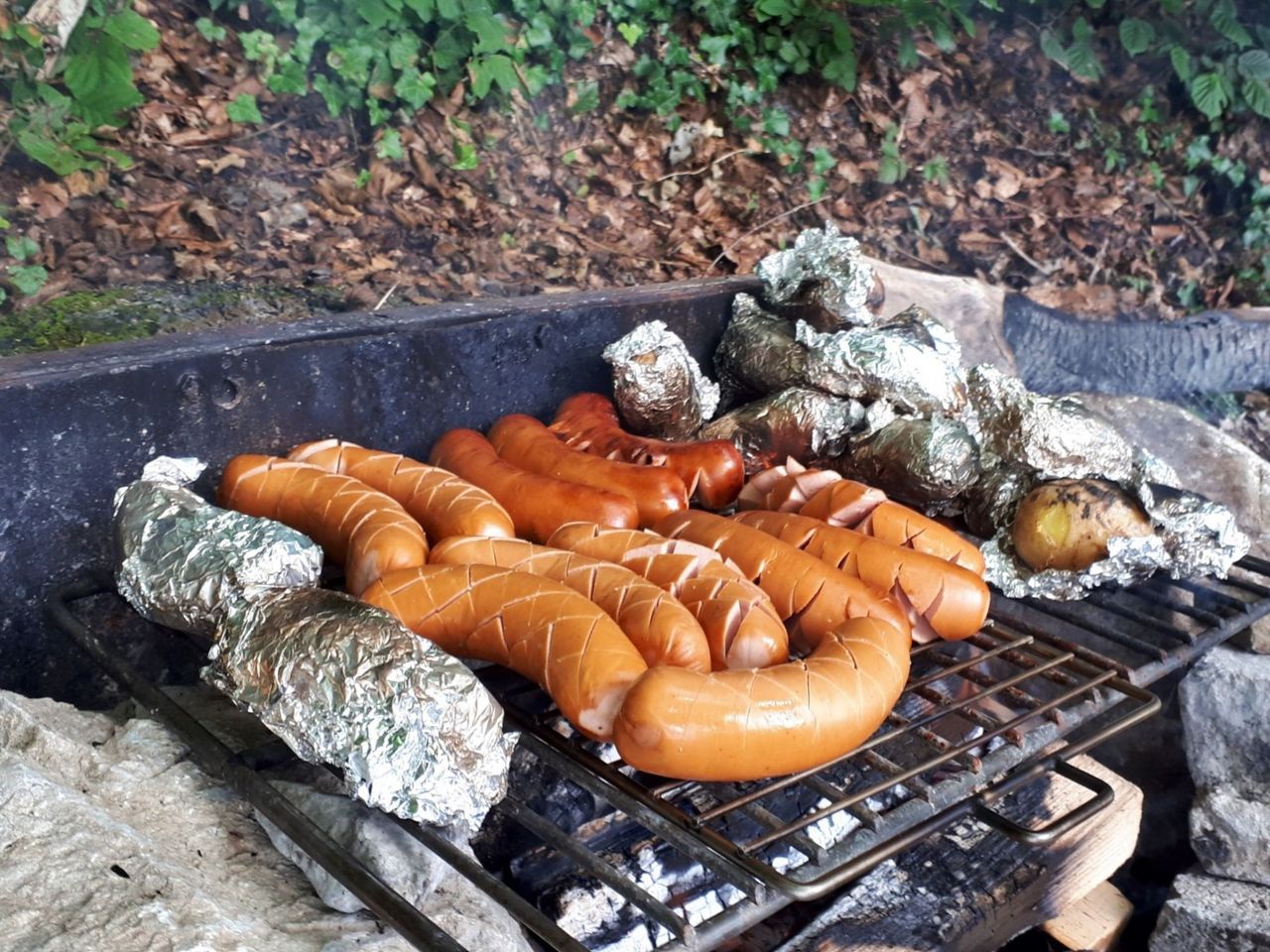
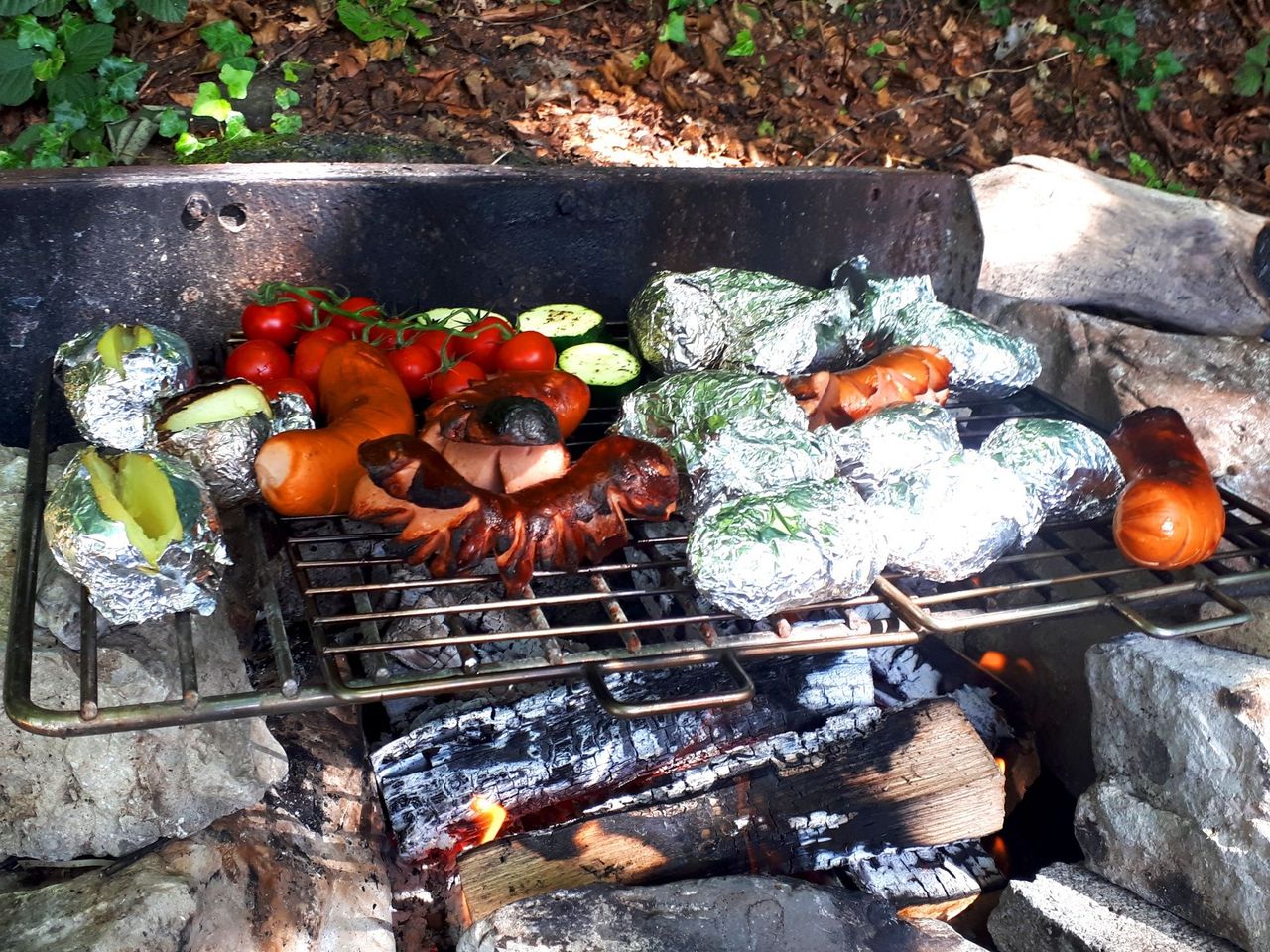
In addition to the kayak excursions, it is also possible to book a barbecue or a subsequent ride on the scooter back to Engelberg. The tours offer the perfect alpine adventure for water sports enthusiasts and kayak fans and last about 1.5 hours.
The splashing of the paddles in the mirror-smooth lake allows a feeling of active relaxation and makes for an unforgettable kayak tour at 1764 meters above sea level
For adventurous kayakers, Switzerland offers a range of river tours that include calm and leisurely stages on the one hand and wild rapids on the other. The Swiss river landscape offers the right conditions for really everyone. Here are the most beautiful river tours by kayak:
With a length of 164 kilometers, the Reuss is the fourth longest river in Switzerland and rises in the famous Gotthard massif. From there it makes its way to the canton of Aargau, where it flows into the second largest river in Switzerland, the Aare. As one of the few large rivers in Switzerland that is still in its natural state, the Reuss is considered a true natural spectacle.
The Reuss trumps above all with its wonderfully green banks, which are dotted throughout with small, secluded gravel beaches. They invite you to stop, barbecue or take a break. Not all sections of the Reuss are suitable for kayaking, but the permitted stretches offer all the more to discover
Especially the route between Bremgarten and Mellingen is considered one of the most beautiful. Various river islands and sandbanks emerge from the riverbed, inviting you to swim and relax. You can launch your kayak at the Hexenturm in Bremgarten, where the approximately 2.5-hour river tour begins. The official exit point is located downstream from the retirement home in Mellingen.
On the Reuss, you experience a mix of smaller rapids and calmer stretches: a perfect blend of adventure and relaxation. Due to the varying water conditions and the inconsistent depth, it's beneficial to have some kayaking experience. On guided tours on the Reuss, you can quickly learn the necessary skills, and experienced guides ensure safety while paddling and handling the kayaks.
The Reuss is a natural spectacle for kayaking enthusiasts!
The Aare flows in the well-known "Aare Loop" around the old town of Bern. In the summer, it's one of Switzerland's hotspots, where all sorts of water sports enthusiasts and the so-called "Böötler" meet. Particularly, the section between Lake Thun and the capital enjoys high demand during the summer months.
The longest river running entirely through Switzerland is a true paradise for kayakers. There are several kayak providers on the banks of the Aare. Here you can gear up for a leisurely paddle and maneuver your way down the river toward the capital. The currents on the Aare are usually quite swift, which is why you can drift along this stretch in many places and use the paddles to steer
The banks of the river are also very busy in the summertime. While you pass between green, natural sections and well-visited bathing places and beaches, you can in between overcome the currents and rapids and immediately afterwards spend calmer passages leisurely in the kayak. The Aare is very varied. Equipped with an introduction and a life jacket, this route offers perfect conditions for all ages!


Along the shores, there are also plenty of places to stop where you can grab a bite, have a barbecue, swim, or just relax. You can completely unwind at the Eichholz camping site and river beach, a true place to be! Located on the outskirts of Bern, sun-seekers can enjoy summer days here while eating, playing volleyball, or simply soaking up the sun. You'll also find many return points for various kayak providers. The Aare can also be paddled from its source area.
The Ruinaulta, known as the Rheinschlucht in Romansh, is a gorge through which the Vorderrhein flows. In the canton of Graubünden, it streams as the source river of the Rhine, carving through a landscape characterized by steep cliffs, deep gorges, and jagged rocks. The protected natural areas of the Rheinschlucht offer plenty for adventurous kayakers.
The rugged nature of the river is dominated by raging rapids and exciting whitewater. The most famous whitewater route runs through the Flimser Gorge, presenting experienced kayakers with challenging currents and thrilling maneuvers. While the toughest sections can be easily avoided, the Vorderrheinschlucht isn't suitable for beginners going solo. However, with a qualified guide by your side, it’s possible to navigate the easier flowing stretches of this beautiful valley and learn the basics of the sport at the same time.
For pro kayakers, guided tours can be booked to expand your paddling techniques and test the spectacular flow conditions of the Vorderrhein. For very experienced paddlers, there’s also the option to paddle the river independently. Of course, it's crucial to adhere to safety regulations and guidelines, ensuring you're equipped with a life jacket and helmet.
The breathtaking and wild nature throughout the valley is absolutely worth visiting Ruinaulta and keeping your adrenaline pumping during an exciting kayaking adventure.
Welcome to the sunniest spot in Switzerland! The Mediterranean climate in the Italian-speaking canton of Ticino, beyond the Gotthard Pass, lets you truly soak in the holiday vibes. Kayak enthusiasts can paddle along the river Ticino, enjoying the beautiful Swiss Alps and palm trees that thrive in the warm climate as they head south. Kayaking through the untouched Leventina Valley combines a southern flair with alpine mountain air.
The most famous and popular route is from Cresciano to Arbedo, which stretches over 8 kilometers through the clear blue river and the natural beauty of Ticino. Various providers offer tours along this route and at other locations on the river. For independent trips, SwitzerlandMobility offers maps and information about the route, water conditions, potential danger zones, and the best launching spots, along with travel tips for getting there and back. Additionally, canoes for multiple people can be rented in Cresciano. Not far from the end of the route is the well-known city of Bellinzona, the capital of the canton of Ticino. Here, you can also enjoy a little city tour and a delicious gelato.


The shores of the Ticino offer, in addition to dense vegetation, long beaches that seem to be made for pausing kayakers. On these beaches and islands you can moor and enjoy your break in perfect vacation mode: sun, warmth, nature. The Ticino has a very wide gravel bed and therefore offers the ideal conditions to paddle comfortably with the current towards Bellinzona.
For those who want to actively relax, enjoy the Mediterranean nature and at the same time feel the Swiss Alpine charm.
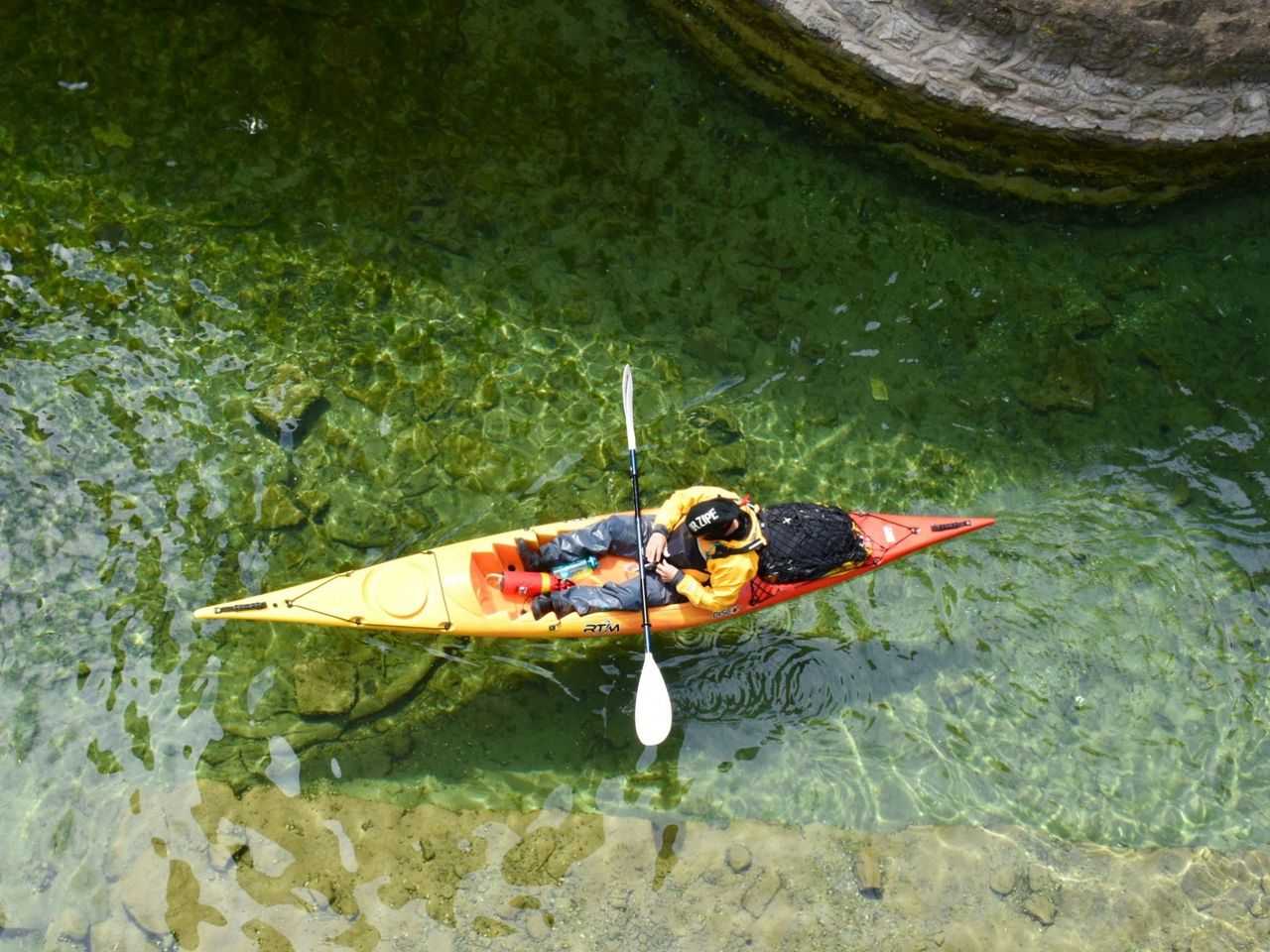
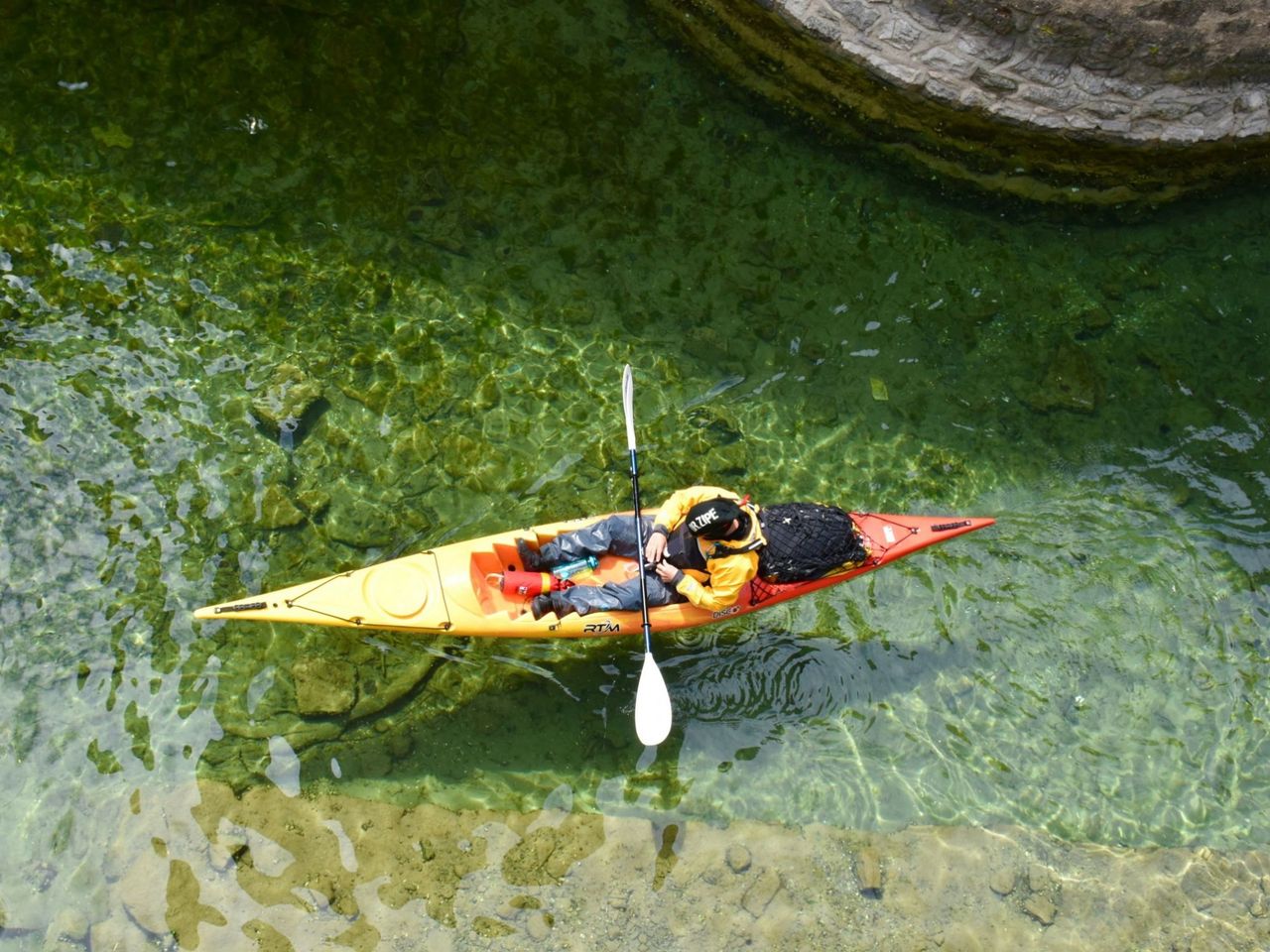
Switzerland definitely comes up trumps with many natural spectacles and one of the most beautiful of these can be found in Ticino: the Verzasca Valley. The Verzasca River flows through the gorges in the form of emerald green water, past huge boulders and tongues of rock and right through the middle of a magnificent green landscape. You almost feel like you are in the tropics! Large and small waterfalls, entire waterfall terraces and especially the crystal clear water make the Verzasca Valley one of the most beautiful destinations in the whole of Switzerland and offer kayakers not only spectacular views but also very challenging and adventurous kayaking routes
Due to the sometimes very steep slopes of the Verzasca, it is not suitable everywhere for inexperienced kayakers. The higher part of the river is easier to navigate and very popular, but is still considered a white water stretch. The further you go downstream, the more challenging the stretch becomes, as the water eats into the rocks more and more in the lower areas
This creates truly spectacular whitewater courses that are an excellent opportunity for professionals to enjoy an action-packed trip. For inexperienced kayaking enthusiasts, it is highly recommended to run this river only in the company of a guide and after a kayak introduction. The beauty of the river sometimes drowns out its potential danger
The tours through the Valle Verzasca are by far among the most beautiful and spectacular in the whole of Switzerland.
Kayaking in the Swiss summer offers the right tour for everyone. Whether it's leisurely lake tours or adrenaline kicks in the white waters of the Swiss rivers: with the tours described here, you'll be well equipped for a kayaking adventure of your choice in beautiful Switzerland.
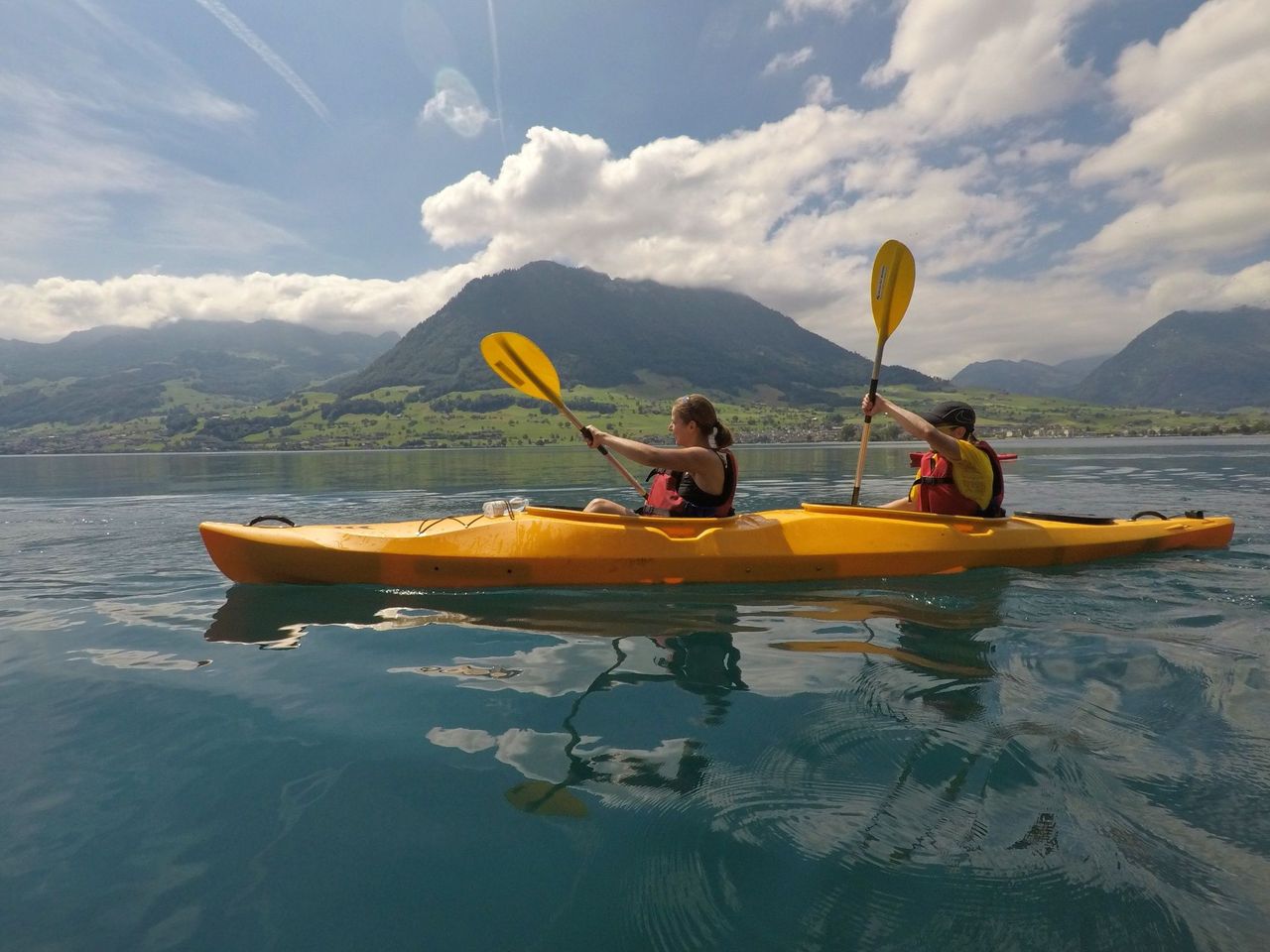
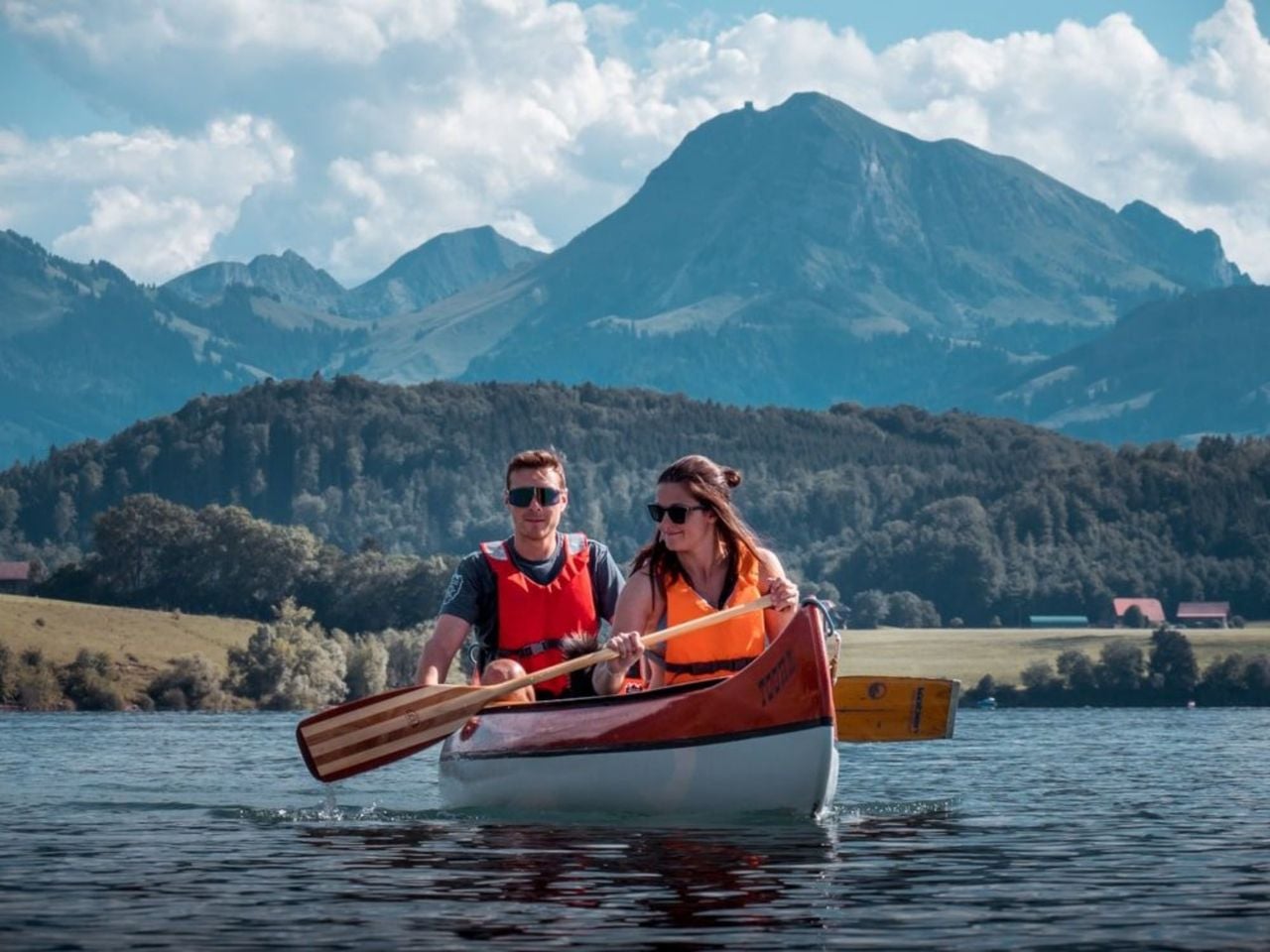
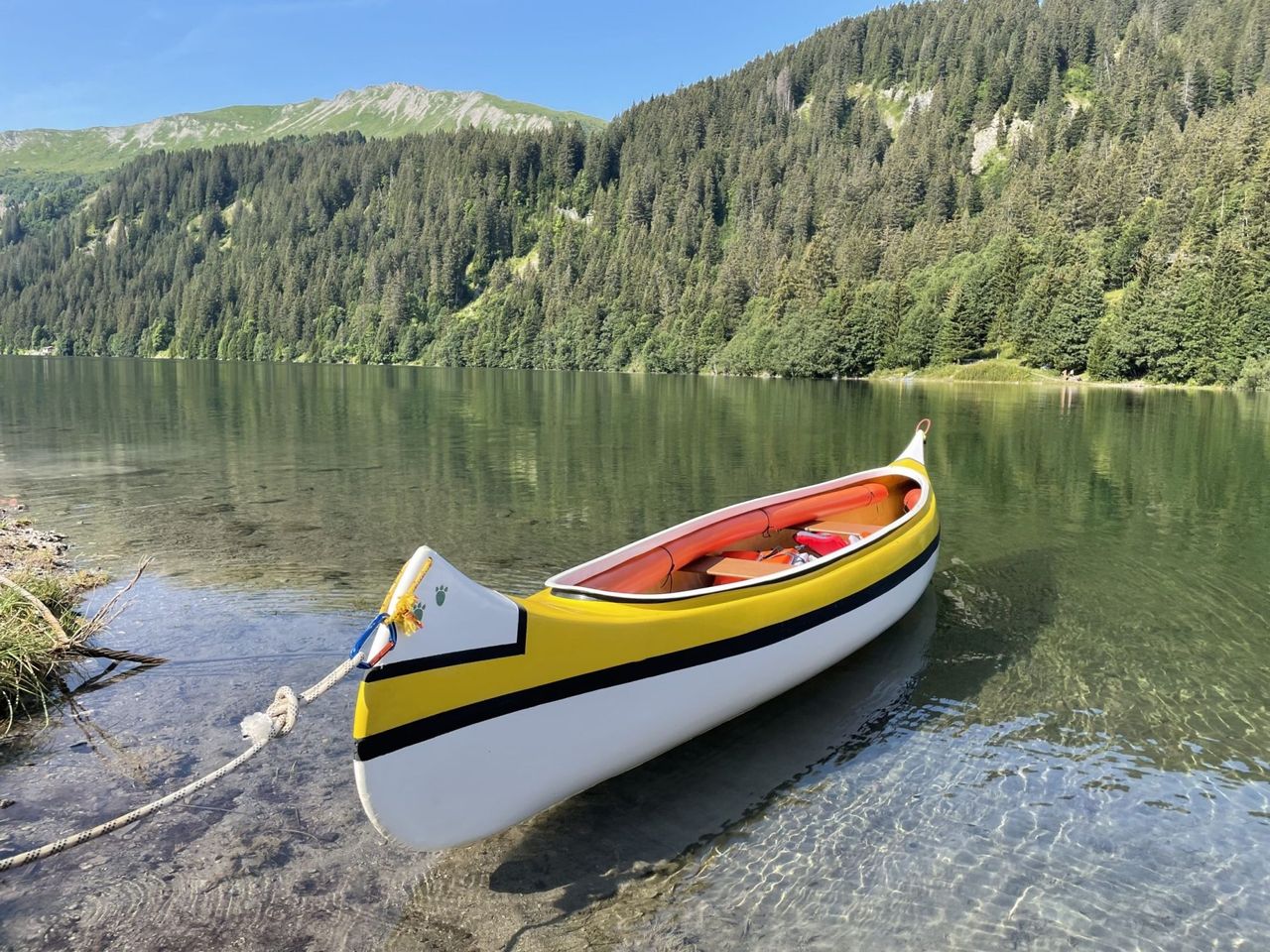
Besides kayaking, canoeing has also become a popular leisure activity in Switzerland. In a canoe, up to four people can paddle together, making this trip the perfect family adventure on Lake Thun!
The Lake Thun is located in the Bernese Oberland at the edge of the Alps, and is thus one of the beautiful Alpine lakes in Switzerland. Between the southern tip of the lake and the adjacent Lake Brienz is the world-famous alpine resort of Interlaken. At the northern end of the lake lies Thun, the city that gives the lake its name.
The breathtaking landscape, with vineyards, castles, and green lake shores, is framed by the mountain panorama of the Eiger, Mönch, and Jungfrau in the background. Canoeists can expect a spectacular and incredibly diverse environment on this turquoise blue alpine lake.
The canoe route on Lake Thun runs along the entire western shore of the deep blue lake, offering paddlers idyllic spots and great places to take a break. You can reach the various stops along the lake with four-person canoes, which can be rented from two people onward, or with a SUP.


The canoes and SUPs can be rented and returned at all stations, which is why a one-way offer is also possible.
In Spiez, for example, you can not only admire the most beautiful bay in all of Europe and the ancient castle of Spiez, but there is also one of the stations of the canoe trail. The station at the Blue Turtle Bistro, about 4.5 kilometers further on, invites you to eat or take a breather, while the stretch between Spiez and Gwatt reveals untouched natural shores
The drop-off points are not always open due to weather conditions, so it is advisable to book in advance
Whether with the family, in groups or with friends, a day canoeing on Lake Thun is not only enormous fun, but also shows the magical beauty of this popular Alpine lake
Kayaking - the popular summer activity in Switzerland for active nature lovers. Countless rivers and lakes suitable for kayaking are on the Swiss map. Our guide will help you choose the most suitable routes across lakes and rivers. Our FAQ at the bottom of the page will give you important information about safety and specific dangers when kayaking. You can also read about the differences between kayak, canoe and Canadian canoe.
Kayaking on the Lake Lucerne is an absolute highlight! The lake is known for its winding inlets and deep blue color, making it one of the most stunning lakes in Switzerland. With a maximum depth of 214 meters and an area of 114 km², it spans across five Swiss cantons: Lucerne, Uri, Schwyz, Obwalden, and Nidwalden.
Your heart will race while kayaking on Lake Lucerne! You can explore nine different routes around the beautiful azure lake and the wonderful surroundings of its mountain-enclosed shores.
The so-called Canoe Route around Lake Lucerne consists of nine paths that can be navigated even without much prior knowledge of canoeing or kayaking. If you manage to complete all nine stages, which can also be planned as day trips, you'll actually circle the entire Lake Lucerne!
The incredibly beautiful view of the Swiss pre-Alps is what makes this waterway stand out. You can rent canoes or kayaks on-site and find all the gear you might need (or still need). Guided tours or kayak/canoe courses can also be booked as desired.
You can either put together your own canoe routes or follow one of the already established paths. The materials and guides for these trips include the best entry and exit points, rest stops, campsites, toilets, and areas with traffic restrictions or hazards. On the Canoe Route around Lake Lucerne, you’re perfectly equipped to paddle into a scenic and active adventure!
Starting points for the canoe route include Lucerne, Horw, Stansstad, Brunnen, Weggis, or Küssnacht. All these places are easily reachable by car or public transport.
Located in the canton of Bern, Lake Brienz is nestled between the Bernese and Emmental Alps. Its shores drop off steeply, so it has almost no flat areas, and it's amongst the cleanest lakes in Switzerland. The municipality of Brienz, which gave the lake its name, lies on the northern shore, while the well-known towns of Interlaken, Matten, and Unterseen are located on the southern shore.
For instance, in the village of Bönigen, which is right by Lake Brienz, you can rent kayaks and other water sports equipment to explore the lake on a tour. Schools located right by the lake also offer kayak courses, coaching, and guided tours.
The tours also head upstream to the truly impressive Giessbach Falls, where the Giessbach cascades over an incredible height of 500 meters down rocks and cliffs. There is even a path that runs underneath the waterfall, which can be explored on foot. You can enjoy this breathtaking sight combined with a leisurely kayak tour.
Experience the stunning view of the mirror-smooth lake and the surrounding mountain peaks while actively steering your kayak and soaking in the pure atmosphere of nature: the kayak tours on Lake Brienz will enchant you!
On the largest lake in Switzerland and France, kayaking has long been a common activity. The lake spans three different Swiss cantons (Geneva, Vaud, Valais) and France. Along the southern shore, you can enjoy magnificent views of the Mont Blanc massif, as well as the popular Swiss city of Geneva, while the northern shore is home to the well-known cities of Lausanne and Nyon.
On the various tours, you’ll find not only wonderful natural landscapes and different nature reserves but also historical highlights: the world-famous Château de Chillon, which is regarded as the “jewel of the Lake Geneva,” looms on the shore and can be reached by kayak. A short tour through this historic water castle provides a welcome change from paddling.
Or how about a tour to Jet d’Eau, the landmark of Geneva? The fountain of the spring, located directly in the water of Lake Geneva, reaches a height of up to 140 meters and is the most famous attraction in Geneva. The only way to see it up close is from the water.
The Lake Geneva area is incredibly scenic, with many hidden beaches that are often only accessible by water, all of which are untouched and offer spectacular views of the Alps.
There are numerous kayak rentals and tour providers scattered along the entire shoreline, and they are mostly reachable by car or public transport.
Enjoy the stunning surroundings on a crystal-clear mountain lake at over 1700 m above sea level, all while kayaking? The Trübsee between Engelberg and Titlis makes that possible!
This beautiful mountain lake is right in the middle of an alpine plateau. Its deep blue color contrasts beautifully with the greenery of the alpine nature and the surrounding mountain ranges.
The breathtaking views of the Titlis mountain panorama and beyond will accompany you throughout your journey across the lake. From July to August, guided kayak tours on Trübsee can be enjoyed when the weather is good.
Lake Trüeb offers not only cozy and scenic spectacular moments, but also hidden bays in the quiet mountain world to discover. A bath towel, sporty clothes and a change of clothes should be brought along, other equipment (kayak, paddle, helmet, life jacket) will be provided
Without any previous knowledge, you can marvel at the flora and fauna of the Alps while kayaking and at the same time do some sports. The Engelberg Ski School offers tours here for beginners and leisurely paddlers, starting at six people. A reservation is therefore advisable.
In addition to the kayak excursions, it is also possible to book a barbecue or a subsequent ride on the scooter back to Engelberg. The tours offer the perfect alpine adventure for water sports enthusiasts and kayak fans and last about 1.5 hours.
The splashing of the paddles in the mirror-smooth lake allows a feeling of active relaxation and makes for an unforgettable kayak tour at 1764 meters above sea level
For adventurous kayakers, Switzerland offers a range of river tours that include calm and leisurely stages on the one hand and wild rapids on the other. The Swiss river landscape offers the right conditions for really everyone. Here are the most beautiful river tours by kayak:
With a length of 164 kilometers, the Reuss is the fourth longest river in Switzerland and rises in the famous Gotthard massif. From there it makes its way to the canton of Aargau, where it flows into the second largest river in Switzerland, the Aare. As one of the few large rivers in Switzerland that is still in its natural state, the Reuss is considered a true natural spectacle.
The Reuss trumps above all with its wonderfully green banks, which are dotted throughout with small, secluded gravel beaches. They invite you to stop, barbecue or take a break. Not all sections of the Reuss are suitable for kayaking, but the permitted stretches offer all the more to discover
Especially the route between Bremgarten and Mellingen is considered one of the most beautiful. Various river islands and sandbanks emerge from the riverbed, inviting you to swim and relax. You can launch your kayak at the Hexenturm in Bremgarten, where the approximately 2.5-hour river tour begins. The official exit point is located downstream from the retirement home in Mellingen.
On the Reuss, you experience a mix of smaller rapids and calmer stretches: a perfect blend of adventure and relaxation. Due to the varying water conditions and the inconsistent depth, it's beneficial to have some kayaking experience. On guided tours on the Reuss, you can quickly learn the necessary skills, and experienced guides ensure safety while paddling and handling the kayaks.
The Reuss is a natural spectacle for kayaking enthusiasts!
The Aare flows in the well-known "Aare Loop" around the old town of Bern. In the summer, it's one of Switzerland's hotspots, where all sorts of water sports enthusiasts and the so-called "Böötler" meet. Particularly, the section between Lake Thun and the capital enjoys high demand during the summer months.
The longest river running entirely through Switzerland is a true paradise for kayakers. There are several kayak providers on the banks of the Aare. Here you can gear up for a leisurely paddle and maneuver your way down the river toward the capital. The currents on the Aare are usually quite swift, which is why you can drift along this stretch in many places and use the paddles to steer
The banks of the river are also very busy in the summertime. While you pass between green, natural sections and well-visited bathing places and beaches, you can in between overcome the currents and rapids and immediately afterwards spend calmer passages leisurely in the kayak. The Aare is very varied. Equipped with an introduction and a life jacket, this route offers perfect conditions for all ages!
Along the shores, there are also plenty of places to stop where you can grab a bite, have a barbecue, swim, or just relax. You can completely unwind at the Eichholz camping site and river beach, a true place to be! Located on the outskirts of Bern, sun-seekers can enjoy summer days here while eating, playing volleyball, or simply soaking up the sun. You'll also find many return points for various kayak providers. The Aare can also be paddled from its source area.
The Ruinaulta, known as the Rheinschlucht in Romansh, is a gorge through which the Vorderrhein flows. In the canton of Graubünden, it streams as the source river of the Rhine, carving through a landscape characterized by steep cliffs, deep gorges, and jagged rocks. The protected natural areas of the Rheinschlucht offer plenty for adventurous kayakers.
The rugged nature of the river is dominated by raging rapids and exciting whitewater. The most famous whitewater route runs through the Flimser Gorge, presenting experienced kayakers with challenging currents and thrilling maneuvers. While the toughest sections can be easily avoided, the Vorderrheinschlucht isn't suitable for beginners going solo. However, with a qualified guide by your side, it’s possible to navigate the easier flowing stretches of this beautiful valley and learn the basics of the sport at the same time.
For pro kayakers, guided tours can be booked to expand your paddling techniques and test the spectacular flow conditions of the Vorderrhein. For very experienced paddlers, there’s also the option to paddle the river independently. Of course, it's crucial to adhere to safety regulations and guidelines, ensuring you're equipped with a life jacket and helmet.
The breathtaking and wild nature throughout the valley is absolutely worth visiting Ruinaulta and keeping your adrenaline pumping during an exciting kayaking adventure.
Welcome to the sunniest spot in Switzerland! The Mediterranean climate in the Italian-speaking canton of Ticino, beyond the Gotthard Pass, lets you truly soak in the holiday vibes. Kayak enthusiasts can paddle along the river Ticino, enjoying the beautiful Swiss Alps and palm trees that thrive in the warm climate as they head south. Kayaking through the untouched Leventina Valley combines a southern flair with alpine mountain air.
The most famous and popular route is from Cresciano to Arbedo, which stretches over 8 kilometers through the clear blue river and the natural beauty of Ticino. Various providers offer tours along this route and at other locations on the river. For independent trips, SwitzerlandMobility offers maps and information about the route, water conditions, potential danger zones, and the best launching spots, along with travel tips for getting there and back. Additionally, canoes for multiple people can be rented in Cresciano. Not far from the end of the route is the well-known city of Bellinzona, the capital of the canton of Ticino. Here, you can also enjoy a little city tour and a delicious gelato.
The shores of the Ticino offer, in addition to dense vegetation, long beaches that seem to be made for pausing kayakers. On these beaches and islands you can moor and enjoy your break in perfect vacation mode: sun, warmth, nature. The Ticino has a very wide gravel bed and therefore offers the ideal conditions to paddle comfortably with the current towards Bellinzona.
For those who want to actively relax, enjoy the Mediterranean nature and at the same time feel the Swiss Alpine charm.
Switzerland definitely comes up trumps with many natural spectacles and one of the most beautiful of these can be found in Ticino: the Verzasca Valley. The Verzasca River flows through the gorges in the form of emerald green water, past huge boulders and tongues of rock and right through the middle of a magnificent green landscape. You almost feel like you are in the tropics! Large and small waterfalls, entire waterfall terraces and especially the crystal clear water make the Verzasca Valley one of the most beautiful destinations in the whole of Switzerland and offer kayakers not only spectacular views but also very challenging and adventurous kayaking routes
Due to the sometimes very steep slopes of the Verzasca, it is not suitable everywhere for inexperienced kayakers. The higher part of the river is easier to navigate and very popular, but is still considered a white water stretch. The further you go downstream, the more challenging the stretch becomes, as the water eats into the rocks more and more in the lower areas
This creates truly spectacular whitewater courses that are an excellent opportunity for professionals to enjoy an action-packed trip. For inexperienced kayaking enthusiasts, it is highly recommended to run this river only in the company of a guide and after a kayak introduction. The beauty of the river sometimes drowns out its potential danger
The tours through the Valle Verzasca are by far among the most beautiful and spectacular in the whole of Switzerland.
Kayaking in the Swiss summer offers the right tour for everyone. Whether it's leisurely lake tours or adrenaline kicks in the white waters of the Swiss rivers: with the tours described here, you'll be well equipped for a kayaking adventure of your choice in beautiful Switzerland.
Besides kayaking, canoeing has also become a popular leisure activity in Switzerland. In a canoe, up to four people can paddle together, making this trip the perfect family adventure on Lake Thun!
The Lake Thun is located in the Bernese Oberland at the edge of the Alps, and is thus one of the beautiful Alpine lakes in Switzerland. Between the southern tip of the lake and the adjacent Lake Brienz is the world-famous alpine resort of Interlaken. At the northern end of the lake lies Thun, the city that gives the lake its name.
The breathtaking landscape, with vineyards, castles, and green lake shores, is framed by the mountain panorama of the Eiger, Mönch, and Jungfrau in the background. Canoeists can expect a spectacular and incredibly diverse environment on this turquoise blue alpine lake.
The canoe route on Lake Thun runs along the entire western shore of the deep blue lake, offering paddlers idyllic spots and great places to take a break. You can reach the various stops along the lake with four-person canoes, which can be rented from two people onward, or with a SUP.
The canoes and SUPs can be rented and returned at all stations, which is why a one-way offer is also possible.
In Spiez, for example, you can not only admire the most beautiful bay in all of Europe and the ancient castle of Spiez, but there is also one of the stations of the canoe trail. The station at the Blue Turtle Bistro, about 4.5 kilometers further on, invites you to eat or take a breather, while the stretch between Spiez and Gwatt reveals untouched natural shores
The drop-off points are not always open due to weather conditions, so it is advisable to book in advance
Whether with the family, in groups or with friends, a day canoeing on Lake Thun is not only enormous fun, but also shows the magical beauty of this popular Alpine lake
Kayak · answered by our editorial team
Kayaking is suitable for anyone who wants to actively paddle through the different waters and experience the Swiss nature. Due to the incredible variety of rivers and lakes in Switzerland, countless different routes exist. For children and beginners, calmer routes or certain lake tours are more suitable, while for the advanced and adventurous, rushing rivers and raging waterfalls also await. Switzerland offers everyone a very special kayaking experience
You can even kayak as a non-swimmer with certain providers. However, even in a kayak: safety first. To ensure this, the guide should always be informed about any ailments or illnesses (especially back, muscles, joints or similar), as well as the swimming level. This way, the route and equipment can not only be customized, but also guarantee the best possible experience on the water.
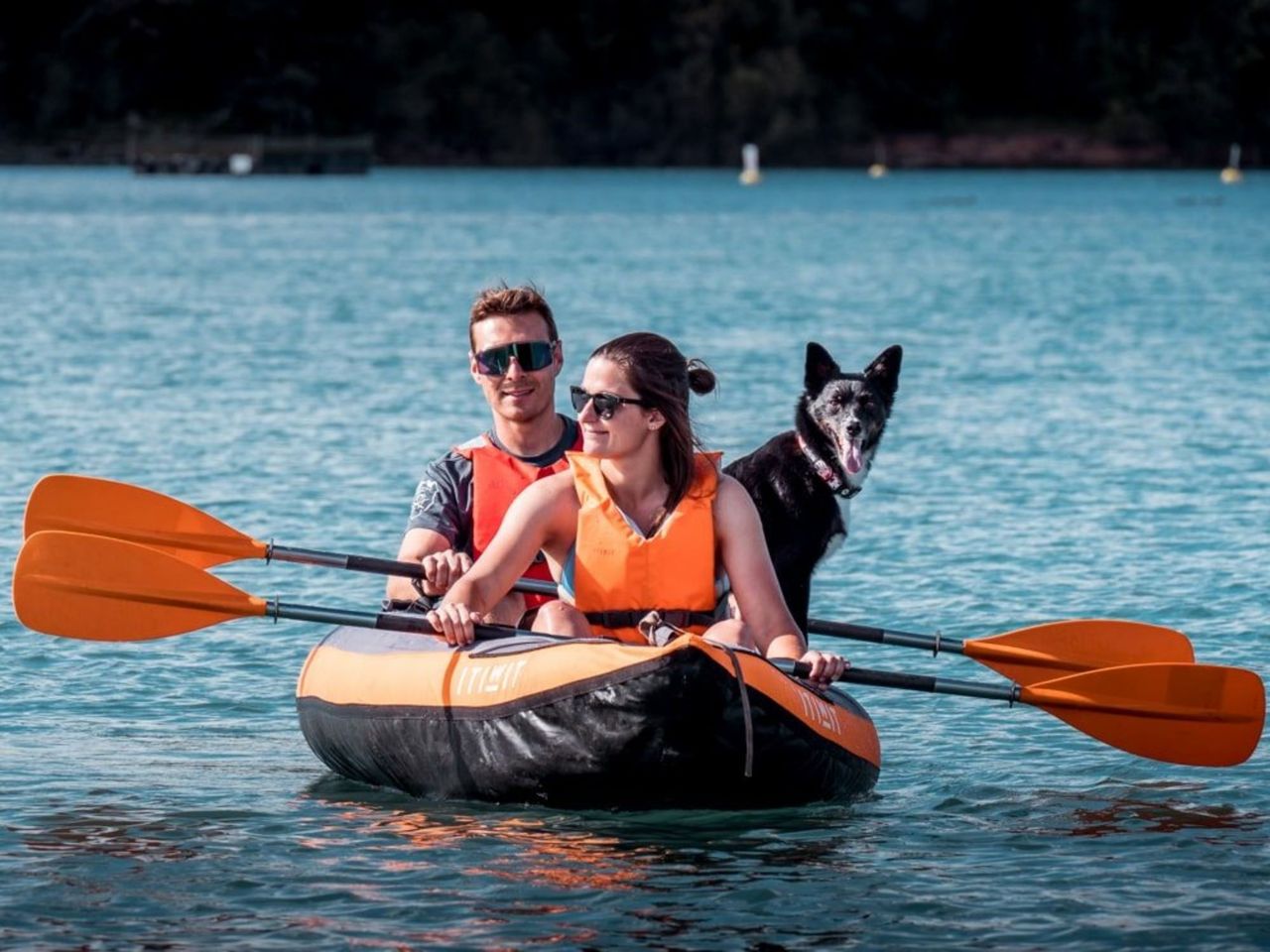
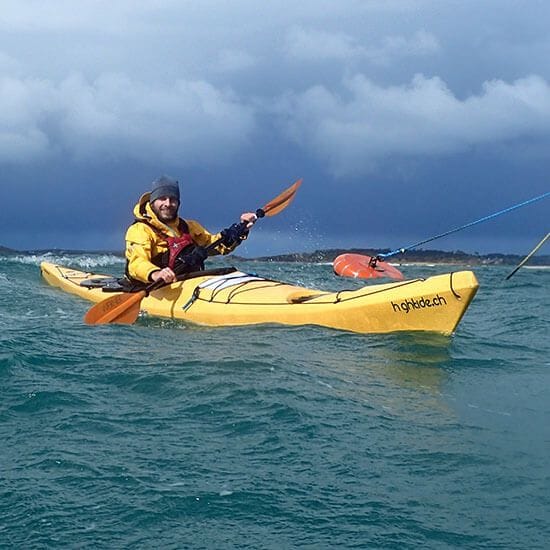
Kayaking (kayaking) consists primarily of paddling and maneuvering. You can steer the small, maneuverable boat through a wide variety of water conditions. To do this, you use a double paddle when kayaking. You can kayak alone or in pairs, according to your own wishes.
On guided tours you will not only be shown the best and most comfortable technique for paddling. You will also be introduced to all safety structures, so that a safe and conscientious trip is guaranteed. The tours have difficulty levels according to the level. They lead over rivers and lakes, past dreamy shores or over steep waterfalls.
Whether leisurely or full of adrenaline, Switzerland offers people of all ages and all levels just the right kayak tour.
Confusion is usually caused by the distinction between canoe and kayak, although there is also the so-called "Canadian". Canoe is basically the generic term for the small, elongated boats under which kayaks and Canadians also fall. Nevertheless, Canadians are colloquially usually referred to as canoes
Therefore, in oral usage, one primarily distinguishes between canoe and kayak. First, the two types of boats can be distinguished based on their origins. The canoe originated in North Africa and was used by the indigenous people there for transportation and hunting. The kayak was used by the Inuit for fishing and sailing on the open sea
A kayak is much narrower and shallower than a canoe and is also not completely open toward the top, but has a sort of seat opening. A canoe, on the other hand, is completely open and therefore offers more storage space and the possibility of being able to sail while kneeling
The kayak is propelled and steered with a double paddle, the canoe with a single paddle. When it comes to effective driving on different waters, a kayak is preferred for sporting activities, such as whitewater rafting, river rafting or similar, because it is faster and more maneuverable.
Kayaking is a very safe sport. In fact, the BFU (Federal Agency for Accident Prevention) shows that simple measures can help make kayaking a completely safe and fun excursion. So, to ensure your safety during this breathtaking experience, you need to keep a few simple things in mind: To be able to paddle safely on the waters, you need training. Guided by a professional guide, you can really enjoy the fun of kayaking and stay safe. The Swiss Canoe Federation ensures that kayak guides are expertly trained and can introduce you to the safety structures of water sports
Especially in wild rivers it is important to wear a helmet and a life jacket. In Switzerland vests are compulsory anyway, appropriate equipment is essential depending on the type of tour. When kayaking, weather conditions and water level are also important factors that should be conscientiously checked and appropriately assessed before each kayak tour. On a guided tour, the trained guides ensure that you can indulge in this wonderful water sport in safe weather and water conditions and well equipped!
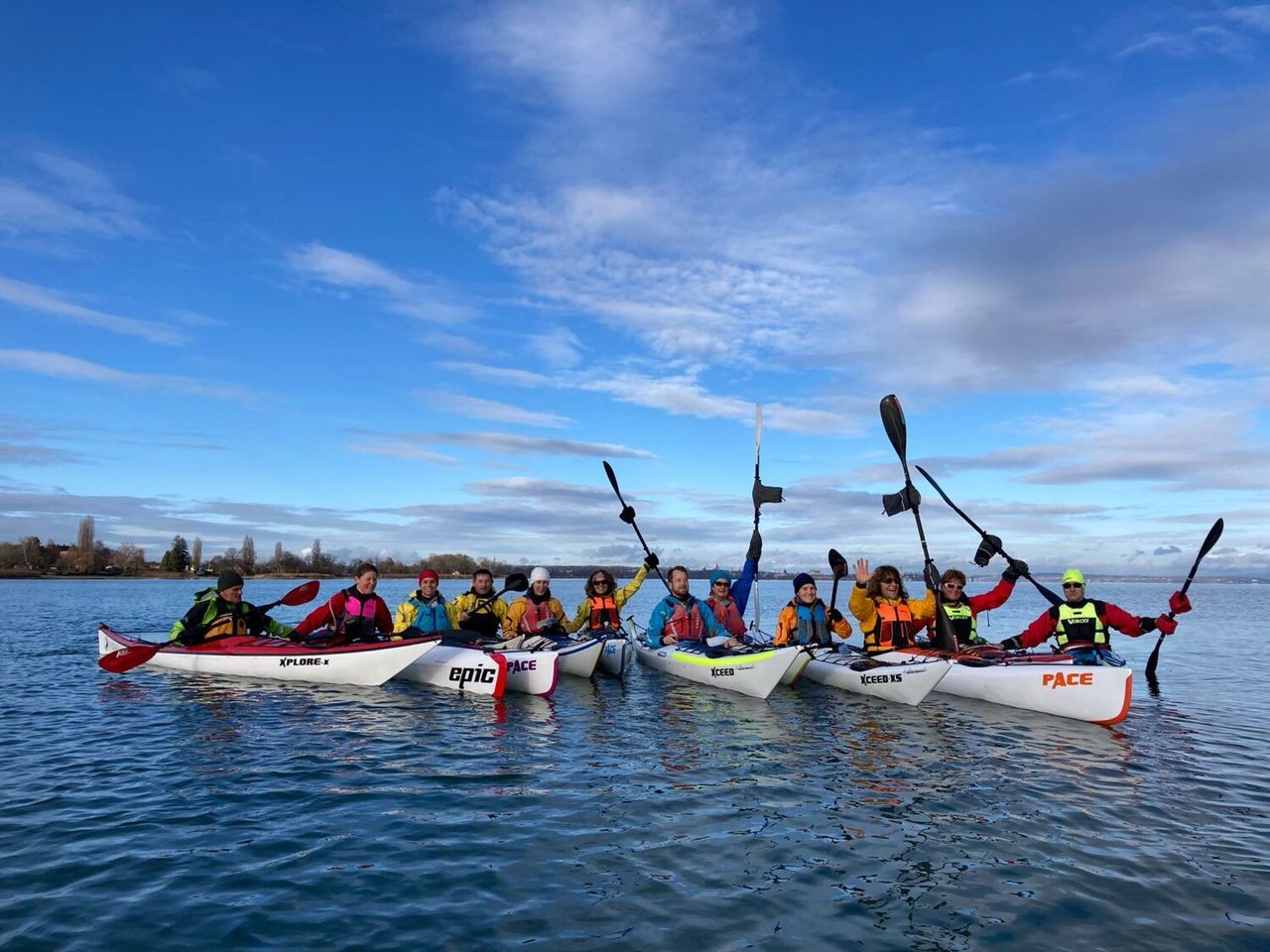
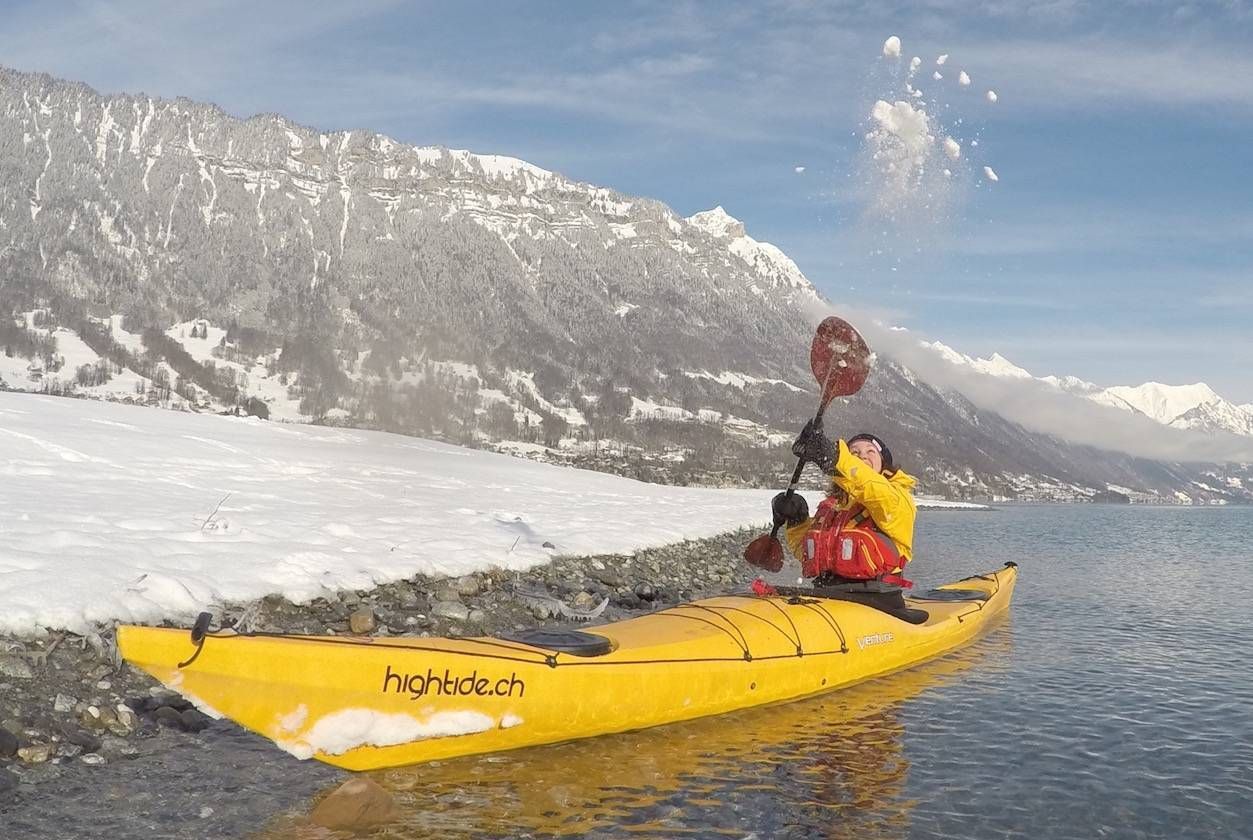
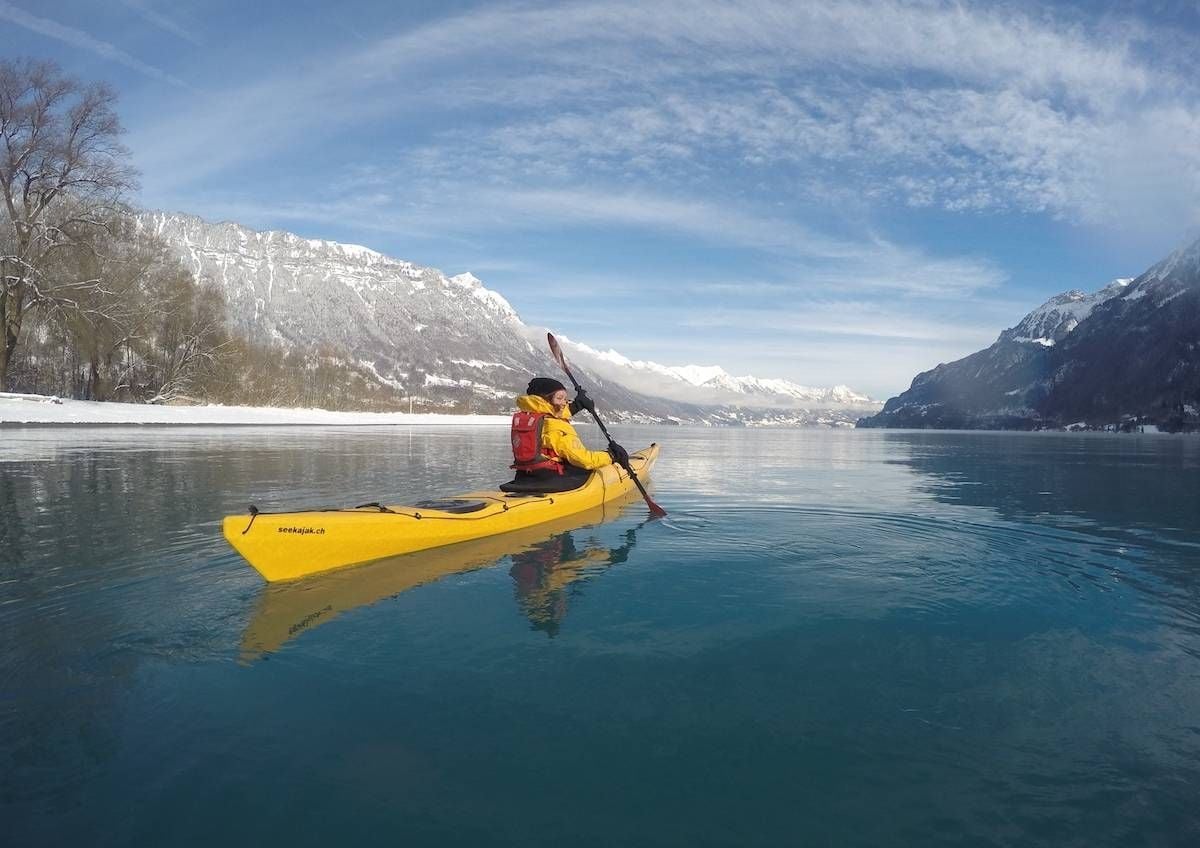
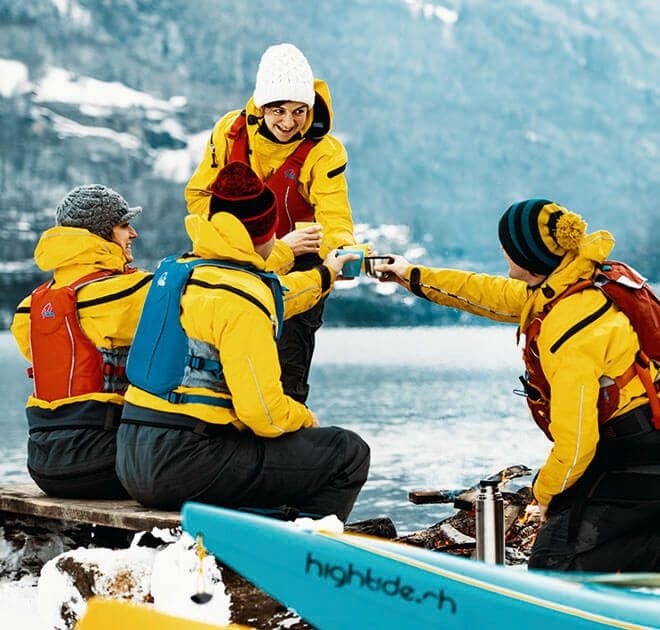
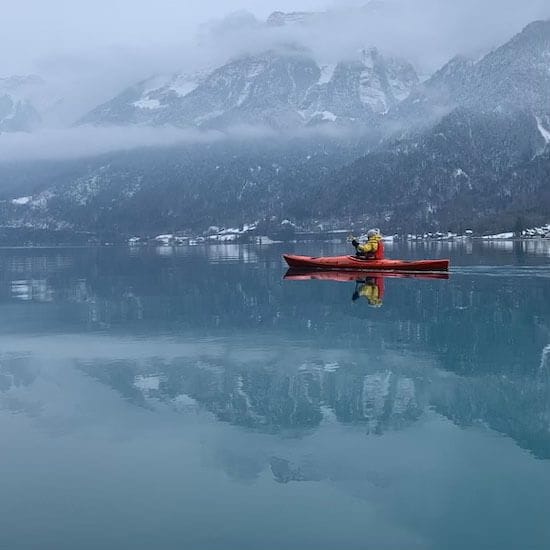
But of course! In recent years, water sports have also proven themselves in winter. In fact, in winter it is possible to enjoy the idyllic silence in the middle of a lake, while the snow-covered shores pass you by. At this time, the fewest water sports enthusiasts are still out and about, which is why you can experience incomparable tranquility on the water here. The icy temperatures and cold water are not a deterrent, because it's all a question of equipment!
You are wrapped in warm neoprene clothes, a dry suit, gloves and cap. Your feet are protected by warm and waterproof shoes. For provisions you have a warm tea or a delicious soup in your luggage. And you are ready to go. The preparations are a bit more time-consuming, but it's always worth it
To go kayaking in winter is a breathtaking moment. Nature and all its beauty are in harmony and you can experience the wonderful peace on the water. Of course, even in winter you should follow the safety rules:
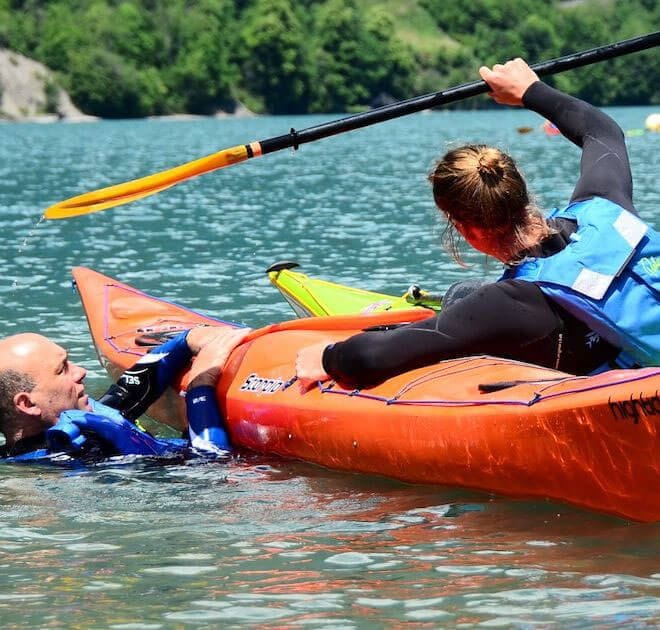
A kayak is very stable and it takes quite a bit of force to make it capsize. Nevertheless, it is of course possible for a kayak to tip over. But don't be afraid! It is always possible to get out of the kayak, even if it has turned. So if your kayak capsizes, it is usually a case of falling out and climbing back in. If you are in faster and windier waters, you should follow the previously learned instructions of your guide
This basically involves leaning into the life jacket and stretching your legs out. Lying on your back, you let yourself drift with the water until your guide reaches you. In such cases, you should definitely stay calm and trust the safety instructions of the professional tour guides. Again, if the safety instructions are followed, it is very likely that your kayak tour will be the best water experience of your life.
Subscribe to the newsletter and receive travel tips, ideas for your free time, and tailored travel guides from Switzerland.