
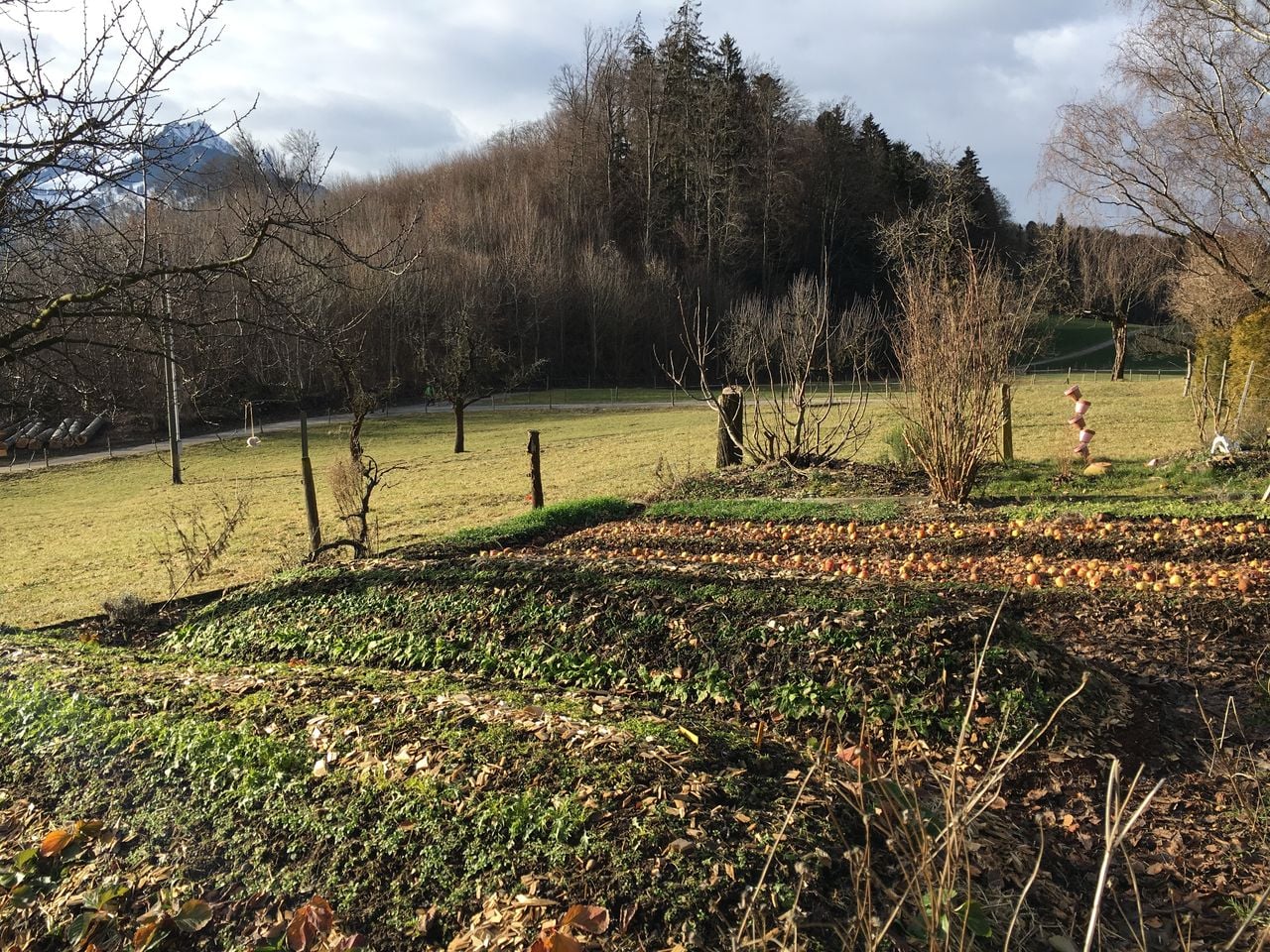
Permaculture garden course in autumn
Tider
Om den här platsen
Harvesting · Extending the season · Winter preparation · Composting Autumn is one of the most decisive phases of the gardening year – and at the same time one of the most underestimated. While many gardens are cleared and given up in September, the real work now begins for permaculture gardeners: protecting soil, returning nutrients, using the microclimate, extending the season. You now lay the foundations for healthy soil, a good harvest next year and a garden that can ease into winter rest – or rather not rest at all, but keep working. A well-prepared bed does not sleep – it regenerates. Under the mulch layer, micro-organisms break down organic material, earthworms build humus, roots keep growing. And if you do it cleverly, you can still harvest fresh greens in December. In this course, we go through the most important autumn tasks together and show you how to protect your beds, extend your season and keep valuable nutrients in the cycle. We work directly outdoors in the autumn garden, with wet leaves, cool air and the comforting feeling that now is the right time to prepare for later. What you will learn in this course 🥕 Harvesting & harvest care – closing the garden properly What can still be harvested now – and what is better left in the bed? We go through the autumn crops: pumpkins, beetroot, root vegetables, late tomatoes, the last beans. You learn to recognise the right harvest time (some vegetables tolerate frost, others do not), how to store vegetables properly (cool, dark, well ventilated – but not every vegetable likes the same conditions) and how to strengthen perennial crops such as berry bushes, perennials or artichokes for winter. Some plants need pruning, others do not. Some benefit from a mulch layer, others want their roots kept clear. We show you who needs what – and why. ❄️ Winter preparation – protecting beds, not sealing them Many gardeners believe that in autumn you should make the beds “tidy” – pull everything out, dig over, clear away. The opposite is true. We show you how to prepare your beds so they stay protected, nutrient-rich and alive. Dead plant material stays on the bed (not in the compost!), because it protects the soil from frost, erosion and drying out. We talk about green manures (plants you sow now to loosen the soil and bind nitrogen), about winter beds (that you create now so you can start earlier in spring) and about when digging harms and when it may exceptionally make sense. 🍂 Mulching – natural protection for winter Mulch is your best friend in autumn. Now there is plenty of material: leaves, grass clippings (the last of the year), harvest residues, shredded hedge cuttings. We show you which mulching materials suit autumn and how to use them: leaves straight onto the bed (but not too thick, otherwise they rot), grass clippings mixed with coarse material (otherwise it gets slimy), straw as a light cover for sensitive crops. You learn how mulch holds moisture (important, because the soil needs water in winter too), improves soil structure (earthworms pull the material down and build channels) and reduces frost stress (a mulch layer insulates like a duvet). And you find out which plants do not tolerate a mulch layer – because there are exceptions here too. 🌿 Extending the season – harvesting until Christmas Who says the garden stops in October? With the right techniques, you can harvest fresh greens right into December. We talk about microclimate: how do you use sheltered corners, south-facing walls, cold frames or simple covers (fleece, plastic tunnels, old windows) to extend the season? Which vegetables tolerate frost – and which even taste better afterwards? (kale, Brussels sprouts, winter purslane, lamb’s lettuce, leek – they all benefit from cold nights.) We show you how to look after autumn and winter vegetables now so they come through the cold season robustly – and so you can still get vitamins from your own garden in the depths of winter. 💧 Watering & nutrients – important in autumn too Many people think: it rains anyway in autumn, so I don’t need to water. That is often true – but not always. We talk about how much water plants really need now (less than in summer, but not none), when to water (on frost-free days, before longer dry spells) and when it is better to wait. Nutrients are also an issue: autumn is the time when you give the soil back what you took from it over the summer. We show you how to return nutrients without disturbing soil life: apply compost (but do not dig it in – the worms do that for you), use mulch as a slow nutrient source, and perhaps even sow a green manure with legumes (they bind nitrogen from the air and pass it on to the soil). ♻️ Composting – making smart use of autumn materials Autumn is peak compost season. Material is falling everywhere: leaves (in masses), harvest residues (from tomatoes, beans, pumpkins), grass clippings (the last), perennial cuttings. Where should it go? We show you how to turn autumn materials into valuable humus: leaves on their own decompose slowly and go soggy – but mixed with grass clippings or kitchen waste, they work perfectly. Thick stems (from sunflowers, tomatoes) should be shredded, otherwise they will still be there in the compost next year. Diseased plant material (powdery mildew, blight) – compost or not? (It depends: hot composting kills pathogens, cold composting does not always.) We discuss different composting methods for autumn and show you how to get the most out of this season’s abundance. 🌾 How the course runs We start together in the autumn garden of Hof Schwarzenbach – outdoors, in wellies, perhaps in light rain (that is part of autumn). We walk through the beds, look at what is still growing, what can be harvested, what should stay. We mulch one bed together, set up a green manure, discuss winter vegetables and try out different covering techniques. Between the practical sessions there is time for questions, exchange and the occasional aha moment – for example when it becomes clear why the bed was so depleted last spring (no mulch layer in winter) or why the compost rots so slowly in autumn (too many leaves, too little green material). The course is suitable for everyone: for garden beginners who have never prepared an autumn garden, just as much as for experienced gardeners who want to optimise their autumn tasks and extend the season. We work in small groups, take time for individual garden situations and show you solutions you can implement straight away – because autumn does not wait. Time: 13:00 – 17:00 Uhr (approx. 4 hours course + discussion round) Included: ✓ Practical work directly in the autumn garden ✓ Comprehensive handout with autumn tasks, plant lists and winter vegetable tips ✓ Small refreshments (hot tea, pastries, seasonal items – because it gets cool outside) ✓ Cosy discussion round at the end ✓ Time for questions about your own garden and winter preparation What to bring: Weatherproof clothing (rain jacket, warm layers – autumn is unpredictable), wellies or sturdy shoes, gardening gloves, notebook for your ideas – and, if available: photos of your own garden, so that we can look together at what is coming up there in autumn. 👉 Registration Are you in? Then register with us via the contact form or by e-mail at [email protected]. Places are limited – we deliberately work in small groups so there is enough time for individual questions and hands-on trying things out. We look forward to walking through the autumn garden with you – and discovering together that this season is not the end, but the beginning of something new! 🍂 The course takes place in cooperation with the Thun – Berner Oberland regional group of the Permakultur Schweiz association.
Plats
Hof Schwarzenbach
Obere Bahnhofstrasse 62, 3700 Spiez
3700 Spiez